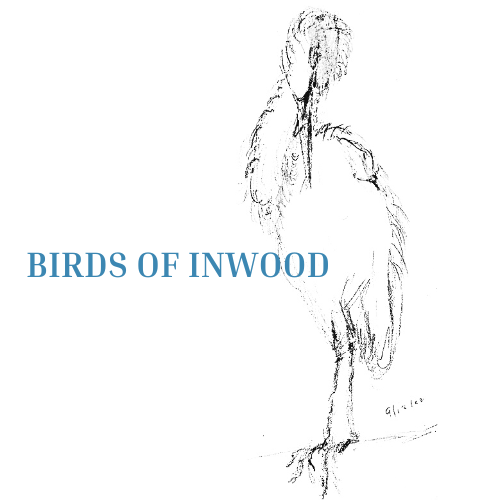

A lively Green Heron has been drawing attention this summer at the Salt Marsh in Inwood Hill Park. While not uncommon for late summer, this member of the heron family stands out among the Great Egrets, Great Blue Herons, and Black-crowned Night Herons. For one, the Green Heron is of slighter skeletal build compared to the “greats,” yet it carries itself with a lot of confidence.

Herons are all descendants of dinosaurs. The established link between the extinct world of dinosaurs and our modern birds is relatively new knowledge, confirmed in scientific studies beginning with the discoveries in southern Germany of Archaeopteryx in 1861. (Blog post from Museum Wales) These fossils of a feathered bird, the size of a raven or magpie, indicated a missing link between the ancient and the new. Outdoor enthusiasts would immediately be able to identify the Archaeopteryx skeleton from its appropriation by the brand.

Herons, like all birds, are descendants of Theropods, the dinosaurs that walked on two legs. Tyrannosaurus rex and Velociraptor are included in this type. Recently, a new species of the Spinosaurus was discovered in the NIger region of Africa. It has been nicknamed “hell heron” for its proportional relationship to blue herons and for its predatory love of fish. (University of Chicago News Feb 19, 2026 https://news.uchicago.edu/story/hell-heron-dinosaur-discovered-central-sahara)
Green Herons typically stand motionless in the water, but on the morning of August 1, this heron flew from the Salt Marsh to a nearby tree on the shore. It fended off attacks from scared starlings, grackles, and a territorial Northern Mockingbird. Though little, it acted like one of its ancestors.
Cover: Green Heron. August 1, 2026. 7:09 a.m. Jurassic Park, New York City.
Pursuit of the Big Picture
I spent several days traveling up the Hudson River in pursuit of new vistas and open skies. I have long been interested in the artwork of the Hudson River School painters, beginning with my graduate student days in the field of American Studies. Prompted by the 200th anniversary of the birth of artist Frederic Edwin Church (May 4, 1826 – April 7, 1900) and the coinciding publication of Victoria Johnson’s excellent new biography (Glorious Country: How the Artist Frederic Church Brought the World to America and America to the World, Scribner, 2026), I packed up my watercolor set and pencils and boarded Metro-North Hudson trains heading to high elevations.
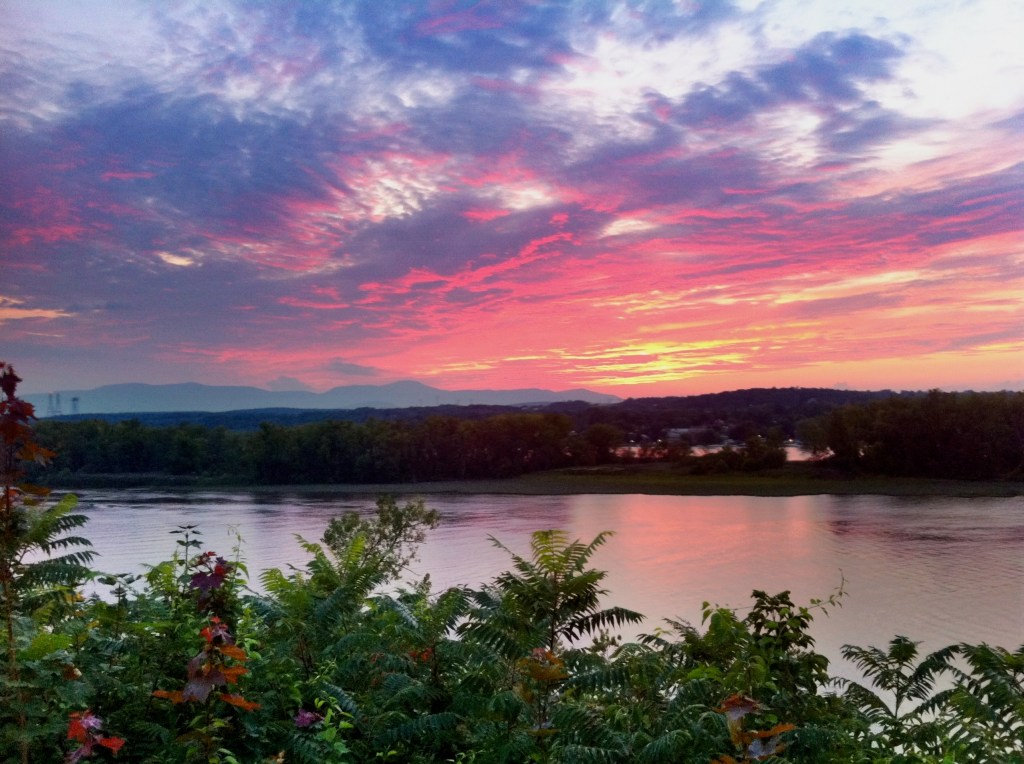
I first visited Hudson, NY in late summer of 2012 when I took a tour of Church’s famous Persian-inspired home, Olana, just outside the town. I longed to spend days there painting river scenes and the Catskills beyond. During my visit, I was completely captivated by the sunsets, improbable ones I had only seen in paintings, and returned repeatedly to see them.

July 13, 2026
In the spirit of pilgrimage and retracing the painterly journey, I visited several spots this summer in the Hudson Highlands favored for their landscape views. I sketched Storm King Mountain from Long Dock Park in Beacon, and I visited the home and galleries of artist Jasper Cropsey (February 18, 1823 – June 22, 1900) in Hastings-on-Hudson. While attending a performance of the Hudson Valley Shakespeare in their new open-air theater outside of Garrison, I found myself once again captivated by the river views.

Summer 2026
What does all this have to do with birds? I saw many birds throughout these wide-open landscapes. As the train sped north, I watched three Bald Eagles dive into the waters near Croton Point Park. In Garrison, I watched large flocks of American Goldfinches alight on the new meadows. Great Blue Herons and Great Egrets waded through the shoreline waters to wait for opportune fishing times. We may not be able to easily discern birds in the big picture, but they are there.

While close-ups of birds are always necessary for a myriad of scientific and aesthetic reasons, pulling back the view to see the wider landscape is critical for an understanding and appreciation of avian life. Birds live in or migrate to particular environments that can sustain their well-being and future.
Recent posts
- Bountiful Fall Migration Bird Sightings in Inwood Hill Park – October 2026
- Herons in Trees: Watching and Waiting at High Tide
- A Green Heron Joins the Other Dinosaurs, and the Pursuit of the Big Picture
- Sporting Colors: The 2026 Baltimore Orioles Season in Inwood Hill Park
- Field Notes from the 2026 Cedar Waxwing Gathering in Isham Park


Comments welcome!