On Monday, February 23, the snow fell across New York City in steady downfalls over many hours, embedded in a winter storm that arrived late afternoon on Sunday and continued well into the afternoon. By the end, Central Park experienced one of the largest snowstorms in the city’s history. * Up here in Northern Manhattan, the snow eventually measured over 22 inches. With an extra dusting a couple of days later, we could round that number up to an even two feet of snow.
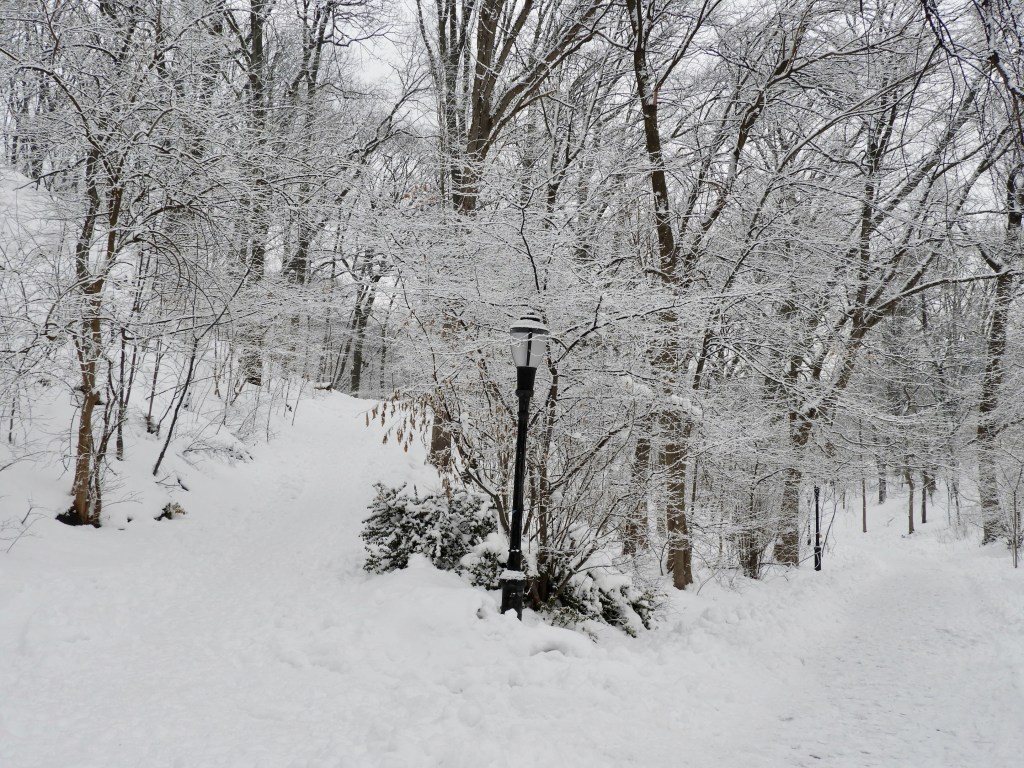
I didn’t venture outside on that Monday, preferring to watch the event from the comfort of inside. After the extra dusting, though, I set out for a morning survey of the winter landscape. The winter scenery did not disappoint. Every surface— tree limbs, park paths, lampposts, park benches, etc.— was coated in snow.
With an abundance of snow this season, many New Yorkers have become experts in the nuances of walking on slippery surfaces. Every city street corner full of snow and ice presented a potential new hazard, a problem requiring just the right steps. The fear was palpable. Falling was not an option.
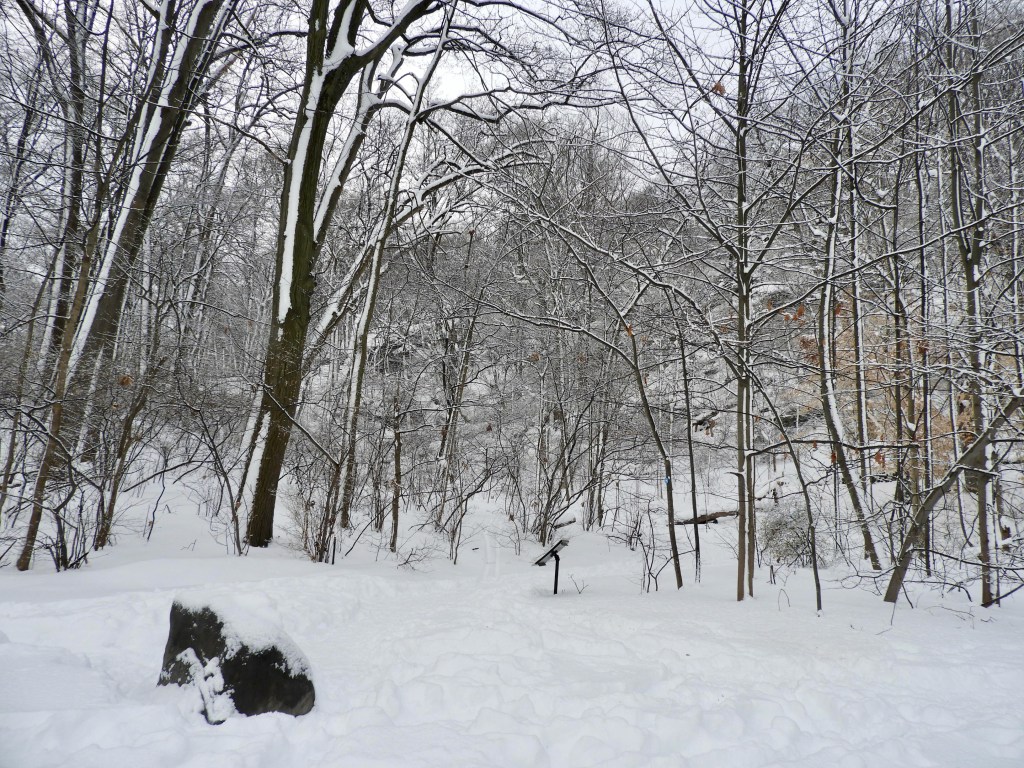
While slowly walking along a snow-covered trail in Inwood Hill Park on Wednesday morning, I discovered a novel hazard. I suddenly realized I had been walking not on the trail itself but on top of two feet of packed snow. The snowpack was about to give way. Fortunately, I located the footprints of a previous winter adventurer, that of a four-legged beast, and followed the paw paths to a place of relative safety near a cleared section of the trail.
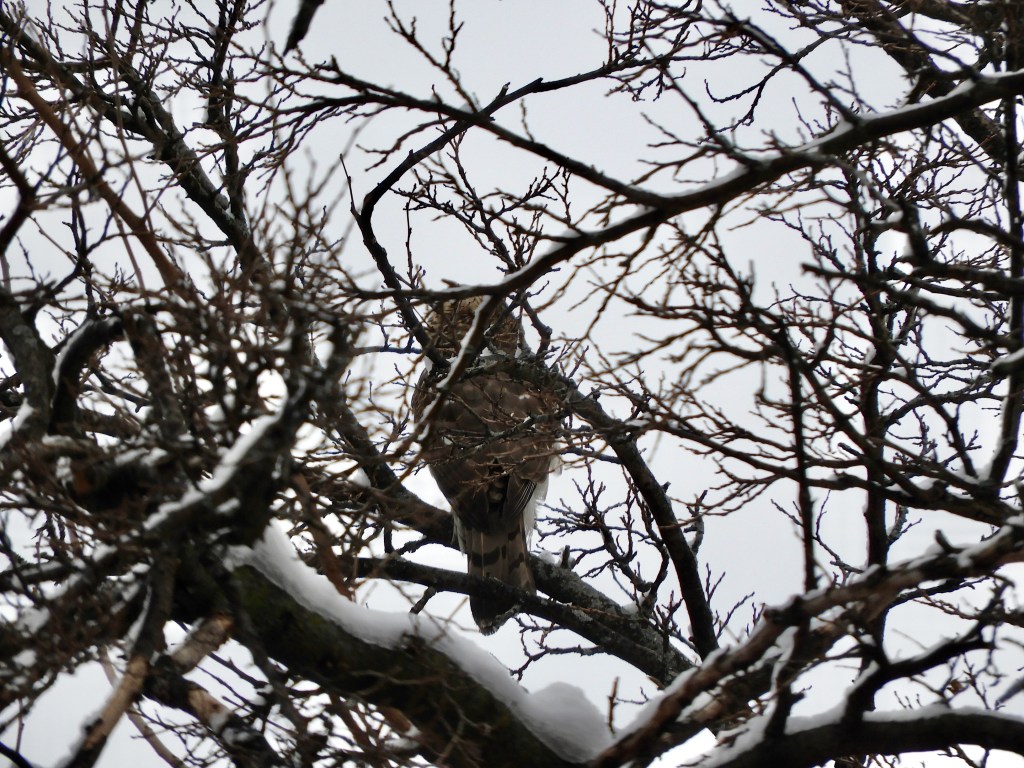
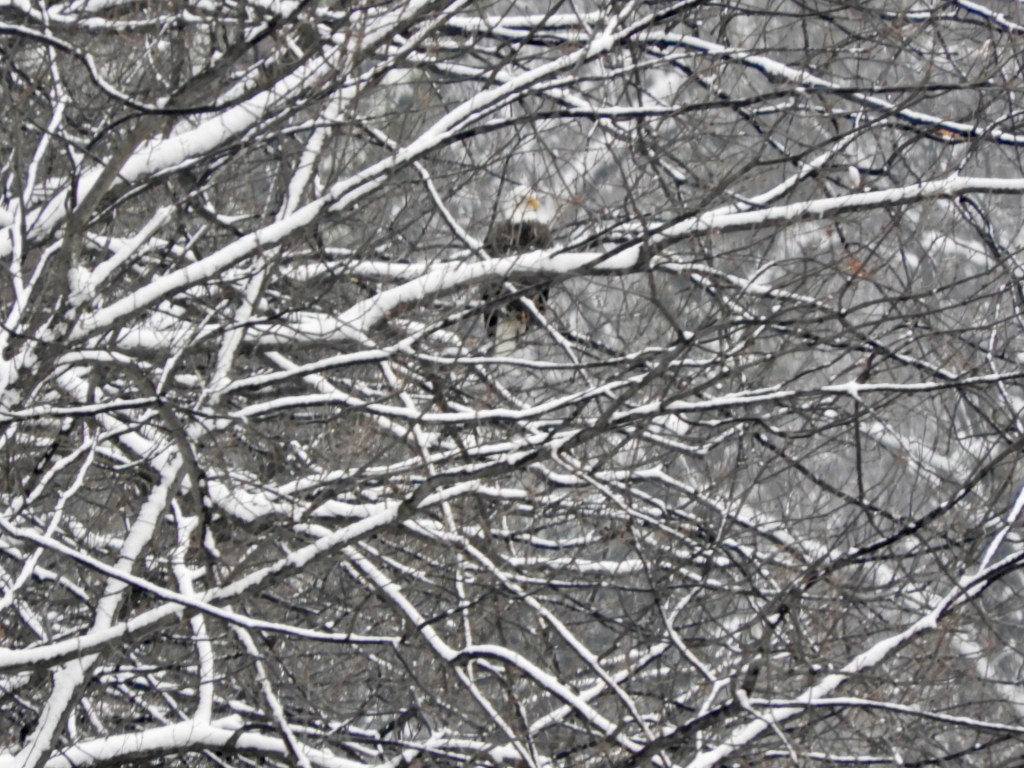
I did not see many birds along my silent walk. I saw a Cooper’s Hawk at the outset in a tree near my apartment and several Ring-billed Gulls foraging in the icy waters of the Salt Marsh. As I was looking at the marsh and the Henry Hudson Bridge, another birder stopped by. He said he had heard there might be Bald Eagles here. I mentioned I had seen one recently in a tree near the bridge (previous post). He held up his binoculars and saw one. I saw it, too.
The many Bald Eagles here and throughout the areas to the north up the river serve as testimony to the renewal of the Hudson River ecosystem, a bright development in a larger story of quickening bird decline. *
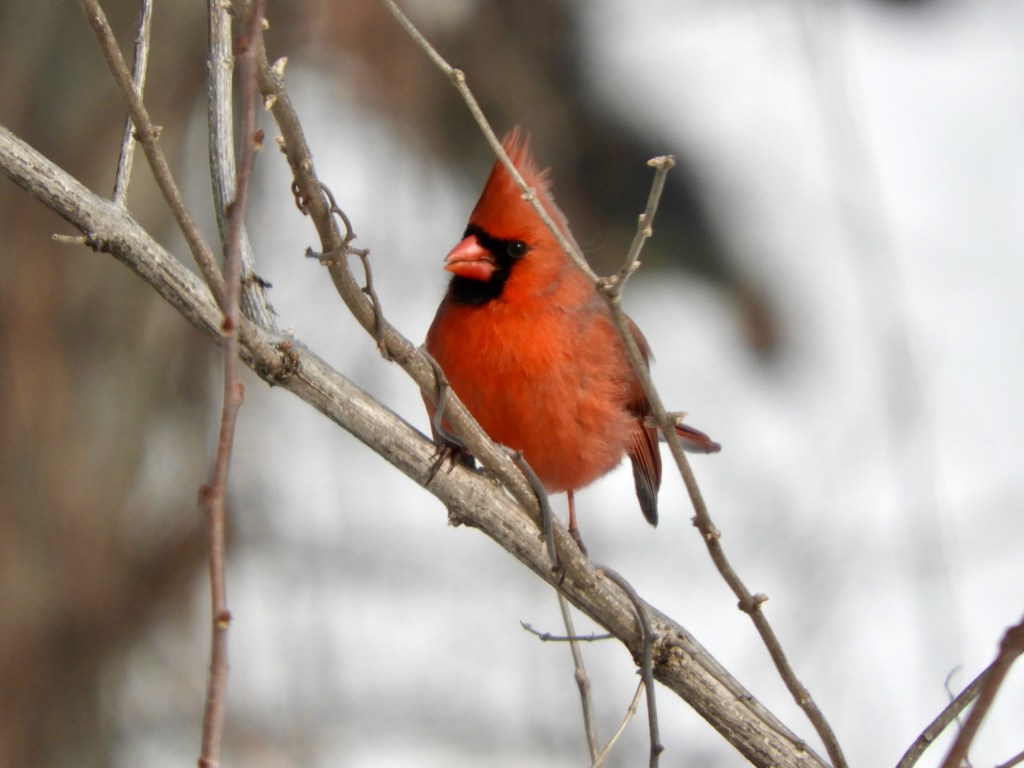
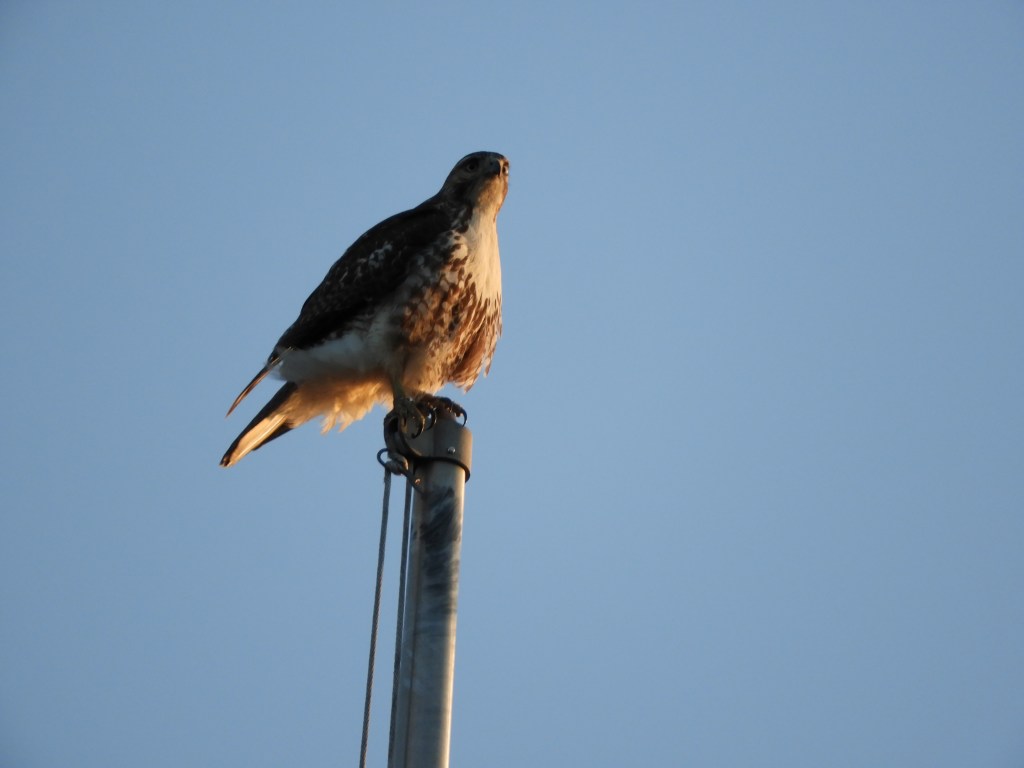
Since the storm, there’s been teasingly nice weather interrupted by occasional flurries. The regular park birds have feasted on seeds that people have left for them, supplementing their usual natural fare. The raptors search on high for available prey.
It’s March now, and the scene will change, slowly at first, and then fast. We’ll soon hear the cries of the Red-winged Blackbird. The mergansers will cruise through the marsh. American Goldfinches will find the first budding trees, and the American Robins will descend in scattered fashion, looking dazed after a long absence. Turtles will emerge from the mud, and the winter birds will prepare for departure. Some sort of bird that no one expects will appear seemingly out of nowhere. Then sometime around St. Patrick’s Day, a Great Egret should arrive from their winter home in Florida or the Carolinas to grace us with their presence.
I can’t promise that this exact scenario will unfold, or in this order, but it happens every March.
* The storm ranks 9th in Central Park history. (Source: NBC New York)
* Read more in the new research article published by Science. Acceleration hotspots of North American birds’ decline are associated with agriculture. 26 Feb 2026 Vol 391, Issue 6788, pp. 917-921 https://www.science.org/doi/10.1126/science.ads0871
Cover: Bald Eagle in tree near the Henry Hudson Bridge. February 25, 2026. 9:46 a.m.
March 2026 Sightings
The March 2026 sightings page is now published. For more of what birds to expect in the month, as noted above, browse the March 2024 and March 2025 pages.
One seasonal note: Cornell Lab’s Birdcast has resumed posting its Local Migration Dashboard to track spring migration.
Birds of Inwood Celebrates Its Third Anniversary!
I published my first post on Birds of Inwood on March 1, 2023. It was about the color of Blue Jays. It’s appropriate then to have a Blue Jay featured for the March 2026 page. Thanks to everyone who has supported Birds of Inwood through these first years.
Latest posts
- Herons in Trees: Watching and Waiting at High Tide
- A Green Heron Joins the Other Dinosaurs, and the Pursuit of the Big Picture
- Sporting Colors: The 2026 Baltimore Orioles Season in Inwood Hill Park
- Field Notes from the 2026 Cedar Waxwing Gathering in Isham Park
- Birds in the Garden of Eden: A Field Trip to Untermyer Park and Gardens in Yonkers, New York


Comments welcome!