
On the morning of July 13, within the first hour after low tide, I spotted a juvenile Black-crowned Night Heron foraging for food under the boat launch at the Salt Marsh in Inwood Hill Park. When I walked around the launch to get a better look, I saw an adult of the same species nearby in the water.
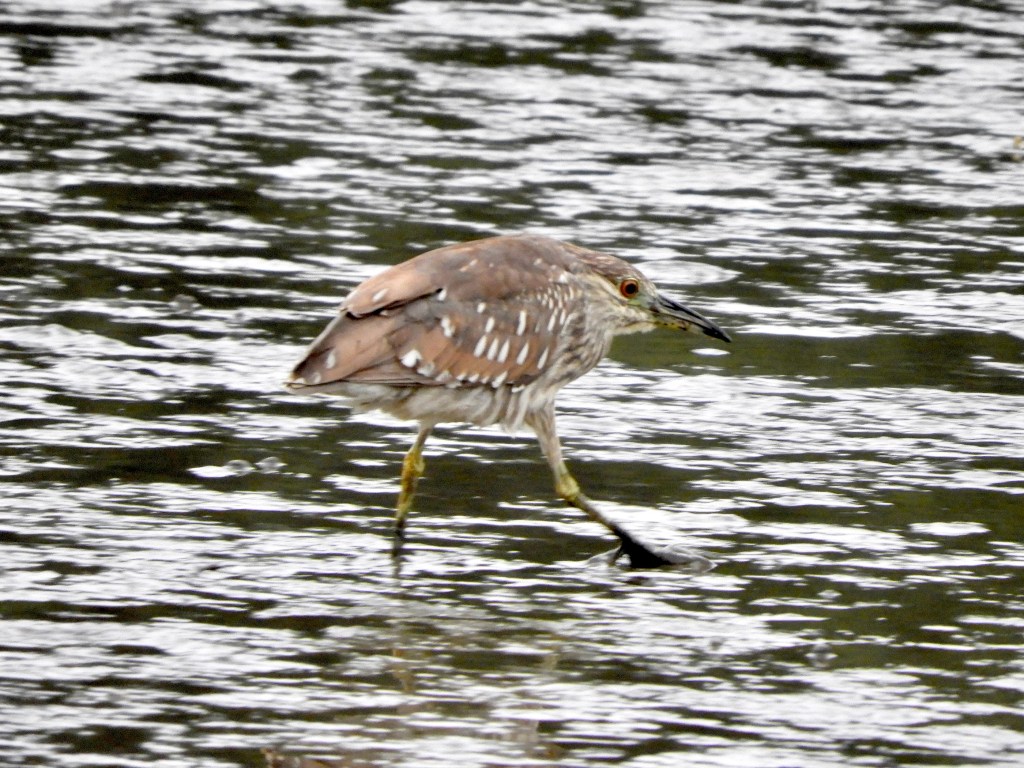
This month has brought warm and humid weather, an uncomfortable mugginess that has limited my birdwatching activities to early morning. On this morning, patchy drizzle and fog enveloped the landscape. I was nevertheless content. I had already watched a Great Blue Heron fly by before I noticed the juvenile Black-crowned Night Heron. I was thrilled to see the adult, as the Black-crowned Night Heron in full maturity is one of the most elegant birds in the heron family.

I spent time watching the adult and juvenile forage together in the rising tide, exploring objects of interest in the muddy flats of the marsh. I’m assuming the two had a parent-offspring relationship. They vocalized at one point.
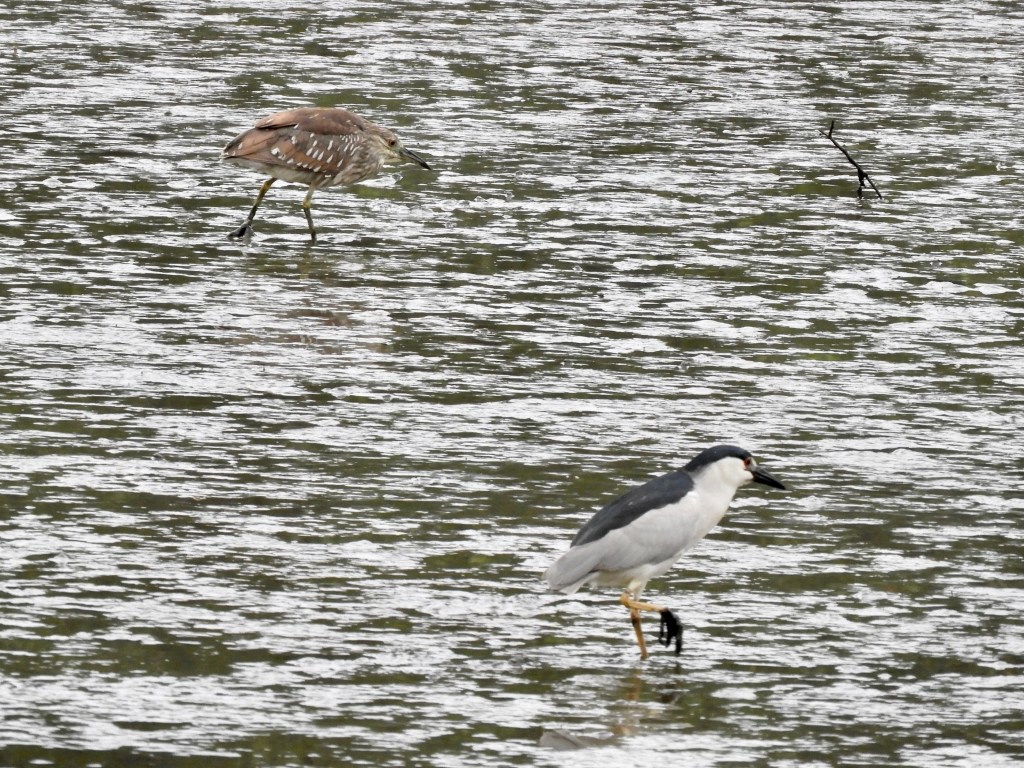
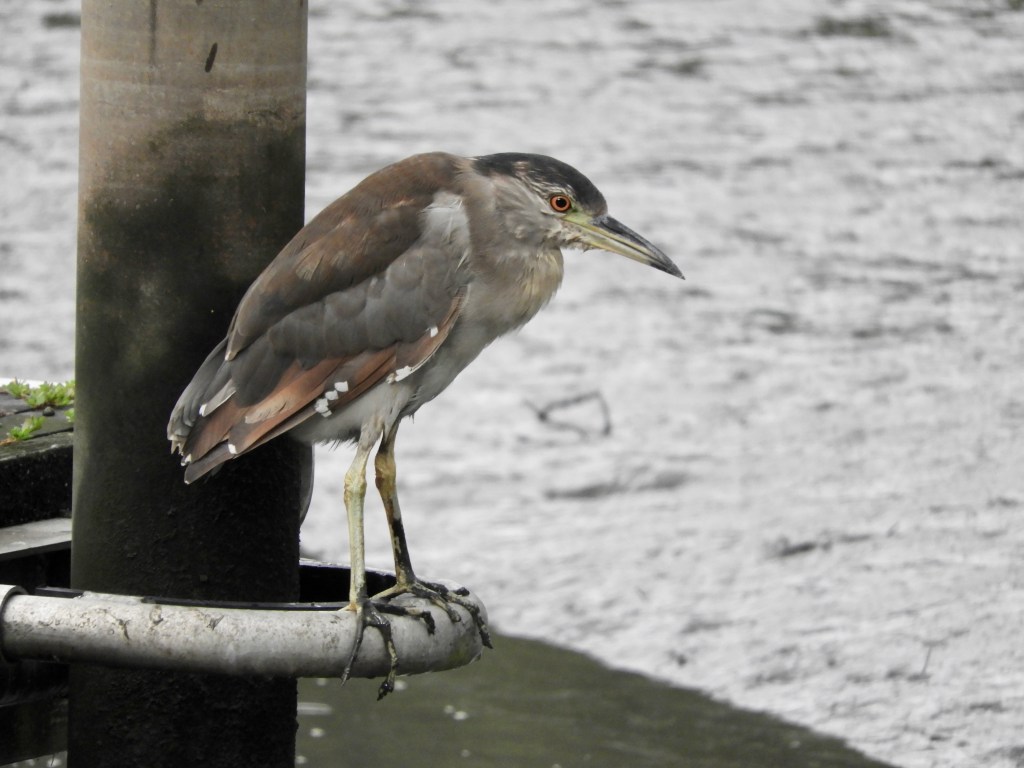
This morning, July 14, the same weather conditions were present. Since I had seen the herons approximately 30 to 40 minutes after low tide, I thought I had a good chance of seeing the herons again by paying attention to the tides. I was partially correct. When I arrived at the Salt Marsh, I spotted a young Black-crowned Night Heron underneath the boat launch. Yet, as I came around to get a closer view, I noticed it was an older heron, an immature one.

The immature Black-crowned Night Heron could be described as a teenager, though it’s probably only two or three years old. It has started to show the darker head of the adult but still with the brown feathers of its juvenile self. Its overall markings are now more sleek and less mottled. While I was observing the heron from a healthy distance, I watched it jump up onto the dock. I got some good looks at it.
After I left the immature heron to continue my walk, I noticed a juvenile way out into the middle of the inlet. It was exploring all on its own. I didn’t see the adult this morning, but I did notice the immature heron watching the juvenile from its position on the dock. A Great Blue Heron was nearby foraging for bigger fish in the waters.

Earlier this year, the NYC Bird Alliance called attention to the critical state of Black-crowned Night Herons in the islands of New York Harbor. Scientists from the alliance have found them in decline and note that they “may disappear entirely from the harbor as soon as 2035.” See the article on the NYC Bird Alliance website and learn what you can do to help with their conservation.

Various factors may be contributing to the decline of the birds on the harbor islands. One is loss of habitat. The Salt Marsh in Inwood Hill Park, one of the last remaining, may be a major factor in encouraging these fascinating birds to keep exploring the northern and wilder side of Manhattan.
I have written posts before about Black-crowned Night Herons, including posts on the juvenile phase and the immature phase. Any sighting of a Black-crowned Night Heron at any age is a reason for gladness and hope.
Cover: Immature Black-crowned Night Heron. The kayak/canoe launch of the Salt Marsh (where no boats are launched). Inwood Hill Park. New York, New York. July 14, 2025. 7:31 a.m.
Latest sightings
Over the past week, I’ve observed other birds learning from one another, including a pair of Peregrine Falcons on top of one of the light towers at the Columbia University athletic facility and a couple of Double-crested Cormorants. See more on the July 2025 Sightings page.
Support Birds of Inwood with a one-time gift.
If you would like to support the ongoing costs of maintaining Birds of Inwood, please see the following gift opportunity. Thank you!
Make a one-time donation
Choose an amount
Or enter a custom amount
Your contribution is appreciated.
Recent posts
- A Green Heron Joins the Other Dinosaurs, and the Pursuit of the Big Picture
- Sporting Colors: The 2026 Baltimore Orioles Season in Inwood Hill Park
- Field Notes from the 2026 Cedar Waxwing Gathering in Isham Park
- Birds in the Garden of Eden: A Field Trip to Untermyer Park and Gardens in Yonkers, New York
- An Evening Walk with a Great Egret, and Spring Migration Report
Subscribe
Contact
I am always happy to hear from readers.


 Birds of Inwood
Comments welcome!