During the recent cold and snowy nights, I was awakened by the sounds of snapping tree limbs falling in the forest down the street. Some of the trees are old and brittle there. I imagined the birds waking up, too, jolted from their feathery dreams to find a new limb in the cold night air.

Birds have many ways to keep warm in cold temperatures. The main way that birds survive cold or freezing temperatures is by trapping air pockets around their bodies. They fluff up their feathers to give them an airy insulation. Some birds will waterproof their feathers with oil from a gland near their tail. Herons grow special feathers to use for waterproofing.
Birds will also crowd into shrubs and vines, sharing body heat.

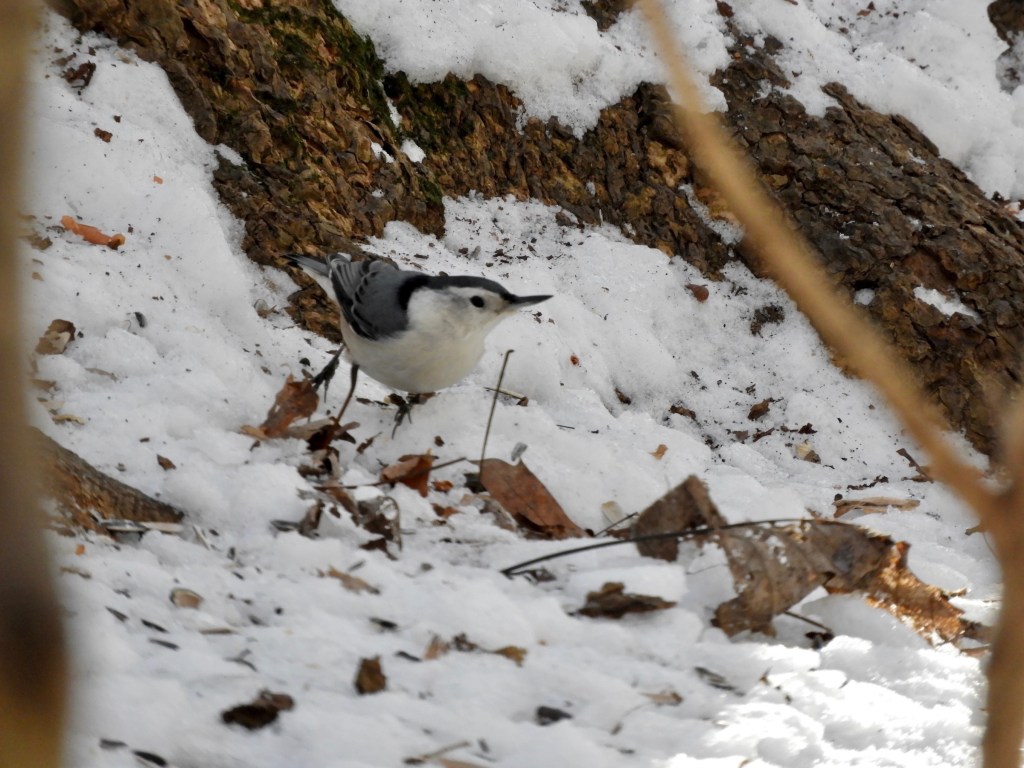
Food provides the necessary energy to keep birds warm, and they will seek out the usual sources. Many of the birds of Inwood depend on seeds and hidden insects. I’ve seen them gather at the base of trees to forage, and I often see them eating sunflower seeds or other seeds provided by human visitors to the park.

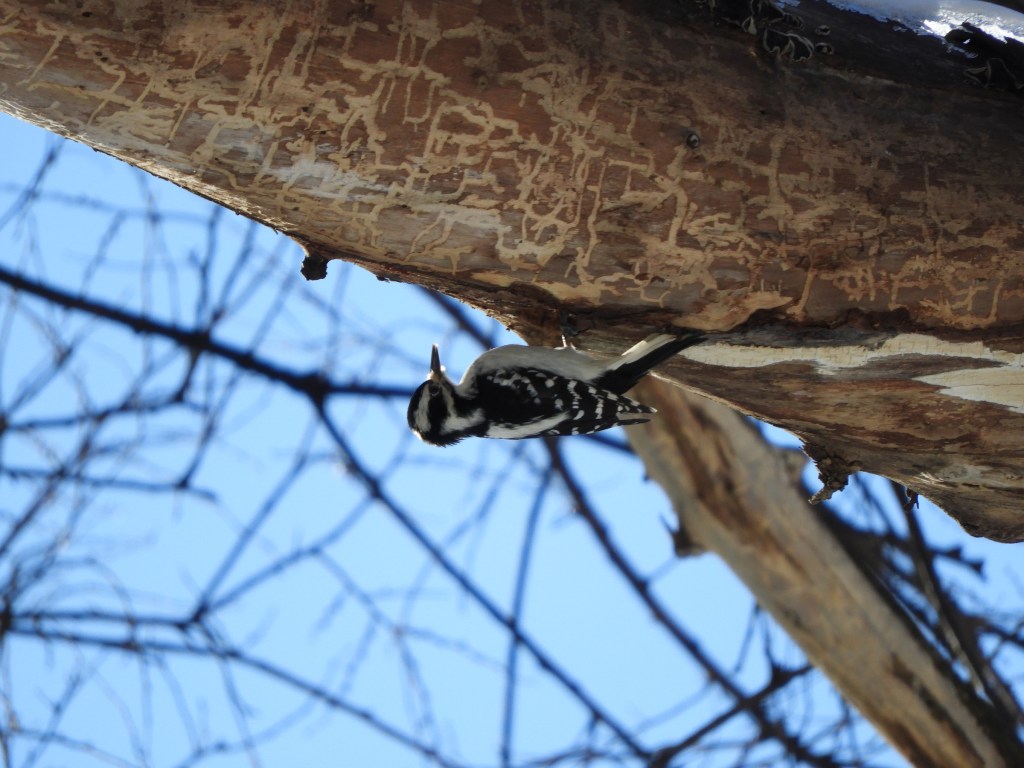
The woodpeckers are good at staying warm all winter, flying into existing tree cavities and by eating insect larvae. They will bore new holes on rotting trees and make new cavities for overnight camping.
Birds will also tuck in their feet and bill to keep warm. Some species will go through torpor, something like hibernation, when they will shut their bodies down for a time.

Many people will seek out similar techniques to stay warm, especially wearing a layer for insulation. A so-called puffer jacket usually does the trick, as it is often made with duck or goose down.
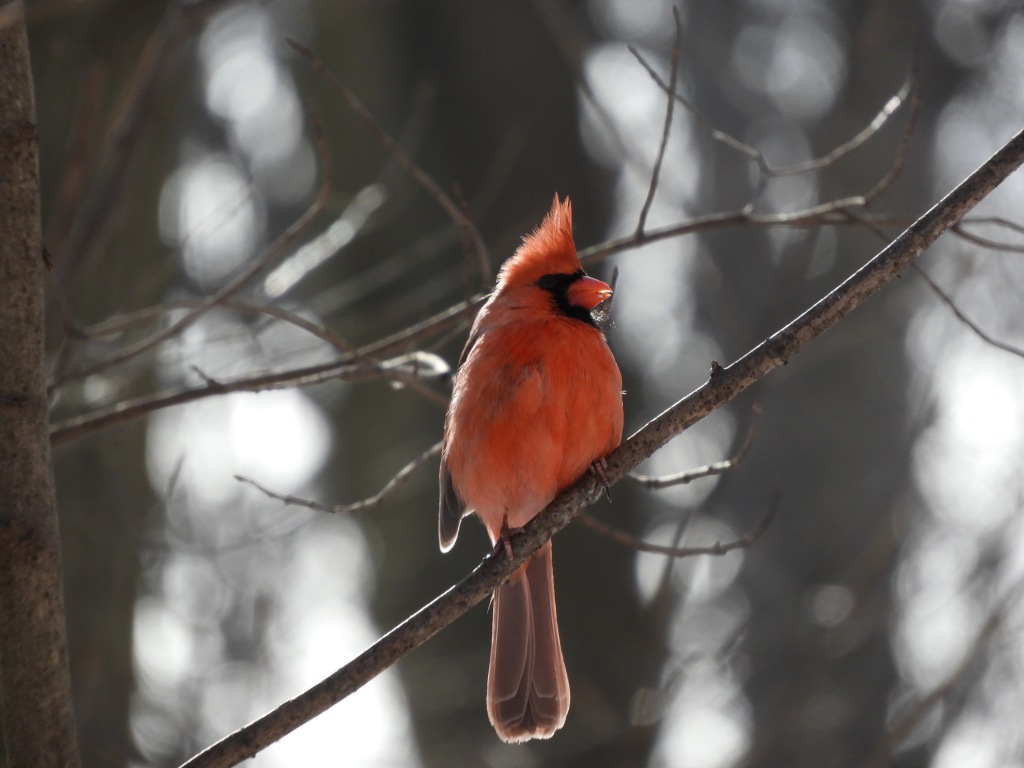
Cover: Male Northern Cardinal in the Clove, Inwood Hill Park. January 22, 2024. 11:27 a.m.
Recent posts
- Herons in Trees: Watching and Waiting at High Tide
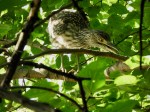 Many of my favorite heron sightings these past few weeks have occurred at high tide. While it’s more common to spot herons wading through the waters during times of low tide, abundant fish during the late summer keep the herons nearby. They watch and wait, frequently grooming their feathers. Look for them in trees or… Read more: Herons in Trees: Watching and Waiting at High Tide
 - A Green Heron Joins the Other Dinosaurs, and the Pursuit of the Big Picture
 A lively Green Heron has been drawing attention this summer at the Salt Marsh in Inwood Hill Park. While not uncommon for late summer, this member of the heron family stands out among the Great Egrets, Great Blue Herons, and Black-crowned Night Herons. For one, the Green Heron is of slighter skeletal build compared to… Read more: A Green Heron Joins the Other Dinosaurs, and the Pursuit of the Big Picture
 - Sporting Colors: The 2026 Baltimore Orioles Season in Inwood Hill Park
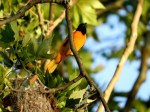 Several Baltimore Orioles made their way back to the high trees of Inwood Hill Park this year. They’ve been building and attending nests at the edges of the park. The female builds the nest over the course of the week, while the male goes out on foraging errands. The orioles usually stake out the same… Read more: Sporting Colors: The 2026 Baltimore Orioles Season in Inwood Hill Park
 - Field Notes from the 2026 Cedar Waxwing Gathering in Isham Park
 Dozens of flocks of colorful Cedar Waxwings have arrived in Isham Park in Northern Manhattan for their annual feasting of the Juneberry trees (Amelanchier is the scientific name, or serviceberry). The festive occasion takes place during late May and early June and lasts as long as the bright red berries are consumed. While Cedar Waxwings… Read more: Field Notes from the 2026 Cedar Waxwing Gathering in Isham Park
 - Birds in the Garden of Eden: A Field Trip to Untermyer Park and Gardens in Yonkers, New York
 At Untermyer Park and Gardens in Yonkers, NY, on May 18, I didn’t see many birds out of the ordinary. I was so taken in by the dramatic vistas of the park and garden that I may have overlooked them. Tens of thousands of birds migrate north of New York City each spring and… Read more: Birds in the Garden of Eden: A Field Trip to Untermyer Park and Gardens in Yonkers, New York


Comments welcome!