In September, look toward the heavens. During the beginning of raptor season, the time that birds of prey are on the move, the sky becomes the focal point for birdwatchers in Northern Manhattan.

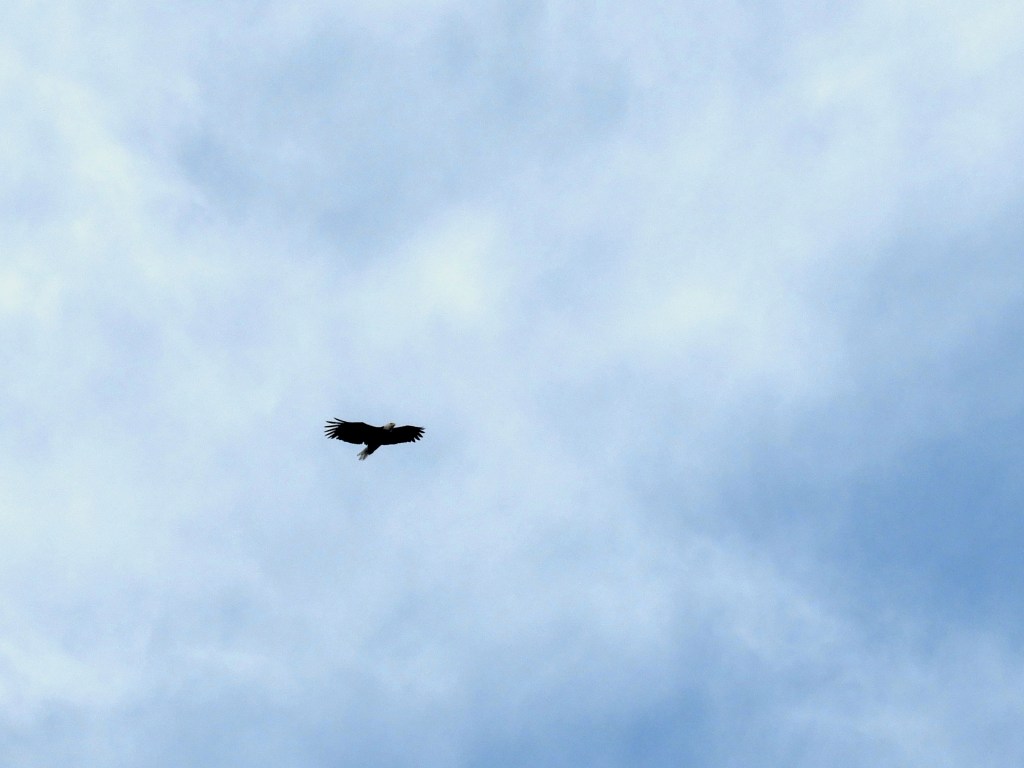
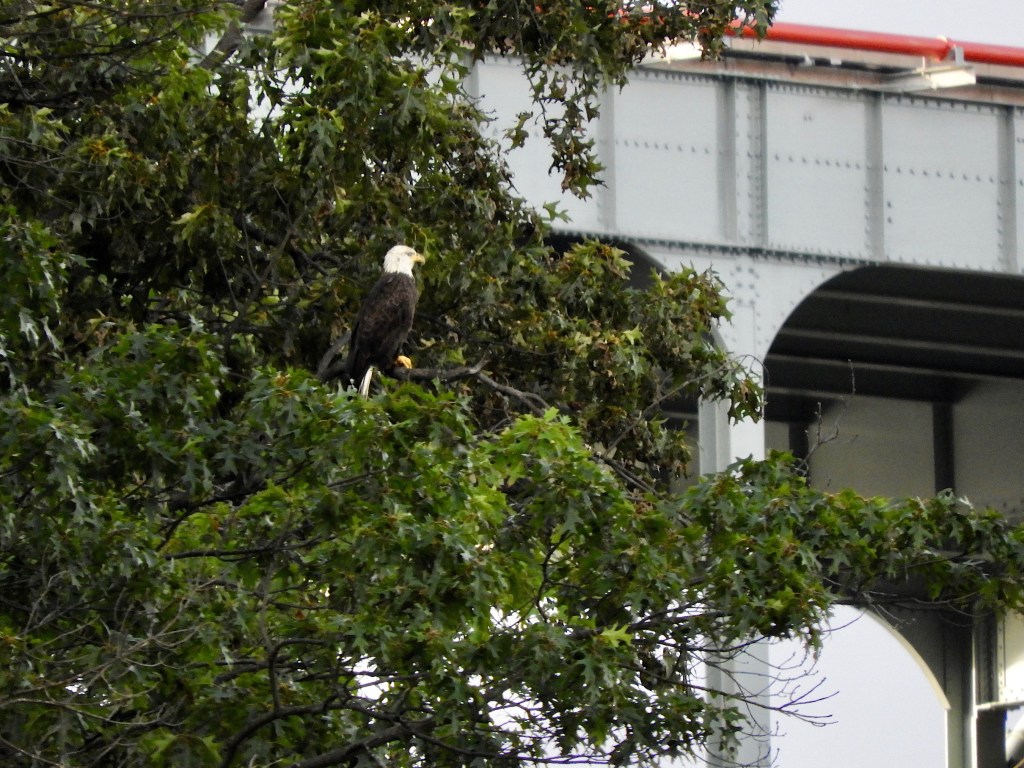
Yesterday, I spotted a Bald Eagle flying high overhead, its white head unmistakable. I have seen plenty of Ospreys for the past few months, but the high-flying Bald Eagle has caught my attention. For the previous post, I wrote about one perched on the “Osprey tree.” When I looked carefully at the pictures I took yesterday, cropping and zooming in, I saw that the eagle had caught a fish.
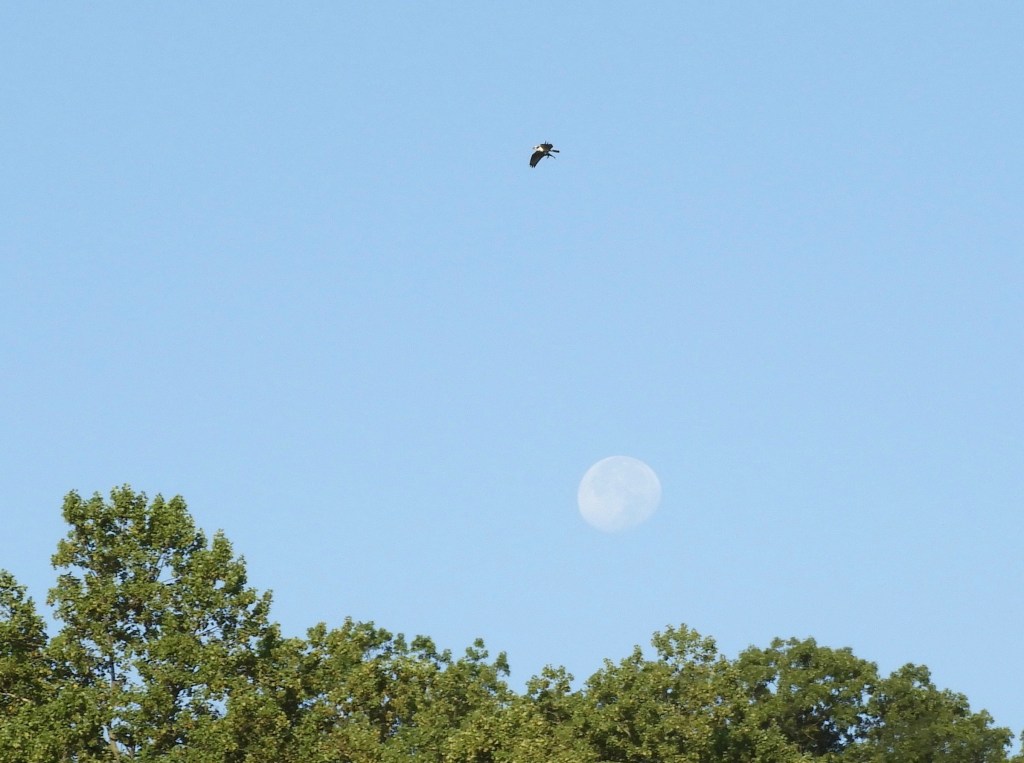
Efforts to improve the ecosystem of the Hudson River and its tidal estuaries have resulted in a healthy supply of fish. The regeneration of the marshes in Inwood has encouraged a better environment for fish. With the fish thriving, the birds thrive, too.
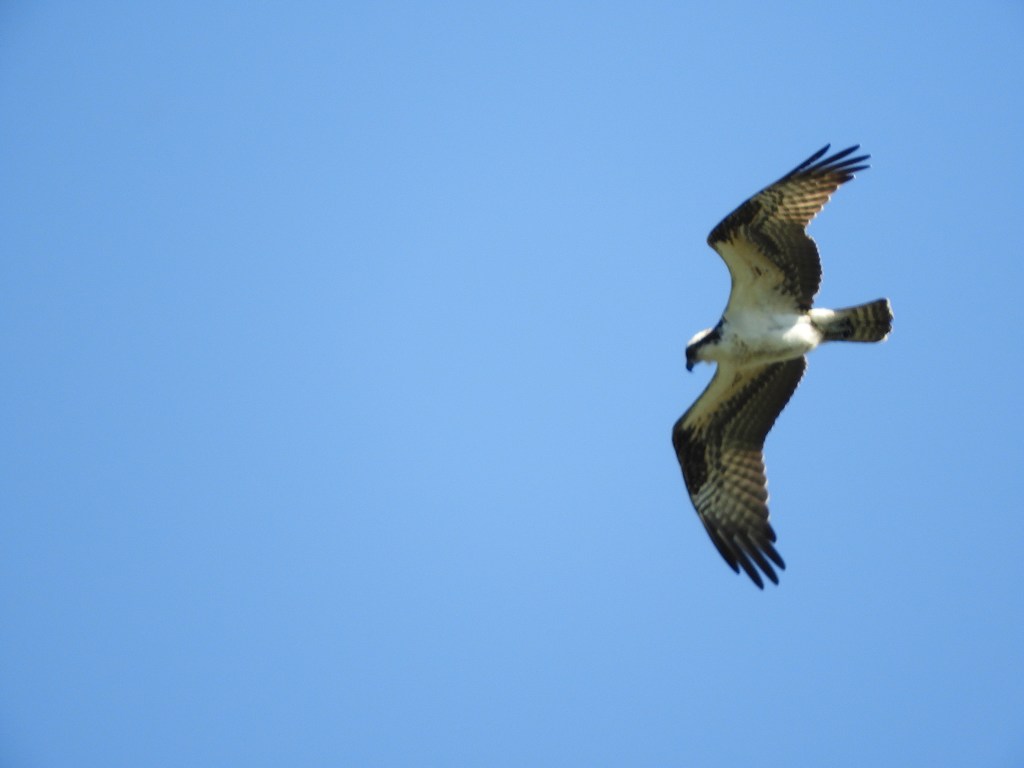
The Ospreys continue to entertain the earth-bound humans with their aerial flights and dives into the water. I love to see how they hover in the air just before plunging in the water below.
The birds of prey must be finding many things of interest in the meeting of the Hudson River with Spuyten Duyvil Creek and the Harlem River. Imagine flying south along the Hudson River and encountering the raging waters of the creek and the steady flow of the Harlem River. On the outermost peninsula of Spuyten Duyvil, many Great Blue Herons rest in the trees. The incoming birds must navigate the manmade structures of the Spuyten Duyvil Bridge, a swing bridge used for Amtrak trains, and the imposing Henry Hudson Bridge, often undergoing noisy maintenance, to reach the marshes.
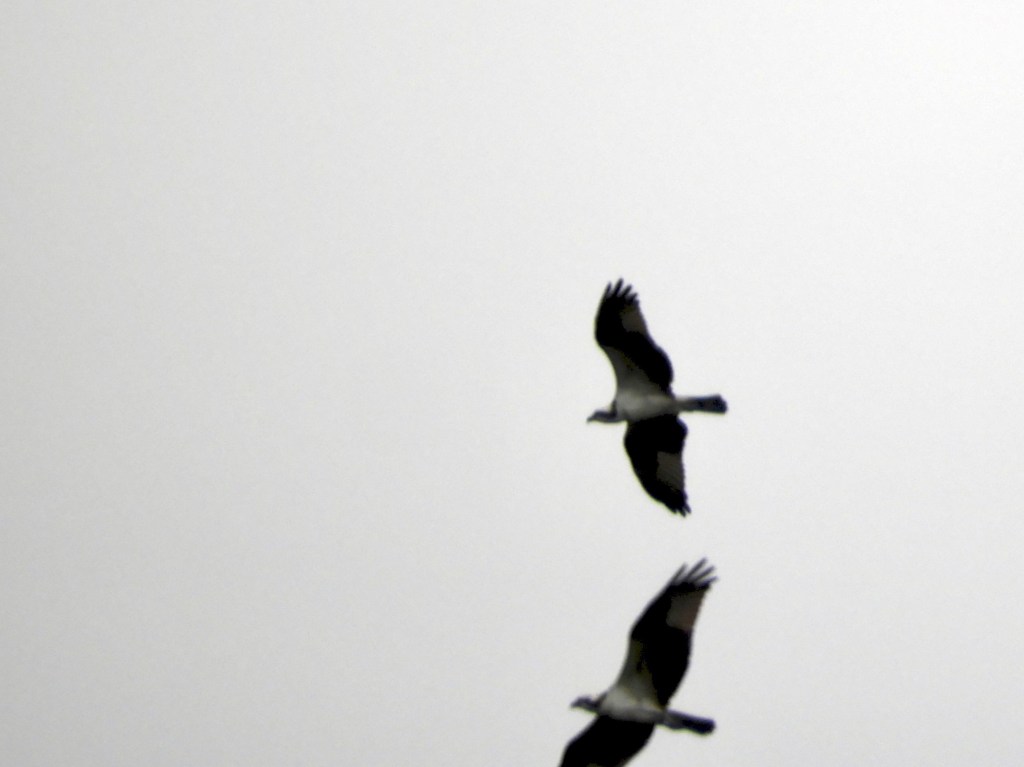
As a birdwatcher in Inwood, the postcard landscape of the Salt Marsh and the bridges provide a sensational backdrop for watching the incoming eagles and hawks. At any point around the marsh, look up at the tree line above Inwood Hill Park or over the bridge for any birds that may enter the airspace over the park.
The sight of Bald Eagles in particular can summon spiritual stirrings. The indigenous peoples revere the eagle, as the bird can fly high enough to meet the Spirit. In western traditions, creatures with wings serve as messengers between heaven and earth.
Before the evolution of the BirdCast technology and the ability to map migratory birds through Doppler radar, radar technicians could not understand the swarms of dots they were seeing on radar. They characterized these unknown dots as “angels.”
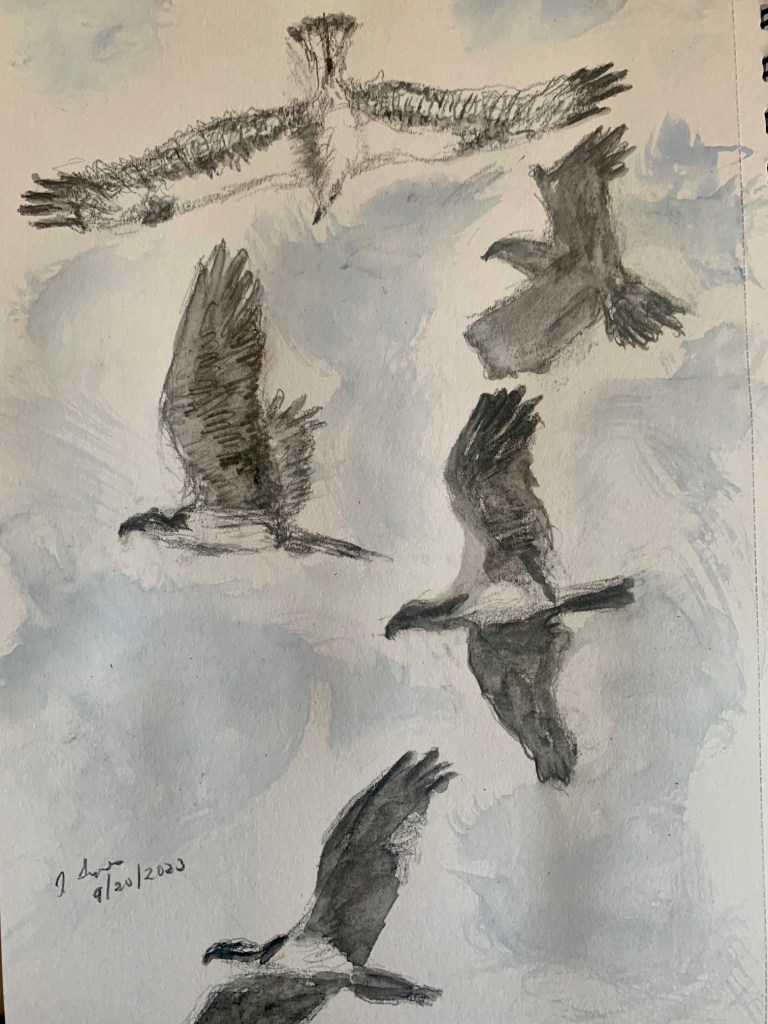
When I looked at the Bald Eagle pictures from yesterday, I enlarged them once again. If I’m not mistaken, I saw at least five more birds flying at any even higher altitude. I won’t include the enlargement here, but somewhere between science and faith, I believe they were Bald Eagles.
As autumn approaches, look to the skies. The veil between heaven and earth is thin, abundant with the flight of angels.
Recent posts
- A Flurry of Yellow-rumped Warblers, Northern Flickers Flickering, and a Great Egret Returns
- The Kinglets of the Forest, with More Stories and Tech-Related Mishaps in the Age of Digital Birding
- Northern Mockingbird – The Bossiest Singer in the Park
- An Early Spring Preview of the Birds of Inwood
- The Snowiest of Snows, and a Bald Eagle Appears
Sightings
See the September sightings page for more birds seen this month.


 Birds of Inwood
Leave a reply to Mangus Khan Cancel reply