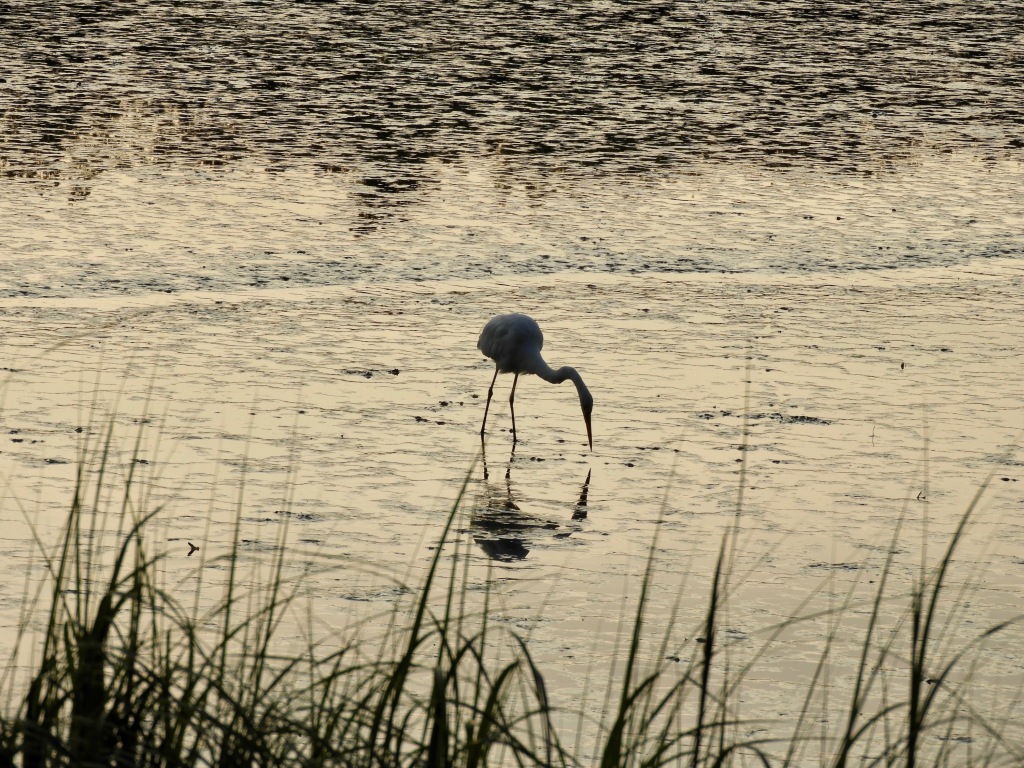
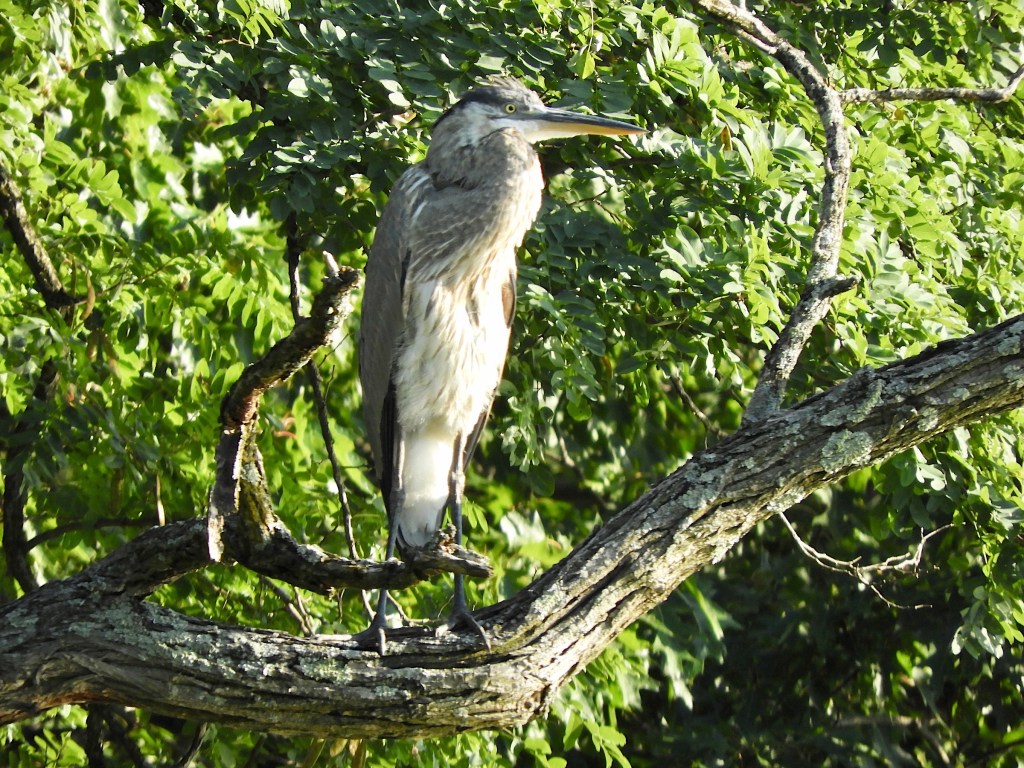
At high tide on the Salt Marsh, one Great Blue Heron tends to perch on a tree above the shoreline while a younger one explores the tunnel between the Salt Marsh and Muscota Marsh. The Great Egret often perches on another branch or on a railing on a dock. They are all waiting for the water levels to drop. Meanwhile, a few Herring Gulls and ducks float in the water, taking frequent flights to resettle in a new place.

At high tide, a Double-crested Cormorant dives and reemerges in the deeper Spuyten Duyvil Creek, sometimes with a fish. Black-crowned Night Herons, a migratory Snowy Egret, Herring Gulls, Ring-billed Gulls, and many ducks take part in their own rituals while waiting for the tide to go back out.
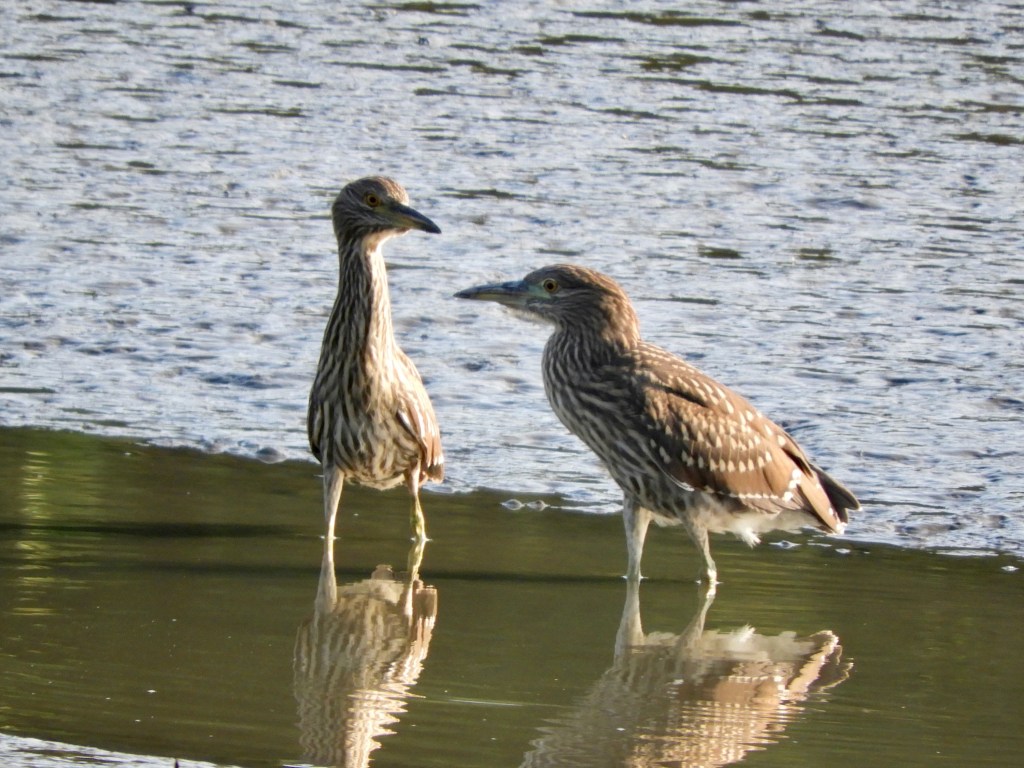
These days of late summer tend to be the busiest at the Salt Marsh in Inwood Hill Park. This summer seems particularly lively with juvenile marsh birds joining the park regulars. Recently, two juvenile Black-crowned Night Herons excitedly explored the marsh. For onlookers, watching the comings and goings at the marsh has been particularly enriching of late, especially during this current break from the heat and smoke that has stifled the summer air.

The egrets and herons are the most active during the hours on either side of low tide. As a tidal estuary, the high and low tides tends to come at intervals, usually around every six hours. The tides come and go at never precisely the same interval, so consulting the tidal charts of Spuyten Duyvil Creek helps with planning a visit to the Salt Marsh. For example, checking martineweather.net for Spuyten Duyvil Creek, low tide occurred today at 5:04 am and will come again at 5:18 pm. High tide arrived around 11:12 am and will come again at 11:29 pm. I arrived at the marsh around 6:15 am this morning and saw both the Great Egret and the Great Blue Heron in the water. If I were to go again today, I would return anywhere from 3 to 7:30 pm. Sunsets are lovely here, too.

At low tide, the Salt Marsh turns into muddy flats. When the smaller shorebirds arrive, typically in August, look for them near the shoreline at low tide. After the water rises and begins to fill the basin, and after the high tide falls, the big egrets and herons typically follow ribbons of water in order to fish or scavenge for remnants.

The Salt Marsh has been particularly entertaining of late for watching the various species interact or at least exist in harmony. On the kayak launch on the Peninsula, the Great Egret may perch and preen on one side of the dock while the Great Blue Heron does the same on the other side. On a recent day, the Great Egret joined a Black-crowned Night Heron on the launch railing. The visiting Snowy Egret has often wandered around underneath this same dock, seemingly hiding from the larger Great Egret.
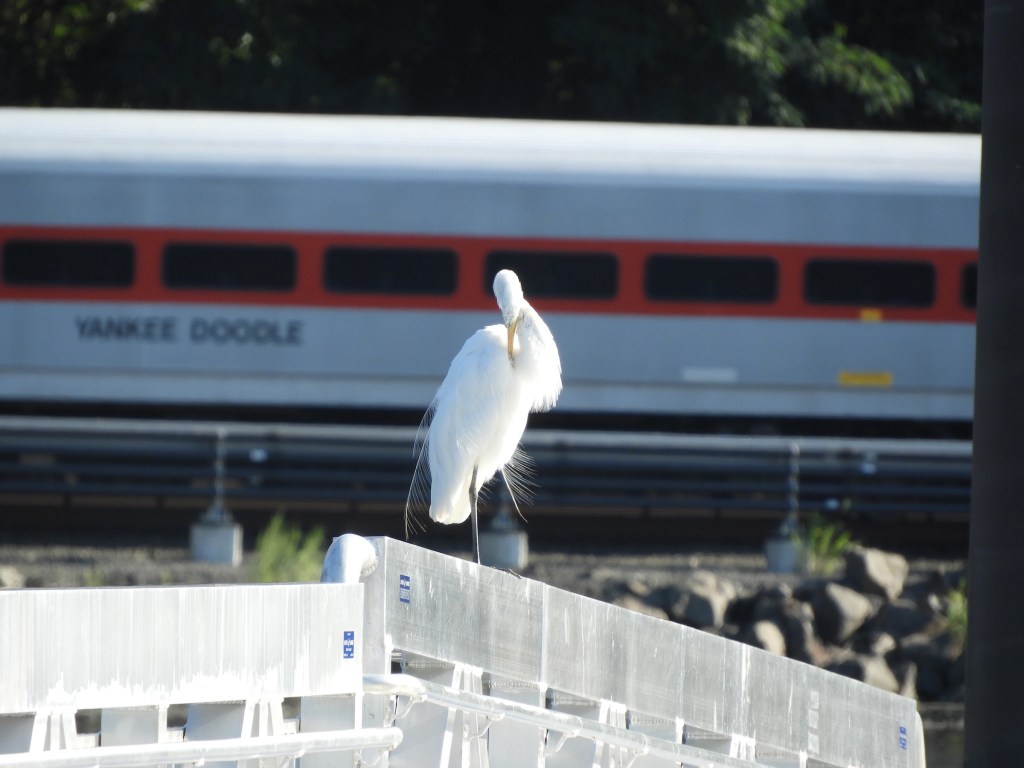
The regular background rumblings and whistles of the MTA Metro-North’s Hudson trains accentuate the rhythms of the tidal marsh. The Hudson line hugs the shoreline, traveling north to Poughkeepsie through the Hudson Highlands and south to Grand Central. The local train stops for passengers at Spuyten Duyvil and Marble Hill. Travelers on the Hudson line frequently choose a window seat, and for good reason.

Another good way to view the ebb and flow of Inwood’s Salt Marsh would be by boat. Still, the best way to view the egrets and herons would be to stand or sit still at the shoreline for a long time, or for as long as it takes to watch the waters ebb and flow.
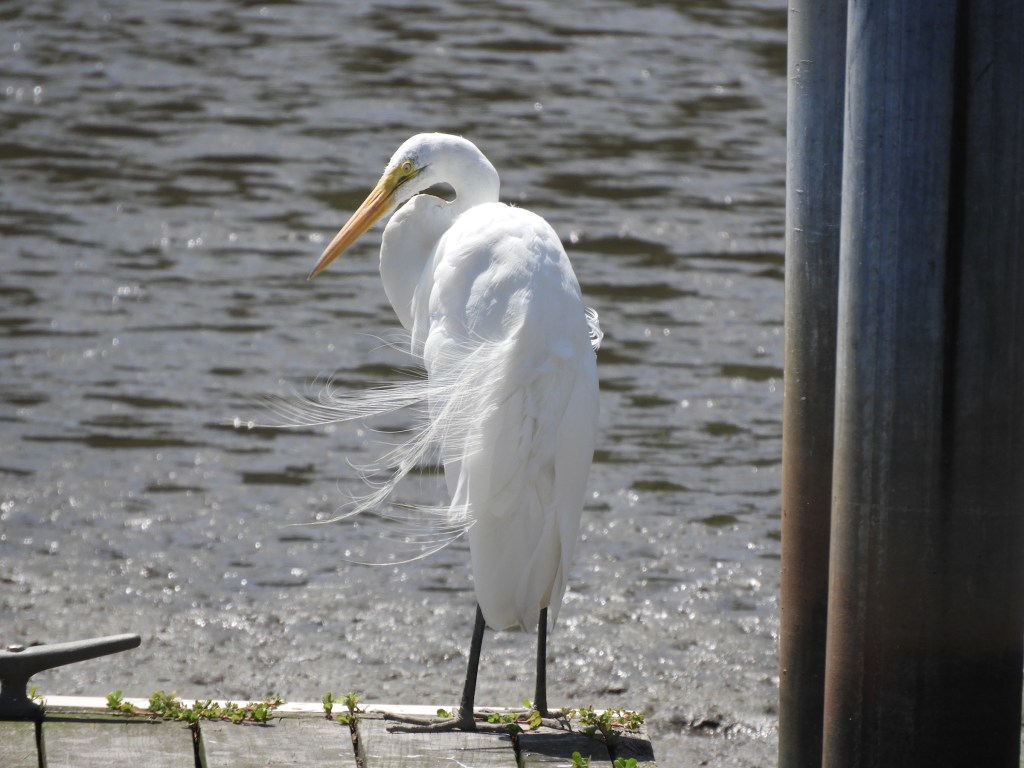
Cover image: The Great Egret. August 3, 2023. 6:52 am, a little less than two hours after low tide.

Note: Please see the Sightings pages for more daily pictures. Also, subscribers, please visit the website to see all the images that illustrate this post.
Recent Posts
- Herons in Trees: Watching and Waiting at High Tide
 Many of my favorite heron sightings these past few weeks have occurred at high tide. While it’s more common to spot herons wading through the waters during times of low tide, abundant fish during the late summer keep the herons nearby. They watch and wait, frequently grooming their feathers. Look for them in trees or… Read more: Herons in Trees: Watching and Waiting at High Tide
 - A Green Heron Joins the Other Dinosaurs, and the Pursuit of the Big Picture
 A lively Green Heron has been drawing attention this summer at the Salt Marsh in Inwood Hill Park. While not uncommon for late summer, this member of the heron family stands out among the Great Egrets, Great Blue Herons, and Black-crowned Night Herons. For one, the Green Heron is of slighter skeletal build compared to… Read more: A Green Heron Joins the Other Dinosaurs, and the Pursuit of the Big Picture
 - Sporting Colors: The 2026 Baltimore Orioles Season in Inwood Hill Park
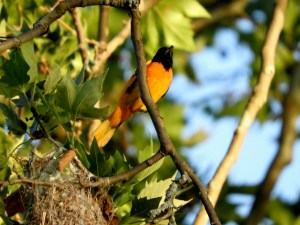 Several Baltimore Orioles made their way back to the high trees of Inwood Hill Park this year. They’ve been building and attending nests at the edges of the park. The female builds the nest over the course of the week, while the male goes out on foraging errands. The orioles usually stake out the same… Read more: Sporting Colors: The 2026 Baltimore Orioles Season in Inwood Hill Park
 - Field Notes from the 2026 Cedar Waxwing Gathering in Isham Park
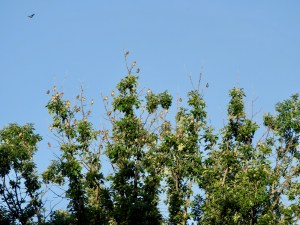 Dozens of flocks of colorful Cedar Waxwings have arrived in Isham Park in Northern Manhattan for their annual feasting of the Juneberry trees (Amelanchier is the scientific name, or serviceberry). The festive occasion takes place during late May and early June and lasts as long as the bright red berries are consumed. While Cedar Waxwings… Read more: Field Notes from the 2026 Cedar Waxwing Gathering in Isham Park
 - Birds in the Garden of Eden: A Field Trip to Untermyer Park and Gardens in Yonkers, New York
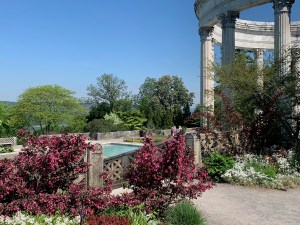 At Untermyer Park and Gardens in Yonkers, NY, on May 18, I didn’t see many birds out of the ordinary. I was so taken in by the dramatic vistas of the park and garden that I may have overlooked them. Tens of thousands of birds migrate north of New York City each spring and… Read more: Birds in the Garden of Eden: A Field Trip to Untermyer Park and Gardens in Yonkers, New York


Comments welcome!