On the evening of July 14, I walked over to the Salt Marsh in Inwood Hill Park to follow up on reports of a Black-crowned Night Heron there. I did get to see it, but first I was completely captivated by the stillness of another heron.

The weather hasn’t been good for frequent walks of late. It’s been too hot, too muggy, too stormy, or too smoky from the wildfires, and frequently it’s been a combination of these elements. Mostly, the dew point has soared into an uncomfortable range, making the air feel like water. On the walk at the Salt Marsh, it felt like the water and land had blended into one.

When I arrived at the Salt Marsh a little before 8 pm, I spotted a Great Blue Heron wading in the water just at the rocky bank. It was perfectly still and didn’t move for the longest time.

I was able to see the Great Blue Heron was a juvenile.
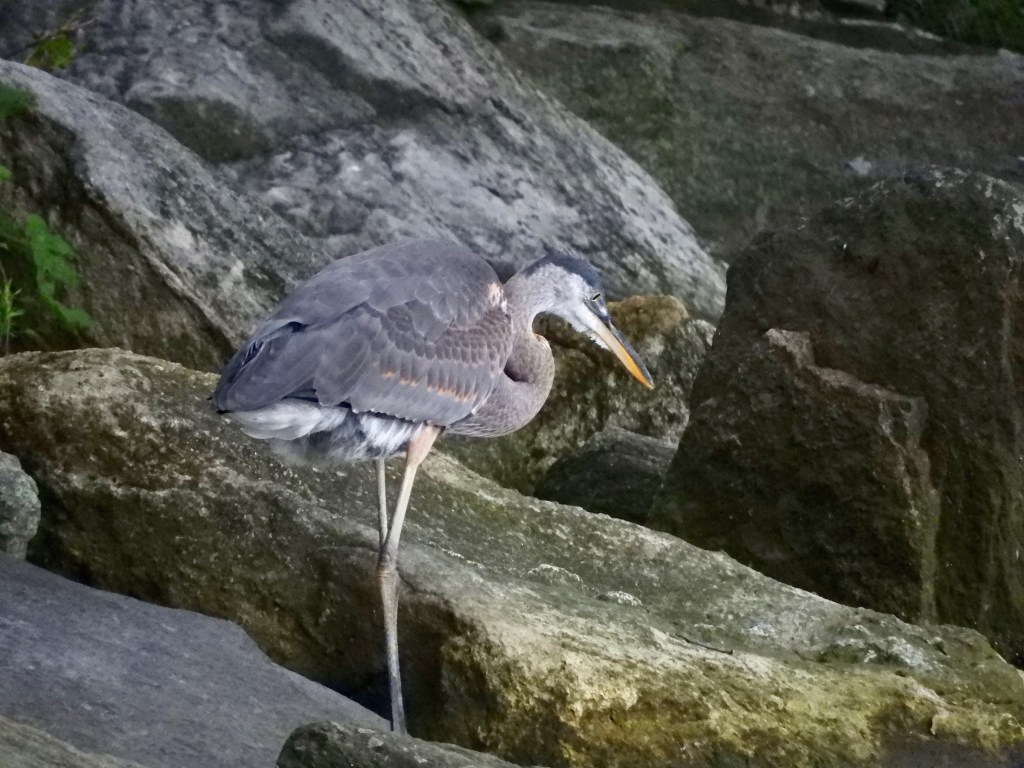
The young Great Blue Heron had dark streaks on its neck, with lots of brown feathers mixed into the grays, and it had no plumes or chest feathers. The top of its bill was dark. (For contrast, see the feature image for May’s sightings showing a mature adult. https://birdsofinwood.com/birds-in-season/sightings/sightings-spring-2023-may/) The young heron looked like it had just gotten out of bed.

Just twenty or so yards away, I spotted the Black-crowned Night Heron hunched along the banks of the marsh.
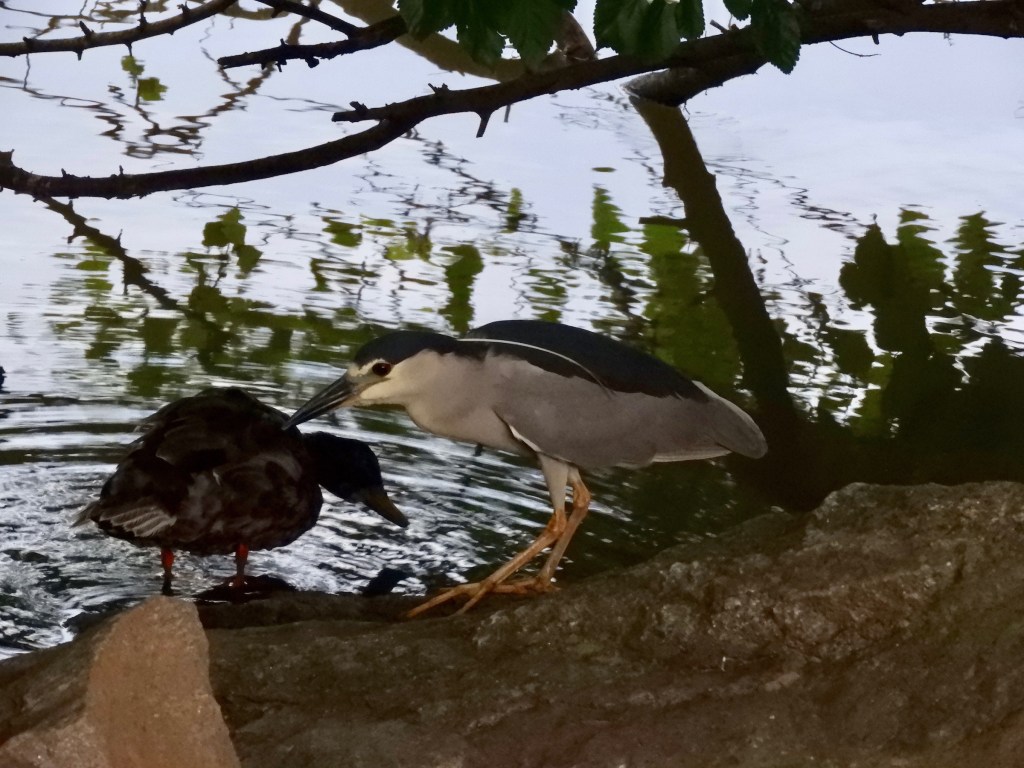
The hunchback posture of this stocky gray and black bird is one of its characteristics.
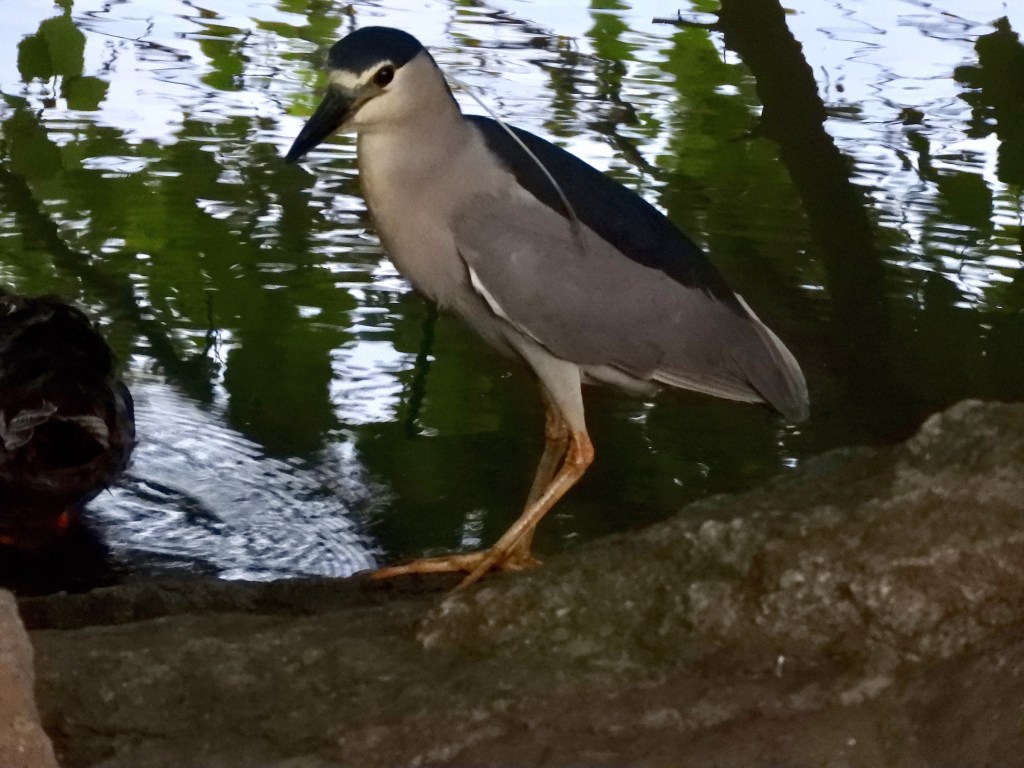
So, too, are the long head plumes.
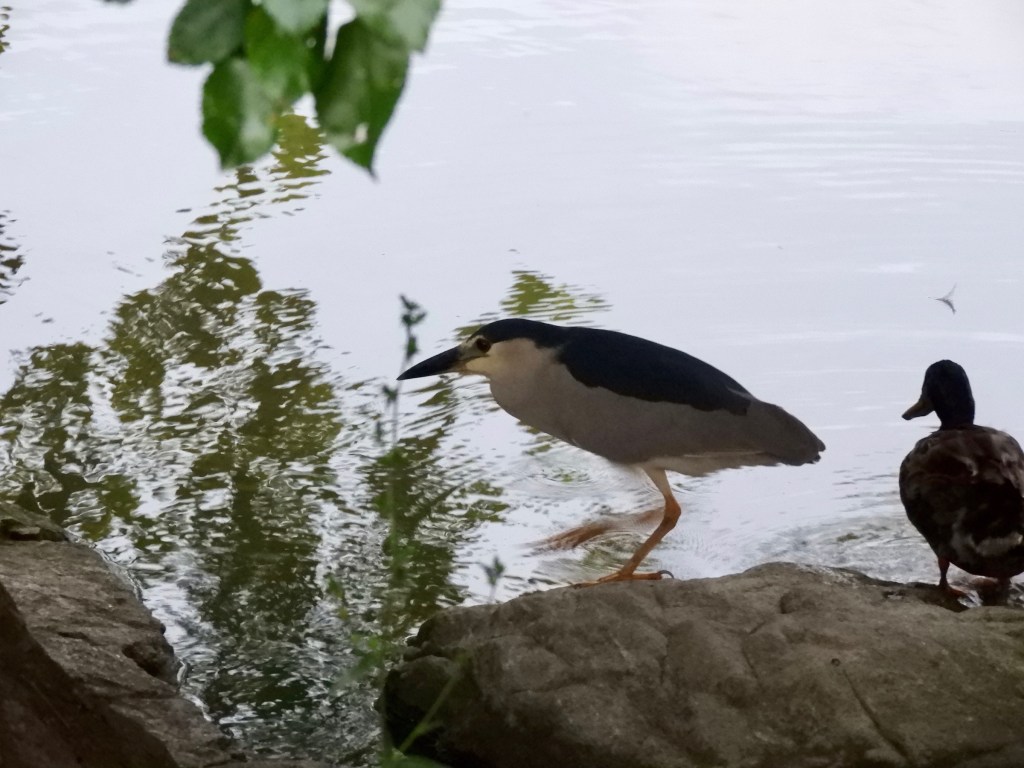
Overall, the heron seemed right at home with the ducks in its company.
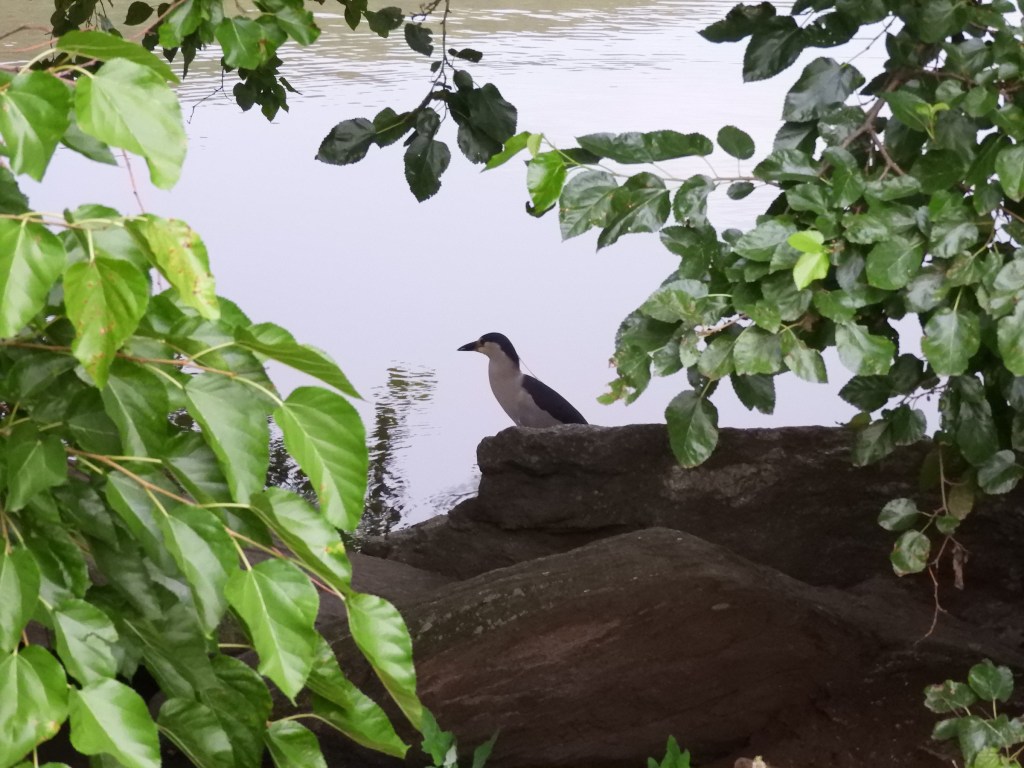
Before leaving the marsh, as the sun was setting, I returned to see the young Great Blue Heron. Once again, it had posed perfectly still, a tranquil sight in the blue hour of night.

Note to subscribers: The email version of the posts will typically only show the cover image. If so, please visit the web version at https://birdsofinwood.com/.
Recent posts
- Herons in Trees: Watching and Waiting at High Tide
 Many of my favorite heron sightings these past few weeks have occurred at high tide. While it’s more common to spot herons wading through the waters during times of low tide, abundant fish during the late summer keep the herons nearby. They watch and wait, frequently grooming their feathers. Look for them in trees or… Read more: Herons in Trees: Watching and Waiting at High Tide
 - A Green Heron Joins the Other Dinosaurs, and the Pursuit of the Big Picture
 A lively Green Heron has been drawing attention this summer at the Salt Marsh in Inwood Hill Park. While not uncommon for late summer, this member of the heron family stands out among the Great Egrets, Great Blue Herons, and Black-crowned Night Herons. For one, the Green Heron is of slighter skeletal build compared to… Read more: A Green Heron Joins the Other Dinosaurs, and the Pursuit of the Big Picture
 - Sporting Colors: The 2026 Baltimore Orioles Season in Inwood Hill Park
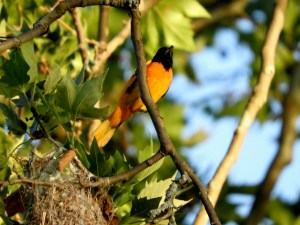 Several Baltimore Orioles made their way back to the high trees of Inwood Hill Park this year. They’ve been building and attending nests at the edges of the park. The female builds the nest over the course of the week, while the male goes out on foraging errands. The orioles usually stake out the same… Read more: Sporting Colors: The 2026 Baltimore Orioles Season in Inwood Hill Park
 - Field Notes from the 2026 Cedar Waxwing Gathering in Isham Park
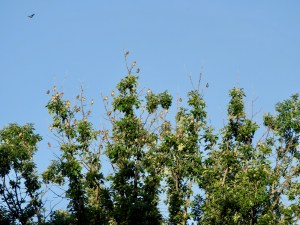 Dozens of flocks of colorful Cedar Waxwings have arrived in Isham Park in Northern Manhattan for their annual feasting of the Juneberry trees (Amelanchier is the scientific name, or serviceberry). The festive occasion takes place during late May and early June and lasts as long as the bright red berries are consumed. While Cedar Waxwings… Read more: Field Notes from the 2026 Cedar Waxwing Gathering in Isham Park
 - Birds in the Garden of Eden: A Field Trip to Untermyer Park and Gardens in Yonkers, New York
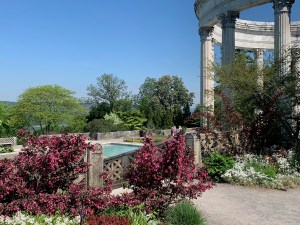 At Untermyer Park and Gardens in Yonkers, NY, on May 18, I didn’t see many birds out of the ordinary. I was so taken in by the dramatic vistas of the park and garden that I may have overlooked them. Tens of thousands of birds migrate north of New York City each spring and… Read more: Birds in the Garden of Eden: A Field Trip to Untermyer Park and Gardens in Yonkers, New York


Comments welcome!