
With the official beginning of summer, it’s time to savor the long slow days. As one suggested activity, I highly recommend finding a place to watch a Great Blue Heron go fishing. Fortunately, anyone near Inwood Hill Park’s Salt Marsh can enjoy the opportunity to watch the slow and steady actions of this tall regal bird.

Over the past two days, I learned to appreciate the patience and slow pace of the Great Blue Heron as it went about its fishing business.

The heron made many instinctive decisions about when and where to fish. The tide comes in, and the tide goes out. On Tuesday, it watched the waters flow in from the vantage point of a rock. At high tide, the rock is submerged, and when it’s low enough, the rock makes a nice pedestal for surveying the landscape. There are a few of these rocks in the Salt Marsh, frequented by geese, ducks, gulls, cormorants, egrets, and other sometimes other types of herons.
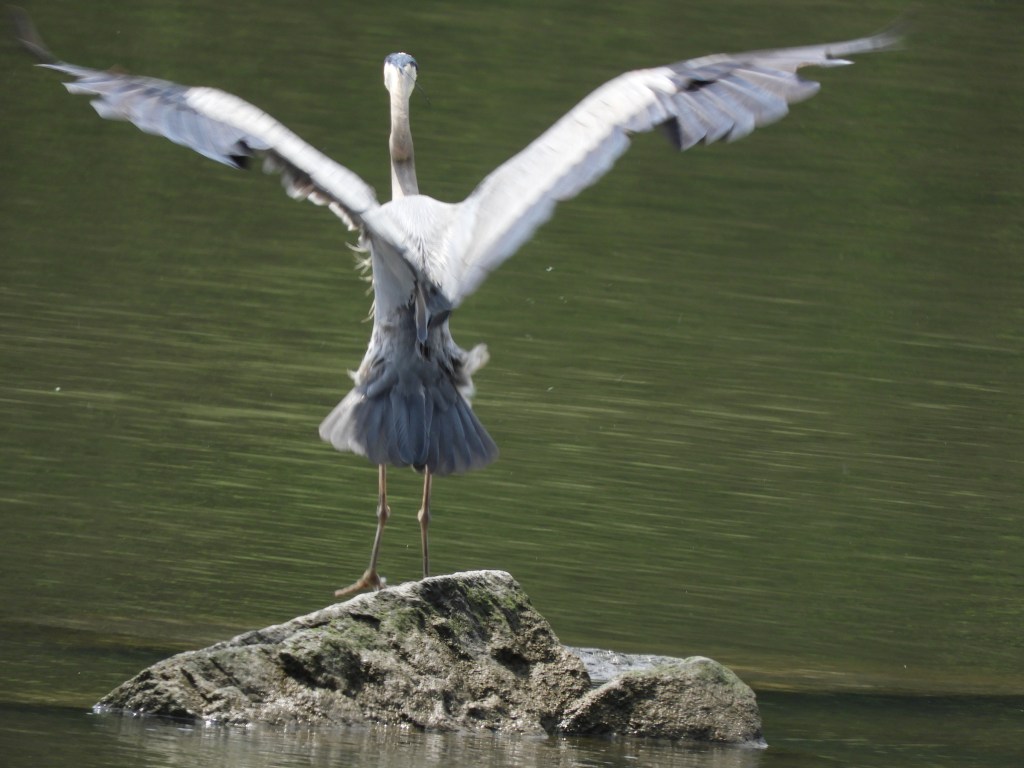
When the Great Blue Heron does make the flapping moves and a short flight, watch for those magnificent toned white and bluish wings.
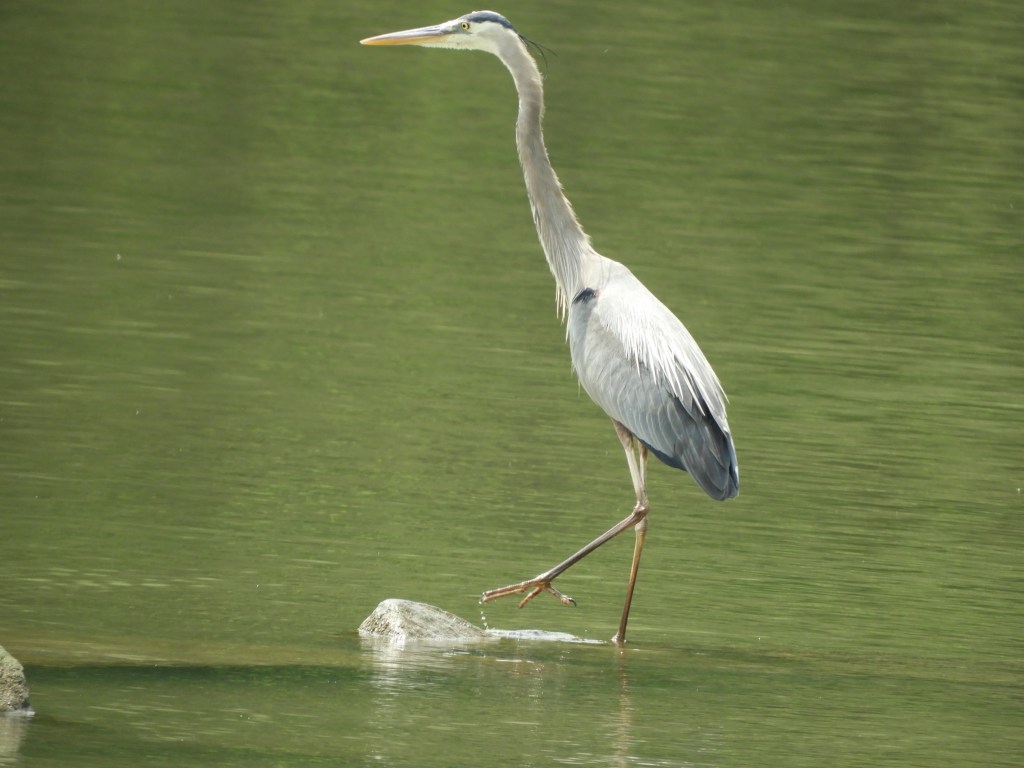
With its height and long legs, the heron can easily wade a rising tide.
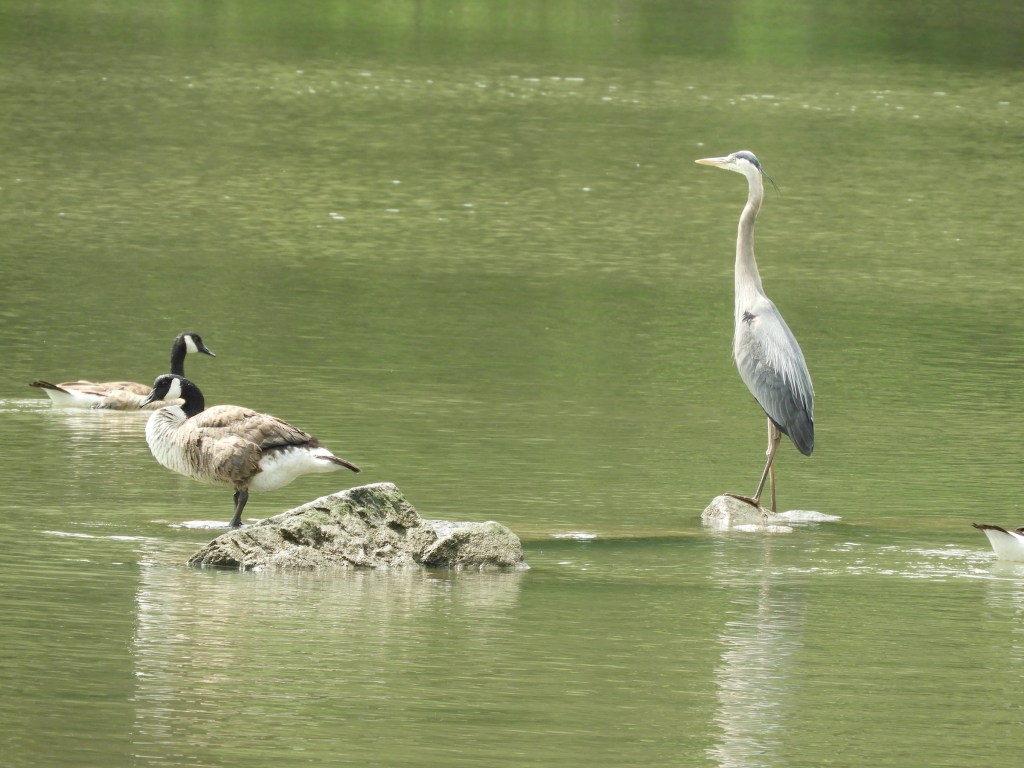
The Great Blue Heron is not the only big bird in the marsh. The Great Egret is often around, and even more of a regular.
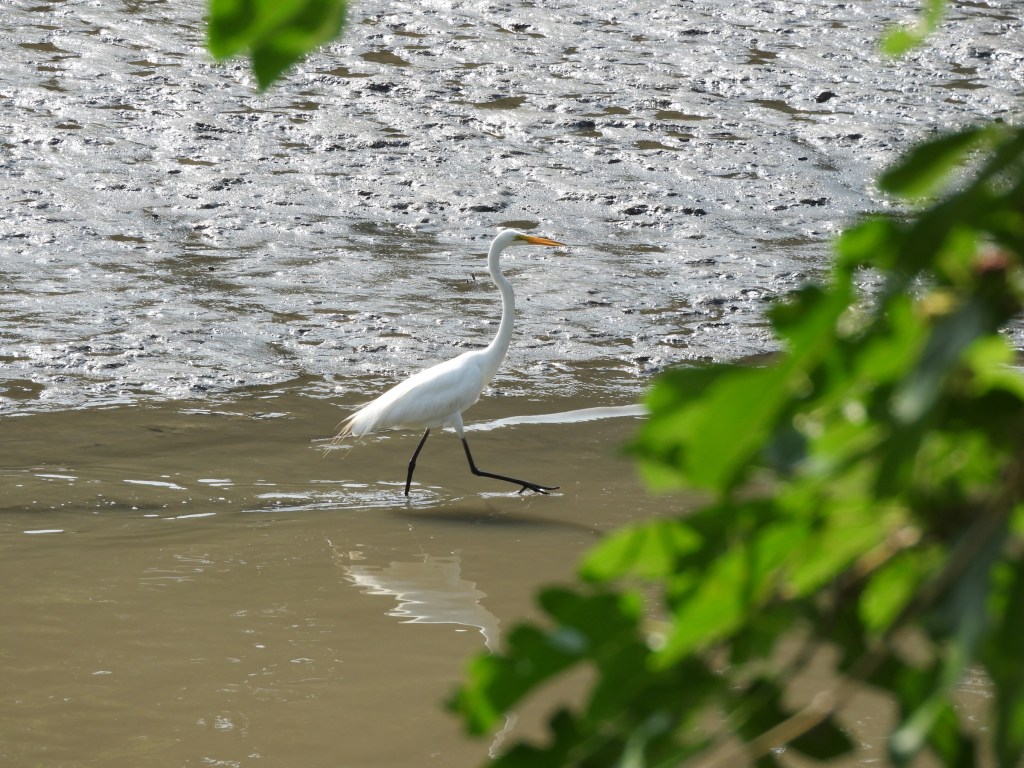
While the Great Egret is tall, the Great Blue Heron is even taller. They both stalk fish and move quickly when ready for the catch.
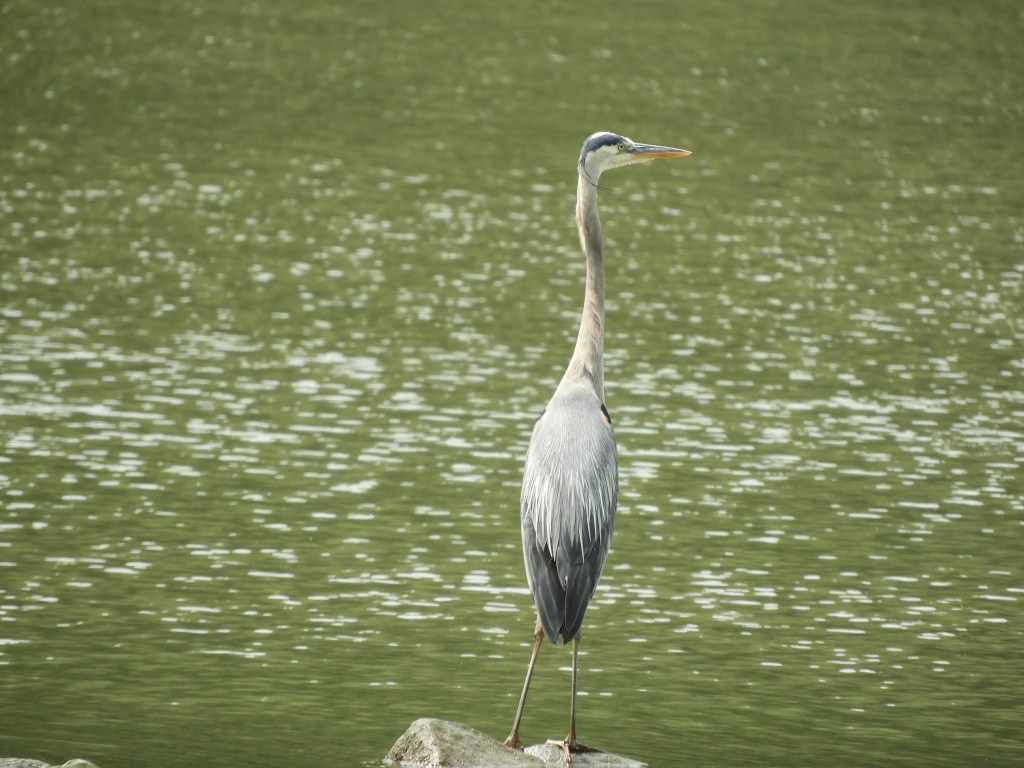
The Great Blue Heron has a long neck, so it can jump at a fish from a distance.
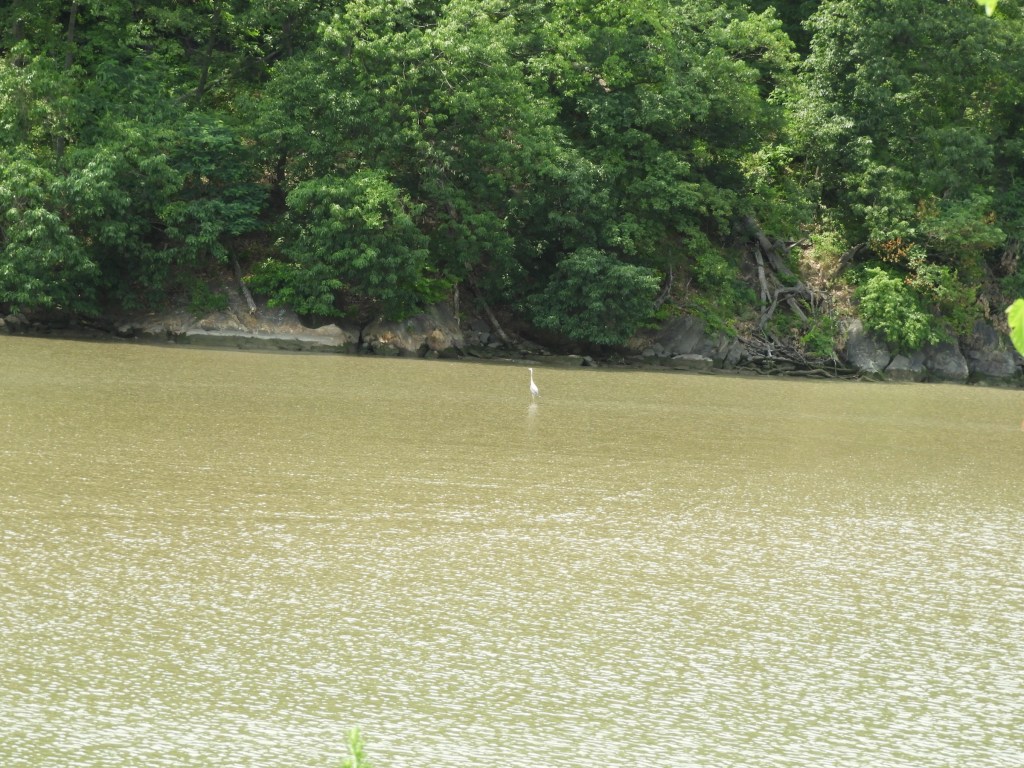
As an extension of the Hudson River, the Salt Marsh functions as a tidal estuary. The heron has an opportunity to look for fish over a wide area.
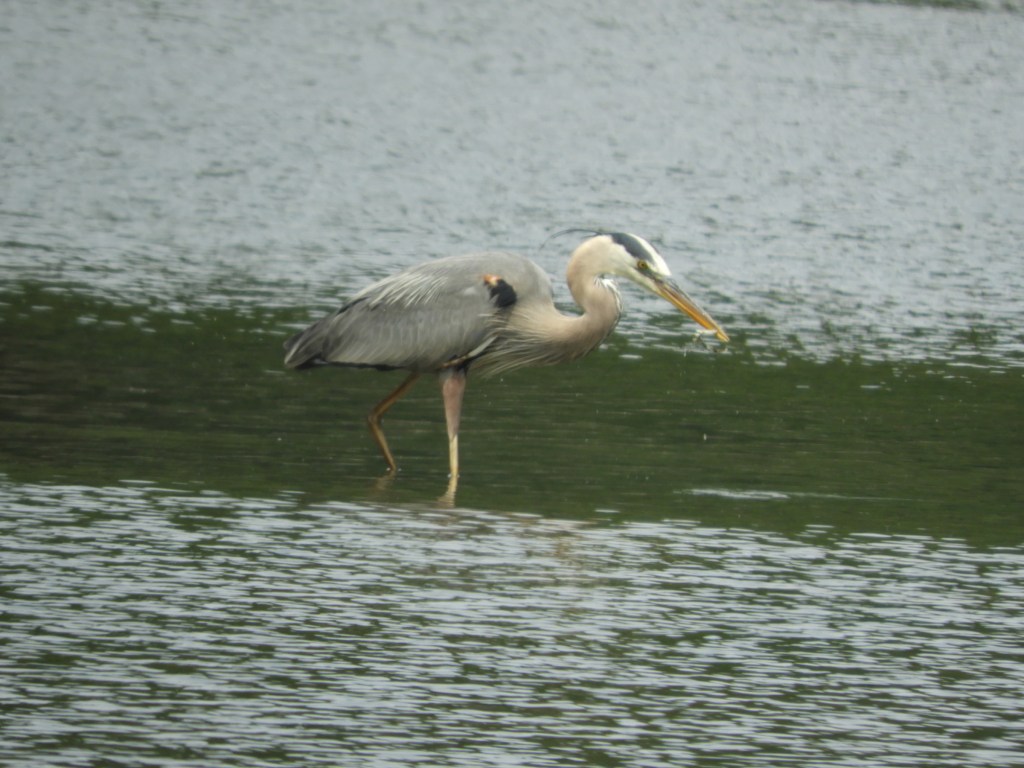
While providing a good lesson in patience, the Great Blue Heron can also teach us about the power of focus and concentration.
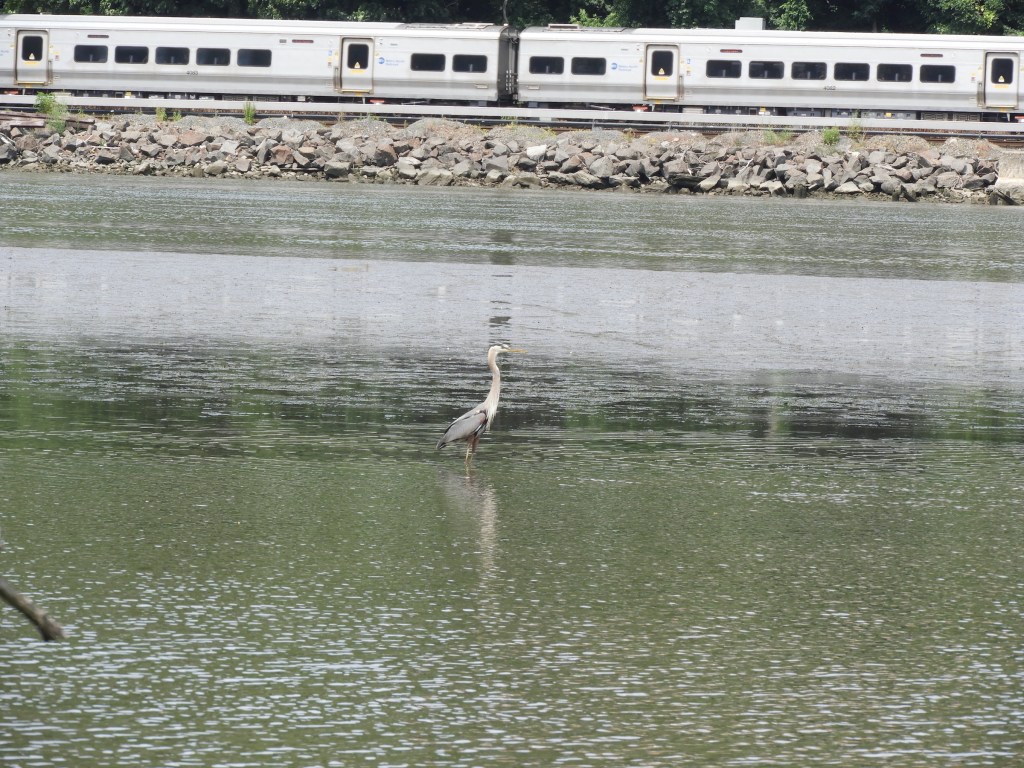
Sometimes, too, great power rests in standing still.
Cover image: A Great Blue Heron at the Salt Marsh in Inwood Hill Park. June 20, 2023.
Recent posts
- A Flurry of Yellow-rumped Warblers, Northern Flickers Flickering, and a Great Egret Returns
 Today, April 22, 2026, is Earth Day, a time to learn more about and advocate for the health of our home planet. The birds depend on us. A great thing about being out in nature in the morning is that a memorable morning with birds can last all day. Whatever I’m doing, whatever happens during… Read more: A Flurry of Yellow-rumped Warblers, Northern Flickers Flickering, and a Great Egret Returns
 - The Kinglets of the Forest, with More Stories and Tech-Related Mishaps in the Age of Digital Birding
 So tiny and fast. They were kinglets, and I saw both kinds this week in the forested areas of Inwood Hill Park. Kinglets are either golden-crowned or ruby-crowned, fast-moving, and constantly in search of insects. They may be distinguished by the color of their crowns and the coloring around the eyes. The Ruby-crowned Kinglet features… Read more: The Kinglets of the Forest, with More Stories and Tech-Related Mishaps in the Age of Digital Birding
 - Northern Mockingbird – The Bossiest Singer in the Park
 Northern Mockingbirds are famous for their expressive and varied songs, often mimicking other birds. All this month, whenever I have had occasion to walk in Inwood Hill Park or Sherman Creek Park, I’ve come across a loud mockingbird singing its heart out.


 Birds of Inwood
Leave a reply to Susan McFeatters Cancel reply