

With the official beginning of summer, it’s time to savor the long slow days. As one suggested activity, I highly recommend finding a place to watch a Great Blue Heron go fishing. Fortunately, anyone near Inwood Hill Park’s Salt Marsh can enjoy the opportunity to watch the slow and steady actions of this tall regal bird.

Over the past two days, I learned to appreciate the patience and slow pace of the Great Blue Heron as it went about its fishing business.

The heron made many instinctive decisions about when and where to fish. The tide comes in, and the tide goes out. On Tuesday, it watched the waters flow in from the vantage point of a rock. At high tide, the rock is submerged, and when it’s low enough, the rock makes a nice pedestal for surveying the landscape. There are a few of these rocks in the Salt Marsh, frequented by geese, ducks, gulls, cormorants, egrets, and other sometimes other types of herons.
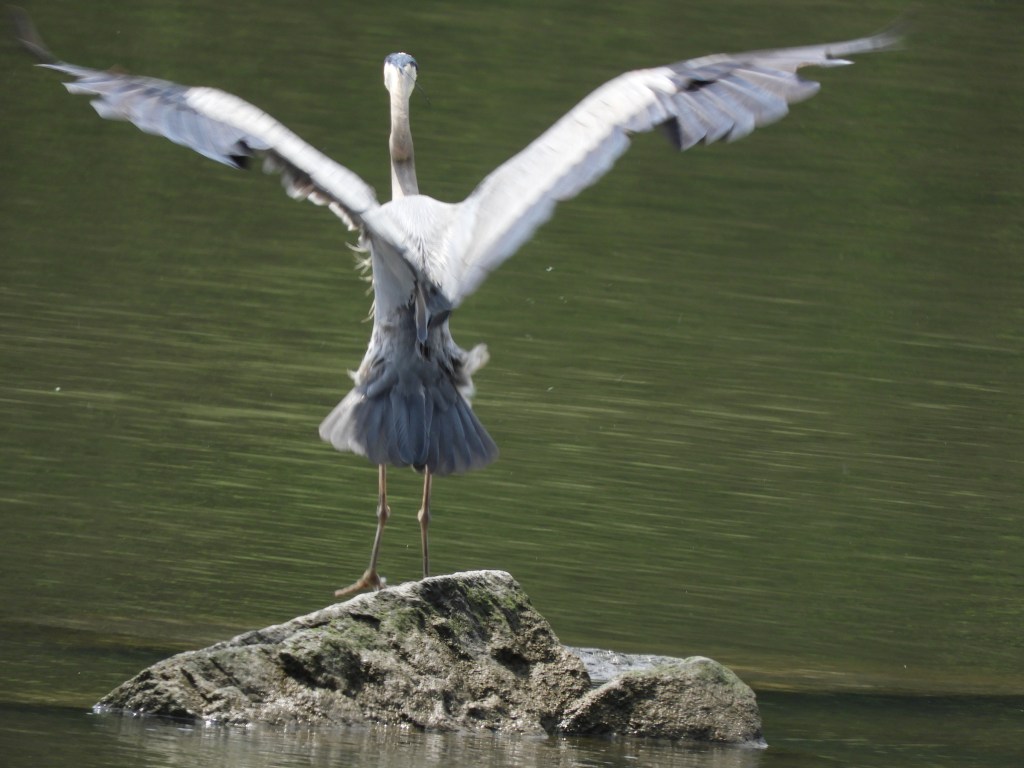
When the Great Blue Heron does make the flapping moves and a short flight, watch for those magnificent toned white and bluish wings.
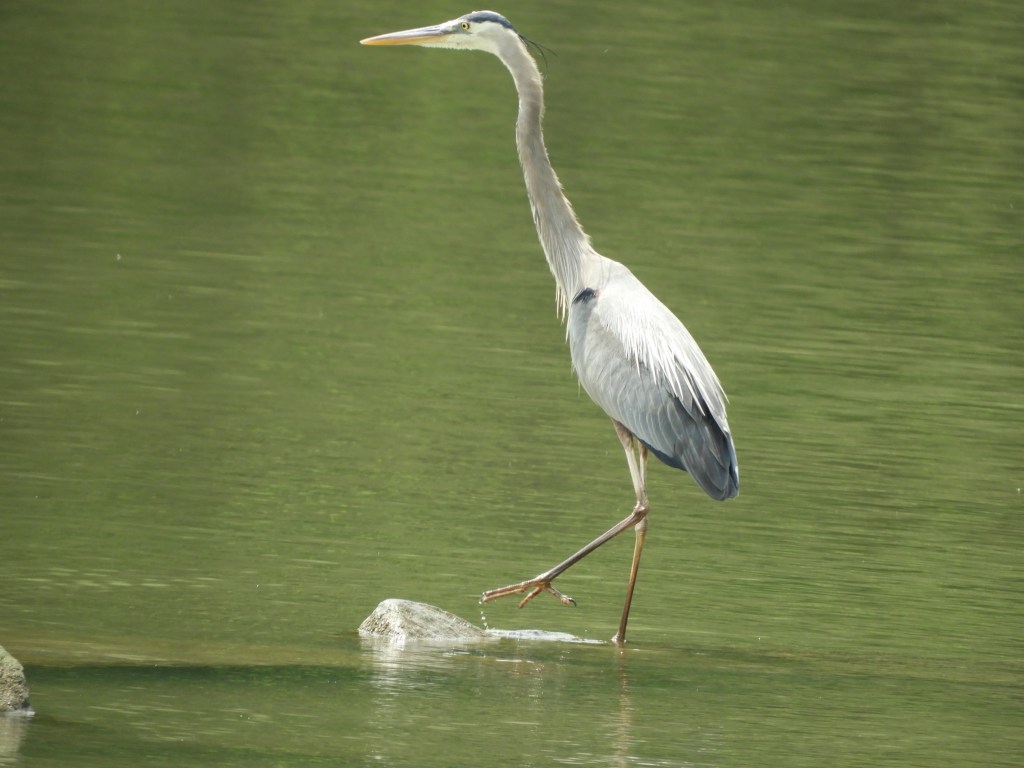
With its height and long legs, the heron can easily wade a rising tide.
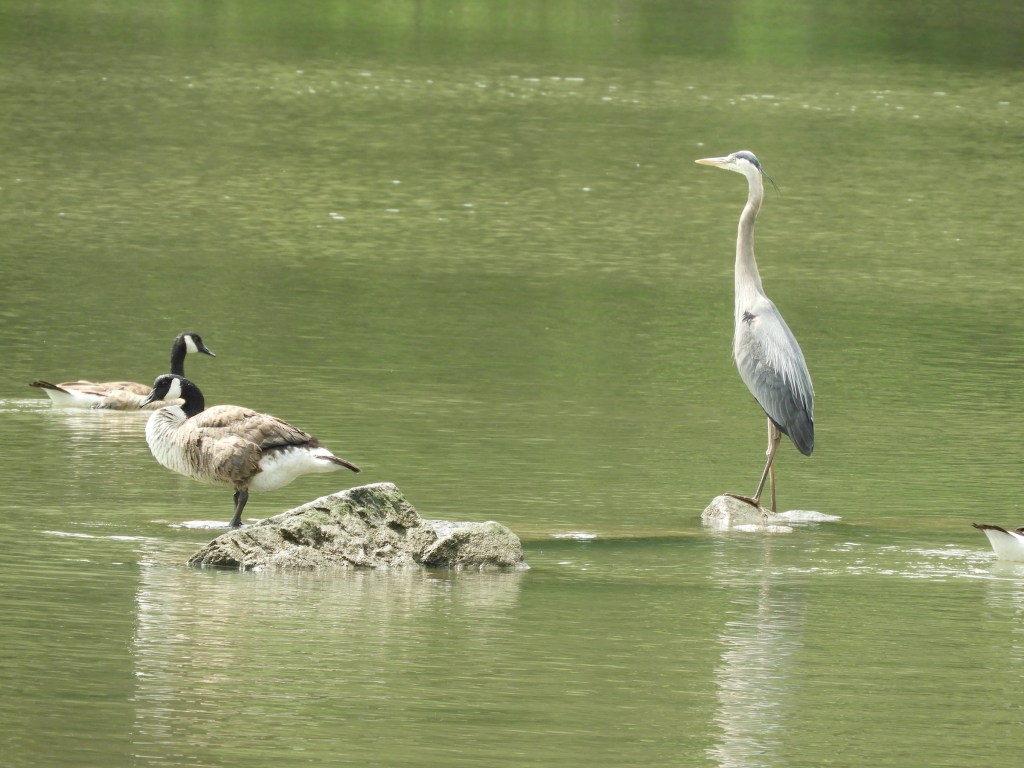
The Great Blue Heron is not the only big bird in the marsh. The Great Egret is often around, and even more of a regular.
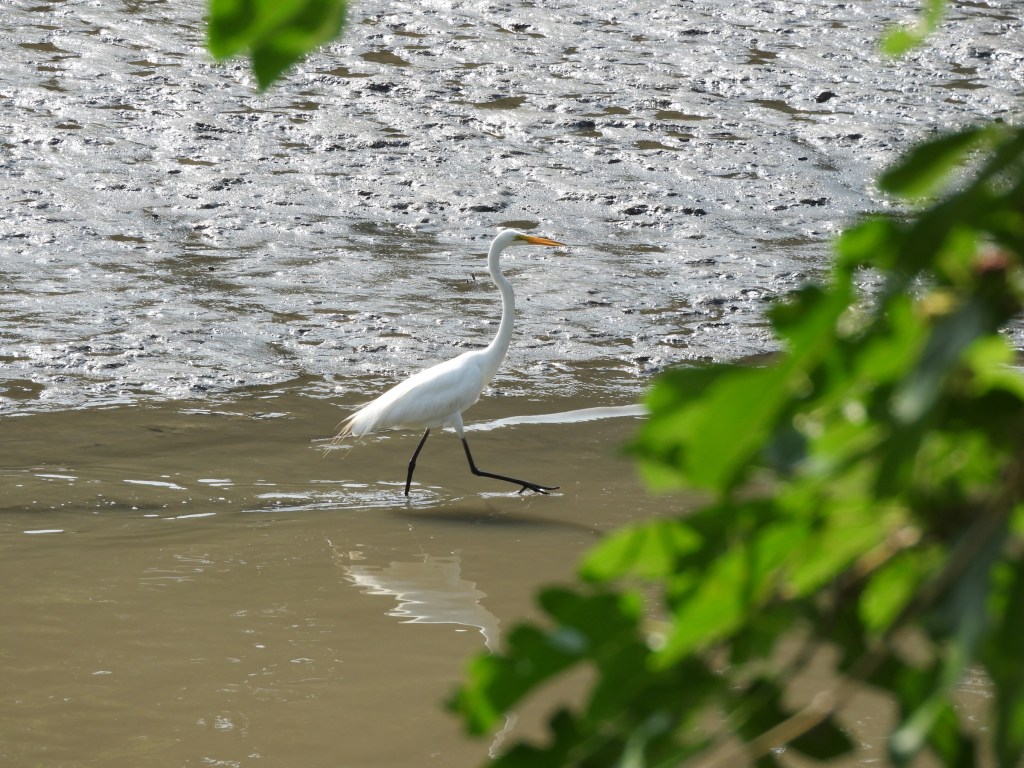
While the Great Egret is tall, the Great Blue Heron is even taller. They both stalk fish and move quickly when ready for the catch.
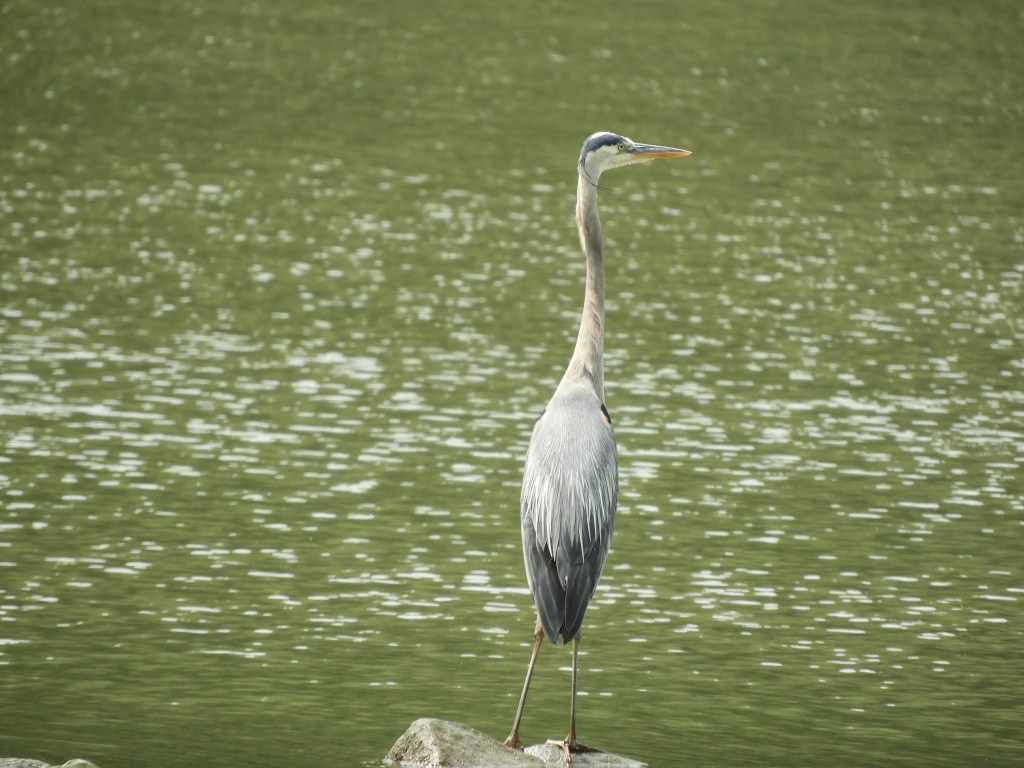
The Great Blue Heron has a long neck, so it can jump at a fish from a distance.
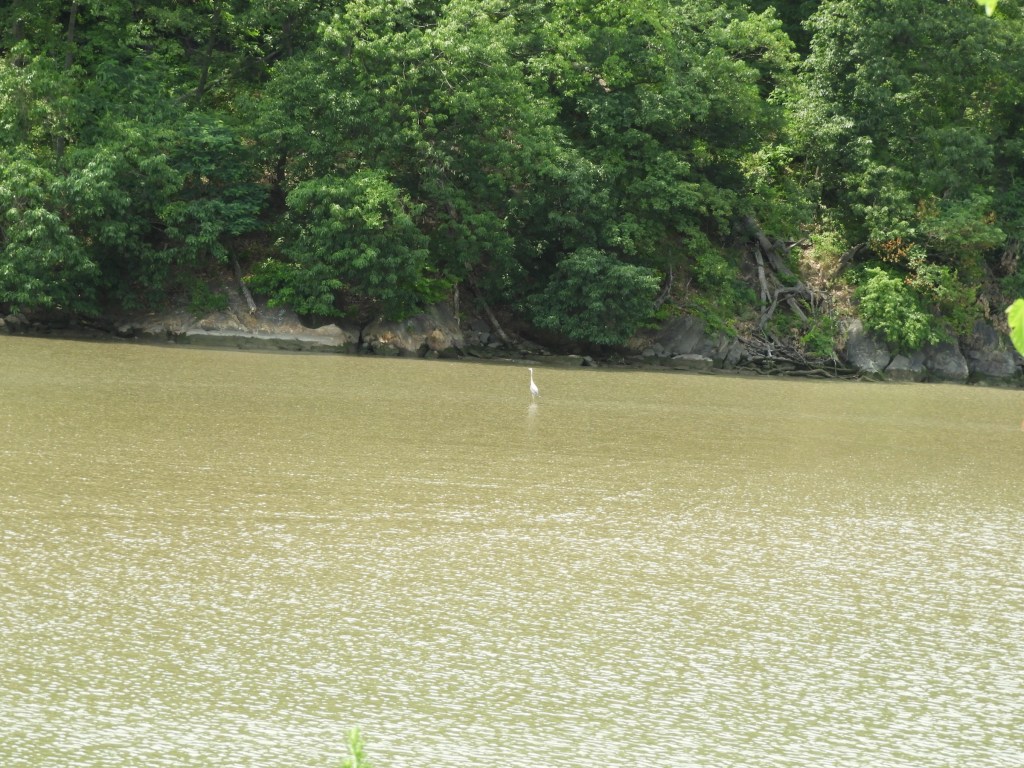
As an extension of the Hudson River, the Salt Marsh functions as a tidal estuary. The heron has an opportunity to look for fish over a wide area.
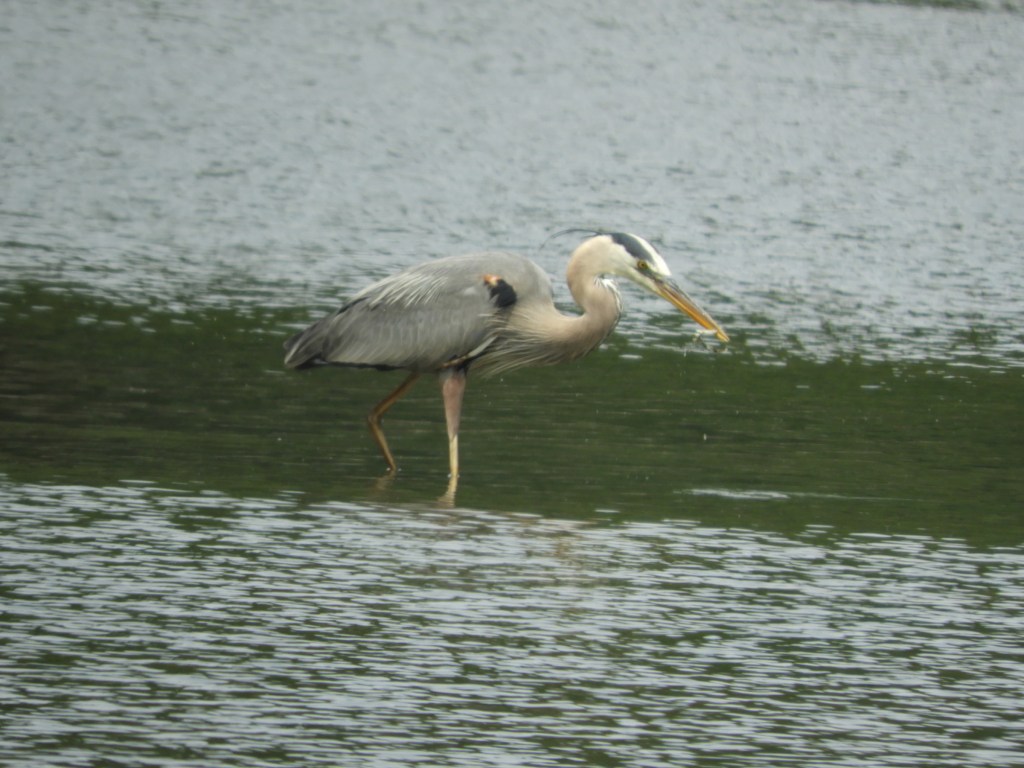
While providing a good lesson in patience, the Great Blue Heron can also teach us about the power of focus and concentration.
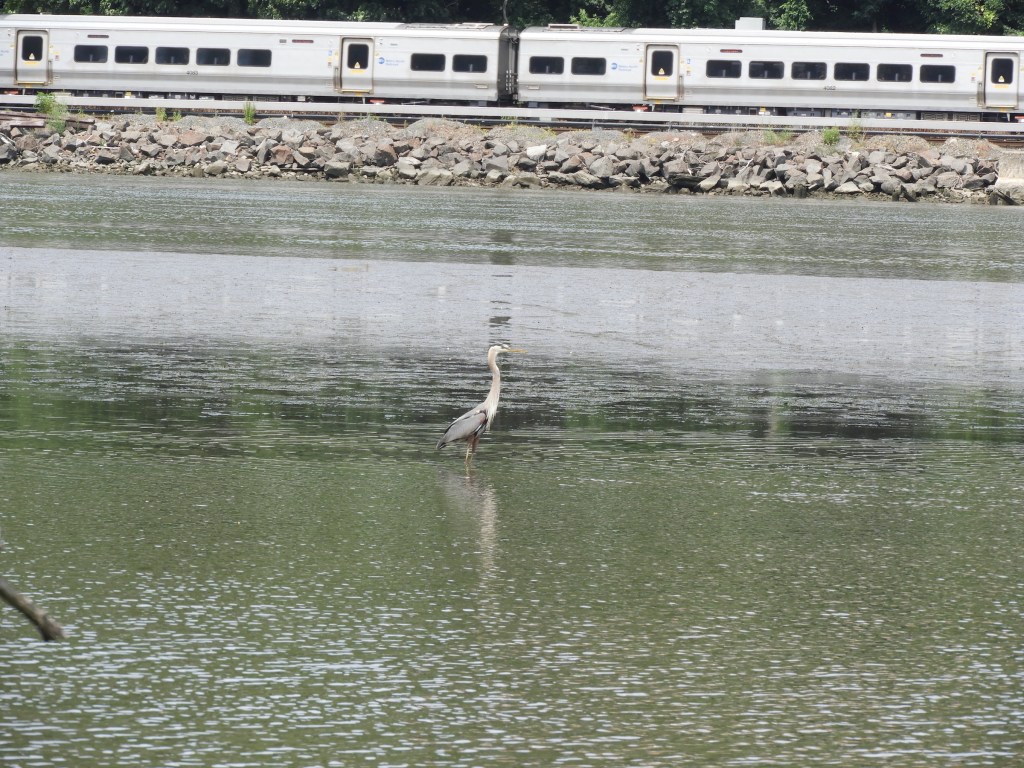
Sometimes, too, great power rests in standing still.
Cover image: A Great Blue Heron at the Salt Marsh in Inwood Hill Park. June 20, 2023.
Recent posts
- Herons in Trees: Watching and Waiting at High Tide
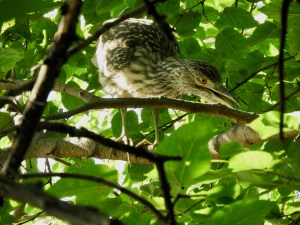 Many of my favorite heron sightings these past few weeks have occurred at high tide. While it’s more common to spot herons wading through the waters during times of low tide, abundant fish during the late summer keep the herons nearby. They watch and wait, frequently grooming their feathers. Look for them in trees or… Read more: Herons in Trees: Watching and Waiting at High Tide
 - A Green Heron Joins the Other Dinosaurs, and the Pursuit of the Big Picture
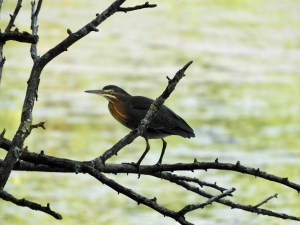 A lively Green Heron has been drawing attention this summer at the Salt Marsh in Inwood Hill Park. While not uncommon for late summer, this member of the heron family stands out among the Great Egrets, Great Blue Herons, and Black-crowned Night Herons. For one, the Green Heron is of slighter skeletal build compared to… Read more: A Green Heron Joins the Other Dinosaurs, and the Pursuit of the Big Picture
 - Sporting Colors: The 2026 Baltimore Orioles Season in Inwood Hill Park
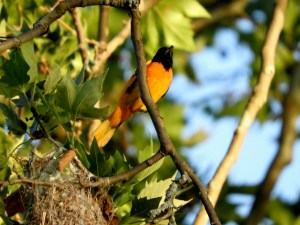 Several Baltimore Orioles made their way back to the high trees of Inwood Hill Park this year. They’ve been building and attending nests at the edges of the park. The female builds the nest over the course of the week, while the male goes out on foraging errands. The orioles usually stake out the same… Read more: Sporting Colors: The 2026 Baltimore Orioles Season in Inwood Hill Park


Comments welcome!