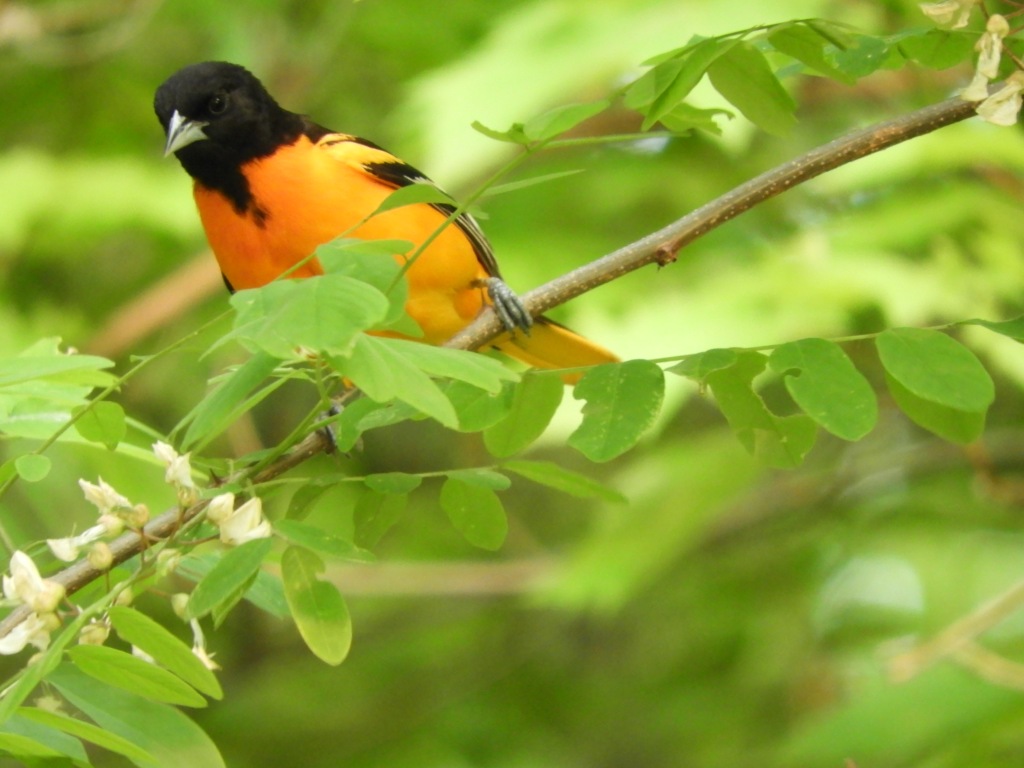
The Baltimore Orioles are in town, and I don’t mean just the ones playing away games at Yankee Stadium this past week. I’m referring to the all-star birds of orange and black, joining the major league Cardinals and Blue Jays above the athletic fields and all around the edges of Inwood Hill Park. Most Baltimore Orioles began arriving in late April and early May and are expected to stay through the better part of the summer, departing in August or soon after Labor Day.
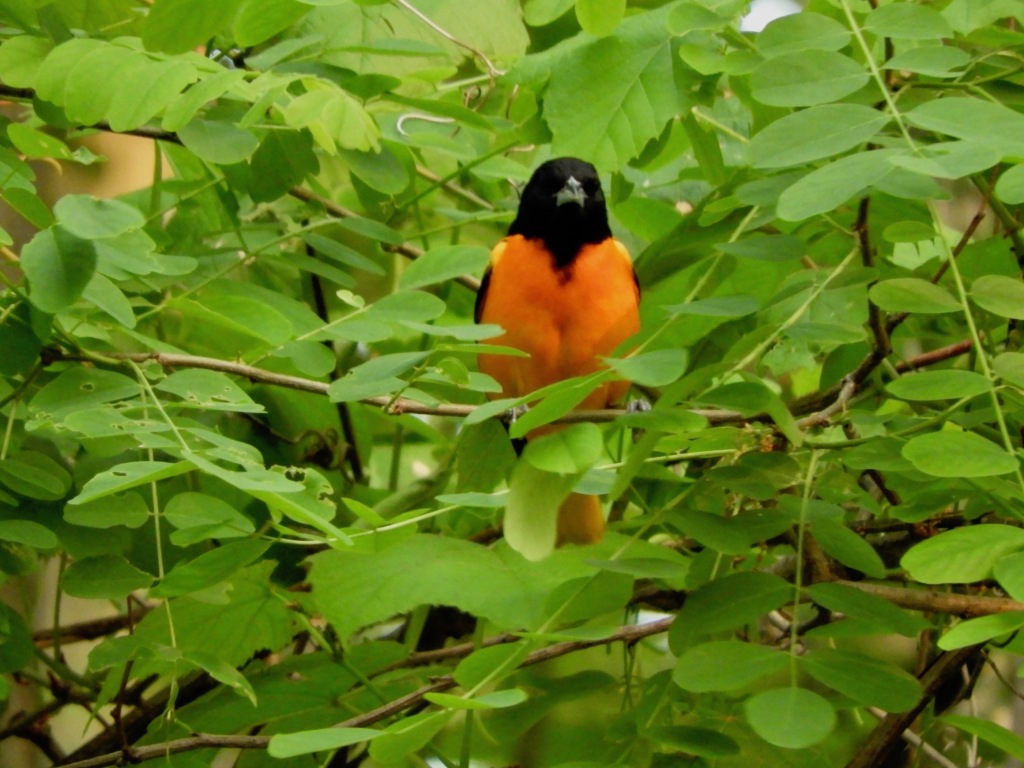
The Baltimore Orioles, and a few Orchard Orioles, too, add a bit of excitement to the summer months. They are excellent athletes, demonstrating agility in foraging for food and building exquisite hanging nests. You may have experience, like me, in setting out slices of oranges for them to eat on their journey. I enjoy listening to their song. Their commanding voices fall in a lower register than many birds, and I consider them the mezzo-sopranos of the forest chorus.
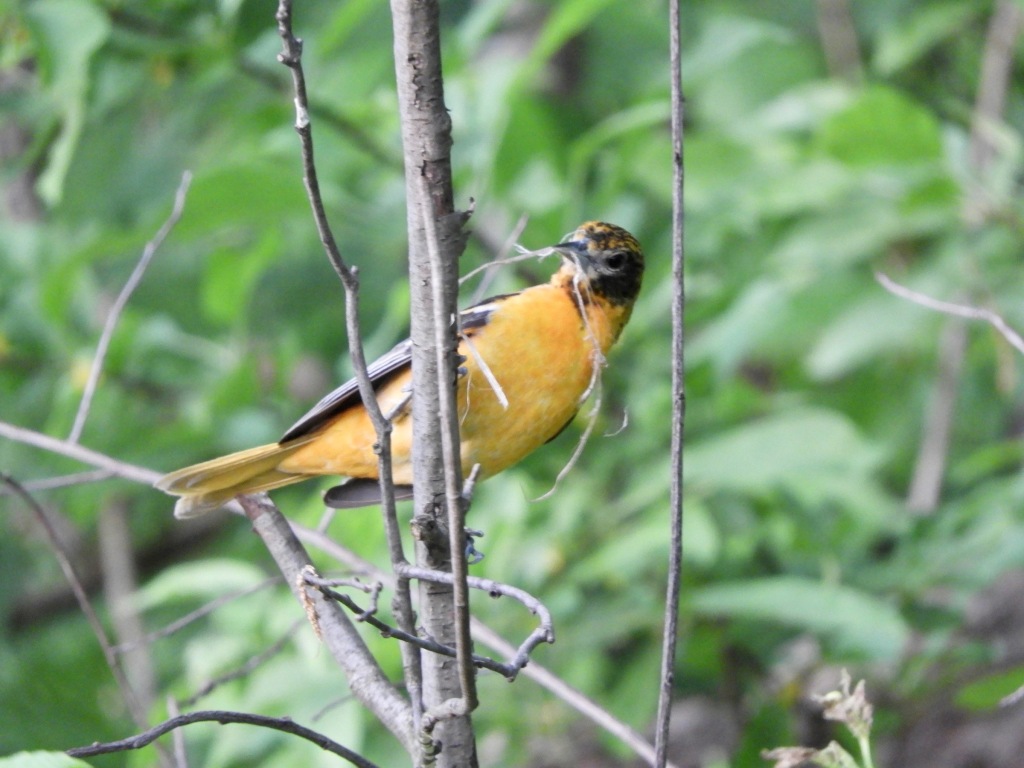
As I’ve spotted a female Baltimore Oriole gathering nesting material, some little ones will be born in the wilds of New York City. I don’t know if that will make them Yankees fans, but the city may leave a lasting impression for future returns. In June the baby orioles will hatch, and in July they will learn how to take care of themselves. In theory, baby orioles born in Northern Manhattan with exceptional eyesight should have good views of Yankee Stadium on the other side of the river.
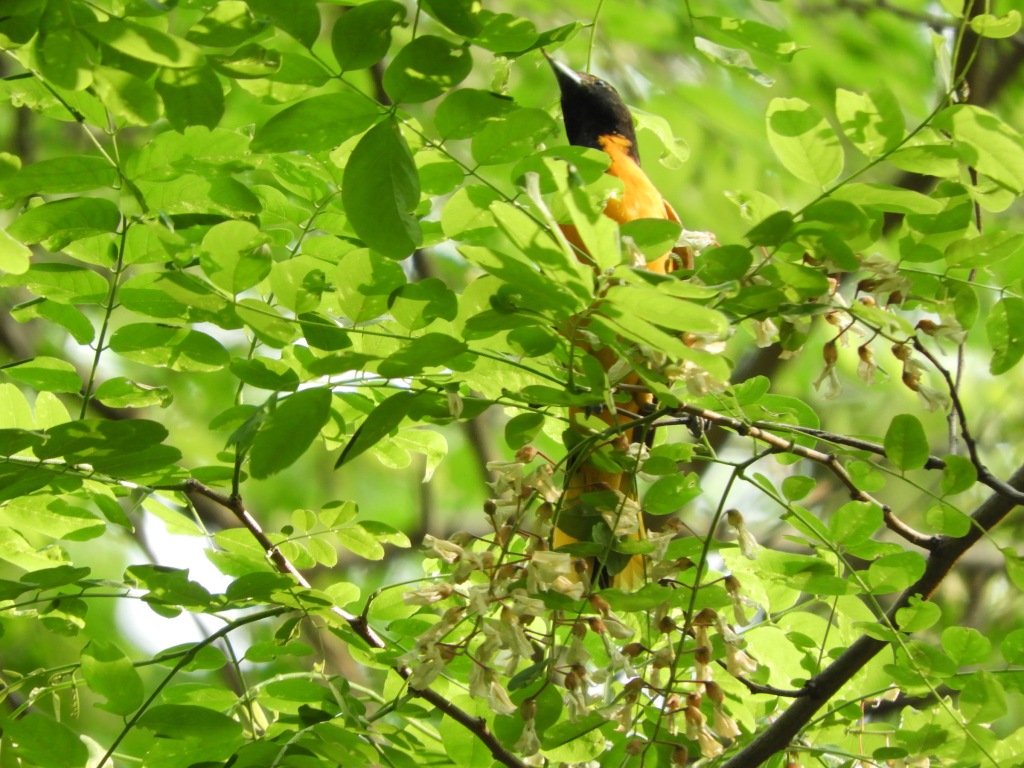
Baltimore Orioles prefer high deciduous trees but not a deep forest environment. They select the high trees at the forest edge. In Inwood Hill Park, look for them in these places. The best view is from the trail that leads up the hill toward the Henry Hudson Bridge near the point where the path begins to curve under the river. Like them, you should still be able to see the Salt Marsh but enjoy a closer view of the treetops. Still, it’s often challenging to see orioles in full view behind the leaves. I frequently see them upside down or sideways as they forage for fruits and insects.
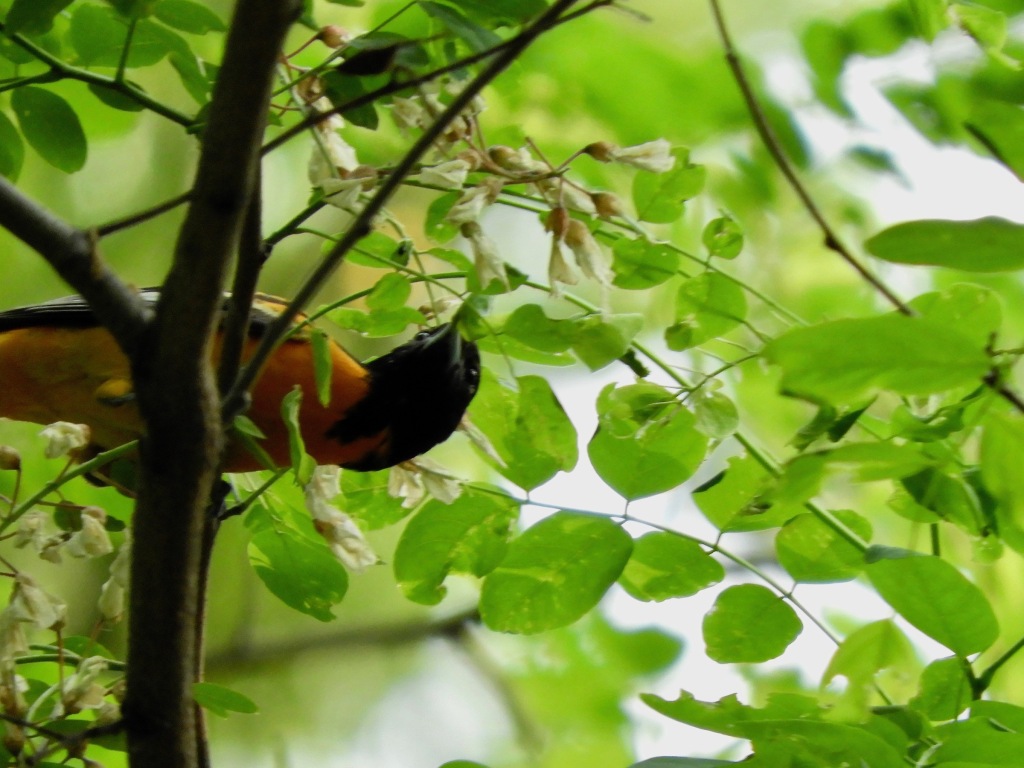
Baltimore Orioles spend a good deal of time and energy in migration, making long journeys for their off-season winter stay in Florida or south into Mexico, the Caribbean, and South America.
Cover image: Baltimore Oriole. May 24, 2023. Inwood Hill Park.
Recent posts
- Herons in Trees: Watching and Waiting at High Tide
 Many of my favorite heron sightings these past few weeks have occurred at high tide. While it’s more common to spot herons wading through the waters during times of low tide, abundant fish during the late summer keep the herons nearby. They watch and wait, frequently grooming their feathers. Look for them in trees or… Read more: Herons in Trees: Watching and Waiting at High Tide
 - A Green Heron Joins the Other Dinosaurs, and the Pursuit of the Big Picture
 A lively Green Heron has been drawing attention this summer at the Salt Marsh in Inwood Hill Park. While not uncommon for late summer, this member of the heron family stands out among the Great Egrets, Great Blue Herons, and Black-crowned Night Herons. For one, the Green Heron is of slighter skeletal build compared to… Read more: A Green Heron Joins the Other Dinosaurs, and the Pursuit of the Big Picture
 - Sporting Colors: The 2026 Baltimore Orioles Season in Inwood Hill Park
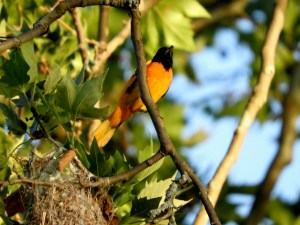 Several Baltimore Orioles made their way back to the high trees of Inwood Hill Park this year. They’ve been building and attending nests at the edges of the park. The female builds the nest over the course of the week, while the male goes out on foraging errands. The orioles usually stake out the same… Read more: Sporting Colors: The 2026 Baltimore Orioles Season in Inwood Hill Park
 - Field Notes from the 2026 Cedar Waxwing Gathering in Isham Park
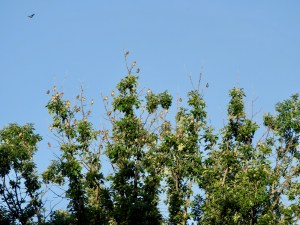 Dozens of flocks of colorful Cedar Waxwings have arrived in Isham Park in Northern Manhattan for their annual feasting of the Juneberry trees (Amelanchier is the scientific name, or serviceberry). The festive occasion takes place during late May and early June and lasts as long as the bright red berries are consumed. While Cedar Waxwings… Read more: Field Notes from the 2026 Cedar Waxwing Gathering in Isham Park
 - Birds in the Garden of Eden: A Field Trip to Untermyer Park and Gardens in Yonkers, New York
 At Untermyer Park and Gardens in Yonkers, NY, on May 18, I didn’t see many birds out of the ordinary. I was so taken in by the dramatic vistas of the park and garden that I may have overlooked them. Tens of thousands of birds migrate north of New York City each spring and… Read more: Birds in the Garden of Eden: A Field Trip to Untermyer Park and Gardens in Yonkers, New York


Comments welcome!