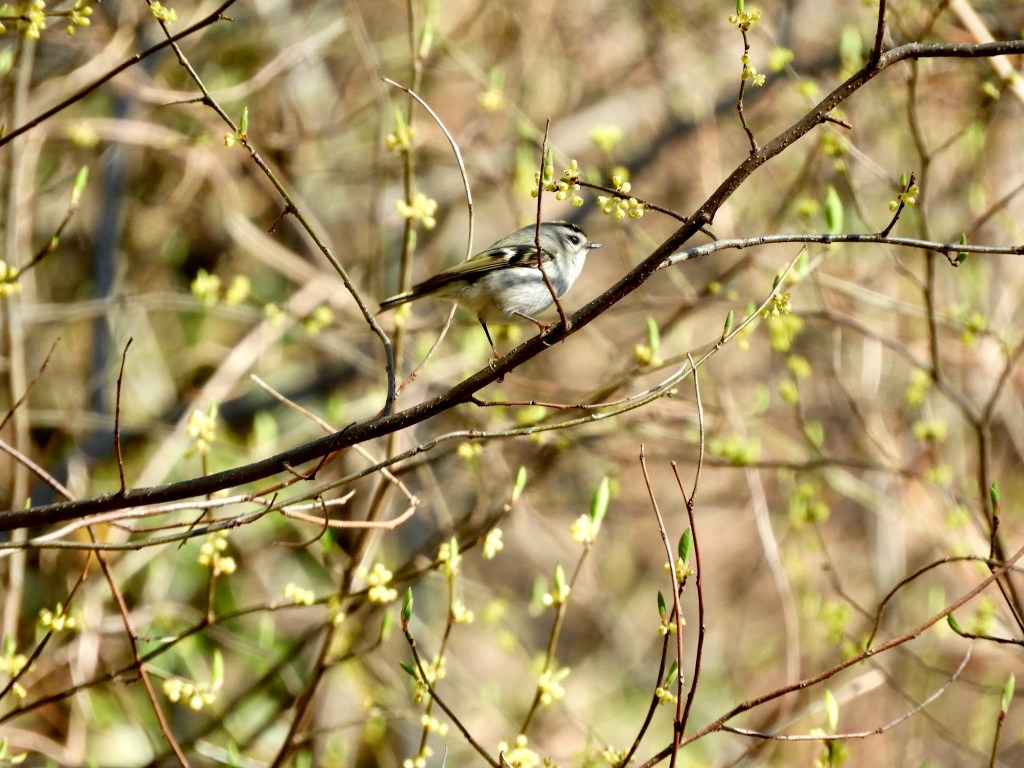
So tiny and fast. They were kinglets, and I saw both kinds this week in the forested areas of Inwood Hill Park.
Kinglets are either golden-crowned or ruby-crowned, fast-moving, and constantly in search of insects. They may be distinguished by the color of their crowns and the coloring around the eyes. The Ruby-crowned Kinglet features a more prominent white eye ring, while the Golden-crowned one looks like it’s wearing eyeliner and mascara.
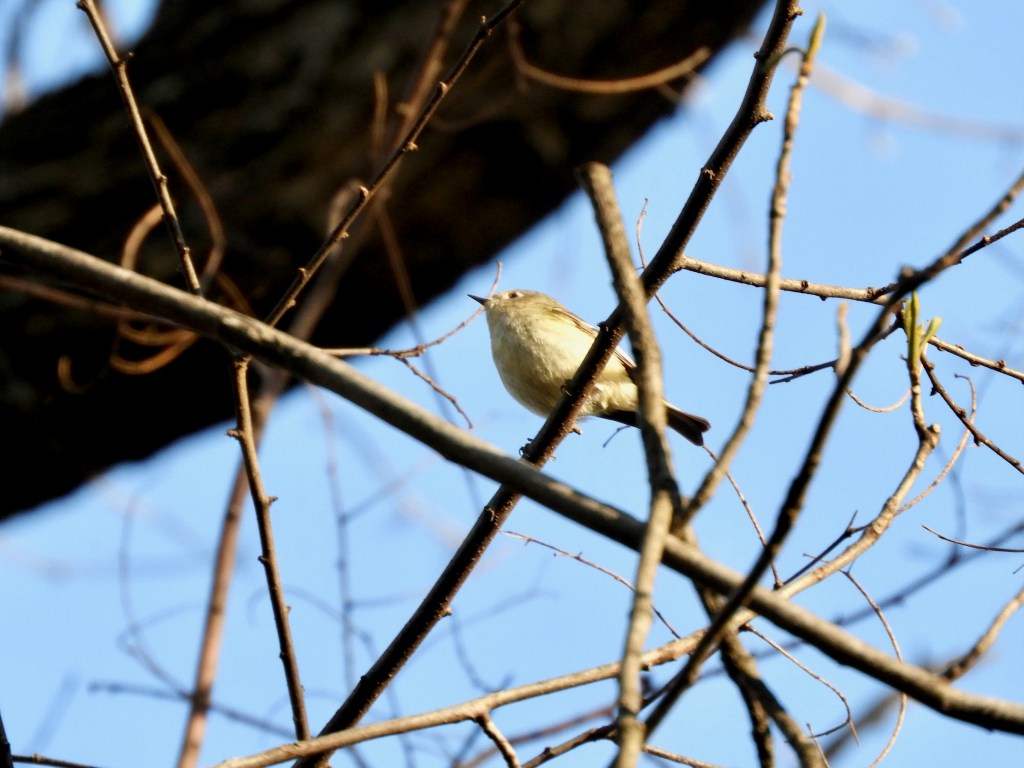
Kinglets are considered medium or short-distance migrants here in the East, spending their breeding season in Canada and northern states and flying short distances south during the winter. They spend most of their time in the forest canopy looking for insects, but here in the parks, I’ve spotted both kinds at lower elevations near the marsh.
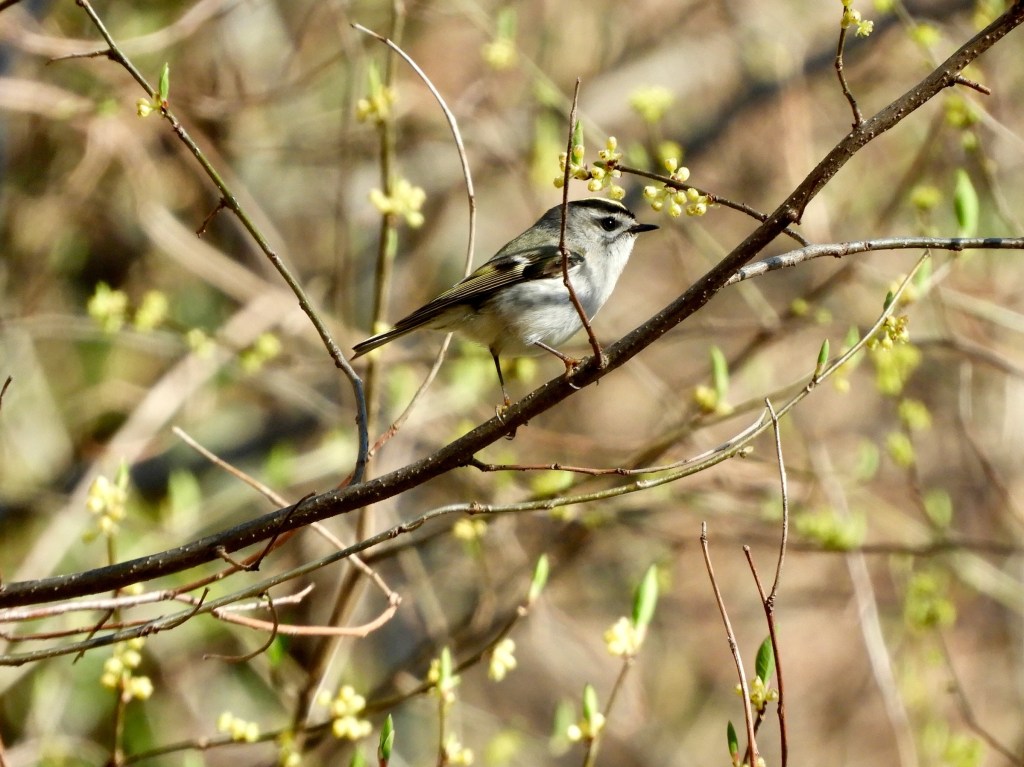
I must say I am proud of my pictures of the Golden-crowned Kinglet. When captured frozen in time like this, the little bird looks so dignified and regal.
One afternoon after work, I was sitting on my couch with my laptop and learning more about these kinglets on the Cornell All About Birds website. My cat was resting on my lap. When I played the sound of the Golden-crowned Kinglet, my cat suddenly bit into the lower right corner of the display screen. As I write, the bottom of my screen is covered in horizontal lines. I must now make an appointment with the Genius Bar at my local Apple Store to get it fixed. Don’t let this be you.
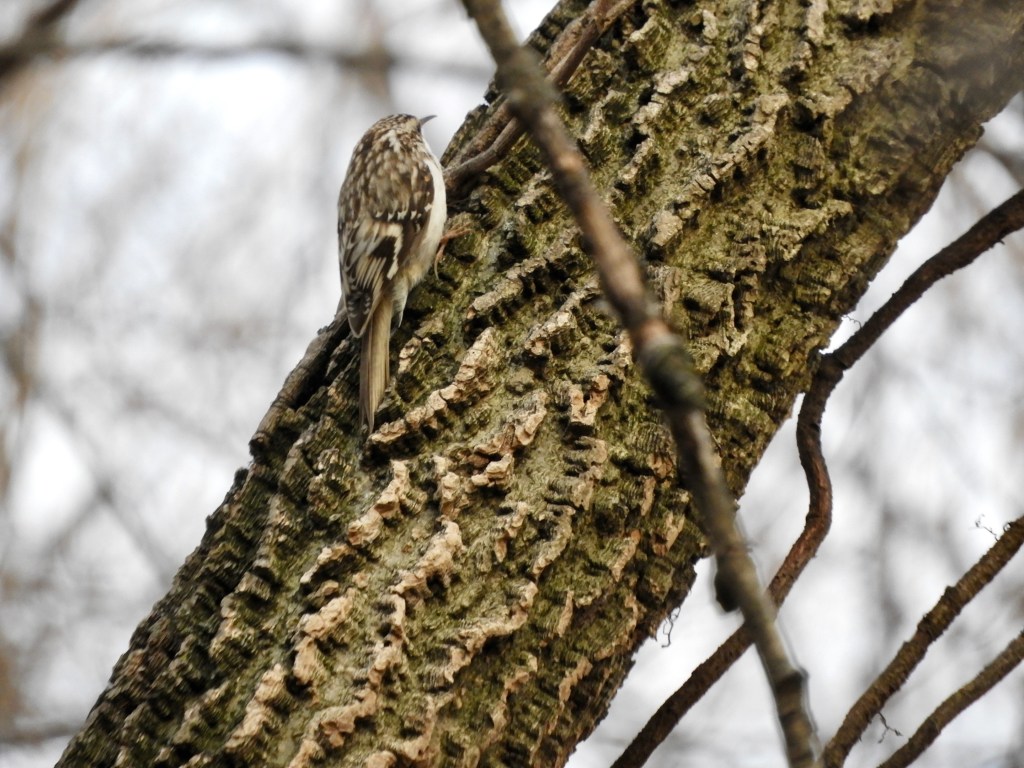
Moving on, I recently saw a White-breasted Nuthatch and a Brown Creeper on adjacent trees. While the nuthatch crawled from top to bottom on its tree, the Brown Creeper was moving in the opposite direction. I’ve seen a Winter Wren down by the upper entrance to the Clove, and several Palm Warblers.
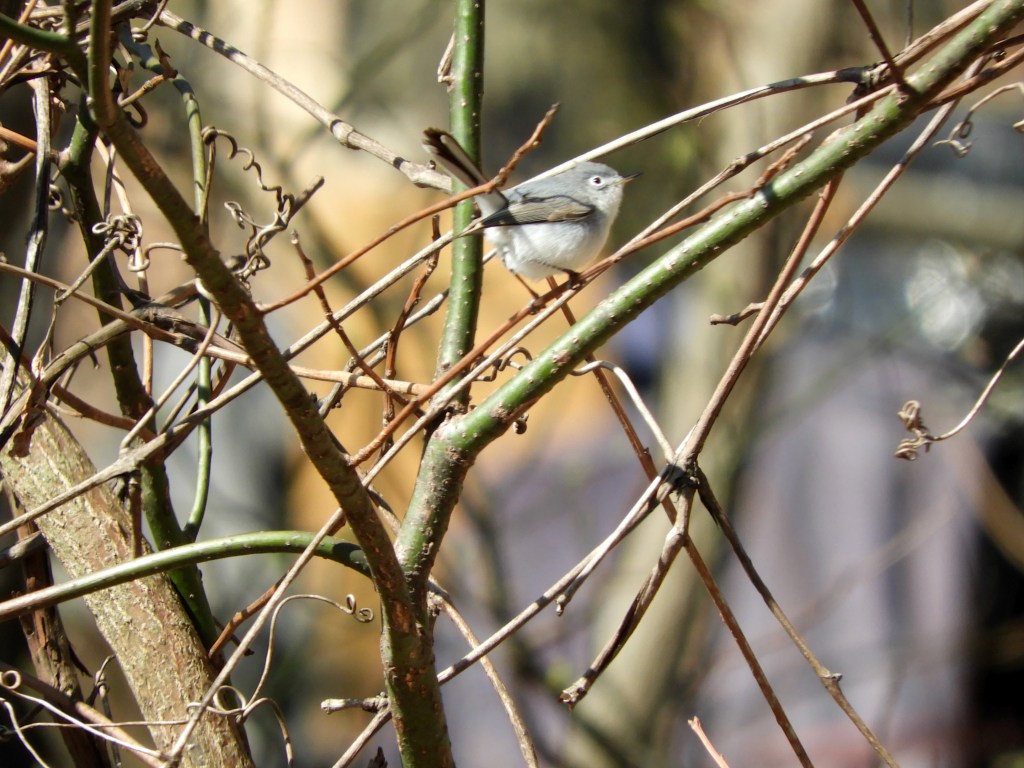
Overall, spring migration is picking up speed with more arrivals. I’ve been spending time with Hermit Thrushes scattered here and there, and I observed a sporty Blue-gray Gnatcatcher dashing through short trees near the W. 207th street steps.
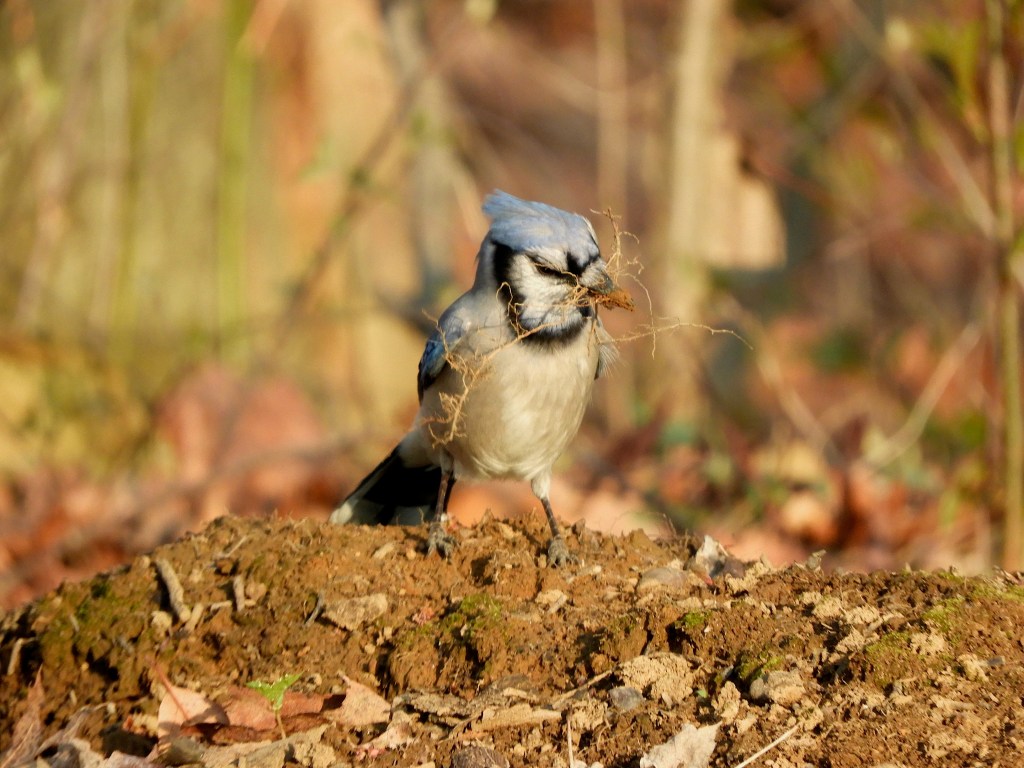
Our park regulars, including multiple sparrows, American Robins, Blue Jays, Northern Cardinals, and the woodpeckers, are busy preparing nests.
Speaking of woodpeckers, I saw a Pileated Woodpecker on Saturday morning (April 11, 2026) at Whaleback. Yes. If you don’t know this distinctive feature of the park, Whaleback is an outcropping of rock, shaped like the back of a whale, at the southern entrance to the Clove. The Pileated flew onto the side of a tree directly in front of me, just next to the whale. I was amazed. In my excitement, I had accidentally moved vital settings on my camera. I couldn’t take a clear picture. To my chagrin, I have posted evidence of this rare woodpecker, in its blurry glory, on the April Sightings page. A Red-tailed Hawk showed up and chased the Pileated away. They flew to Fort Tryon Park, if you are looking for them.
Another tech mishap in the age of digital birdwatching. My plan for the upcoming months is to document more with paper and pencil.
As they say on Threads, any mention of a cat must include a picture of the cat. This is known as a “cat tax.” Tax is filed here below.

Cover: Golden-crowned Kinglet. April 7, 2026. 8:51 a.m.
Recent posts
- A Green Heron Joins the Other Dinosaurs, and the Pursuit of the Big Picture
- Sporting Colors: The 2026 Baltimore Orioles Season in Inwood Hill Park
- Field Notes from the 2026 Cedar Waxwing Gathering in Isham Park
- Birds in the Garden of Eden: A Field Trip to Untermyer Park and Gardens in Yonkers, New York
- An Evening Walk with a Great Egret, and Spring Migration Report


 Birds of Inwood
Comments welcome!