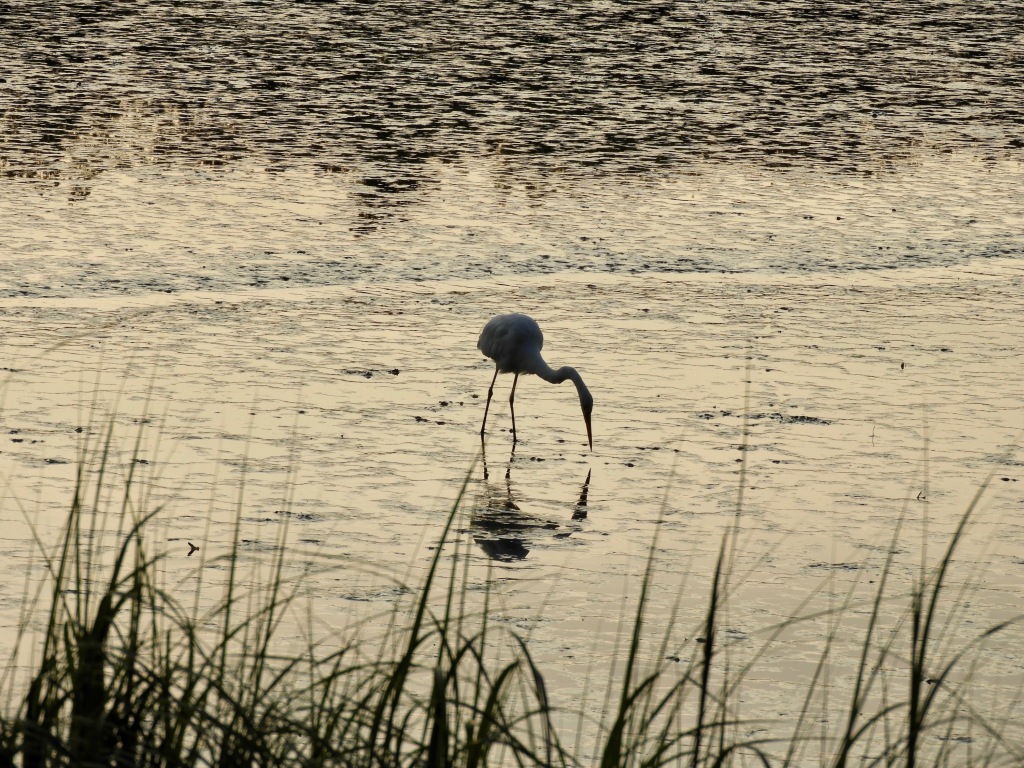
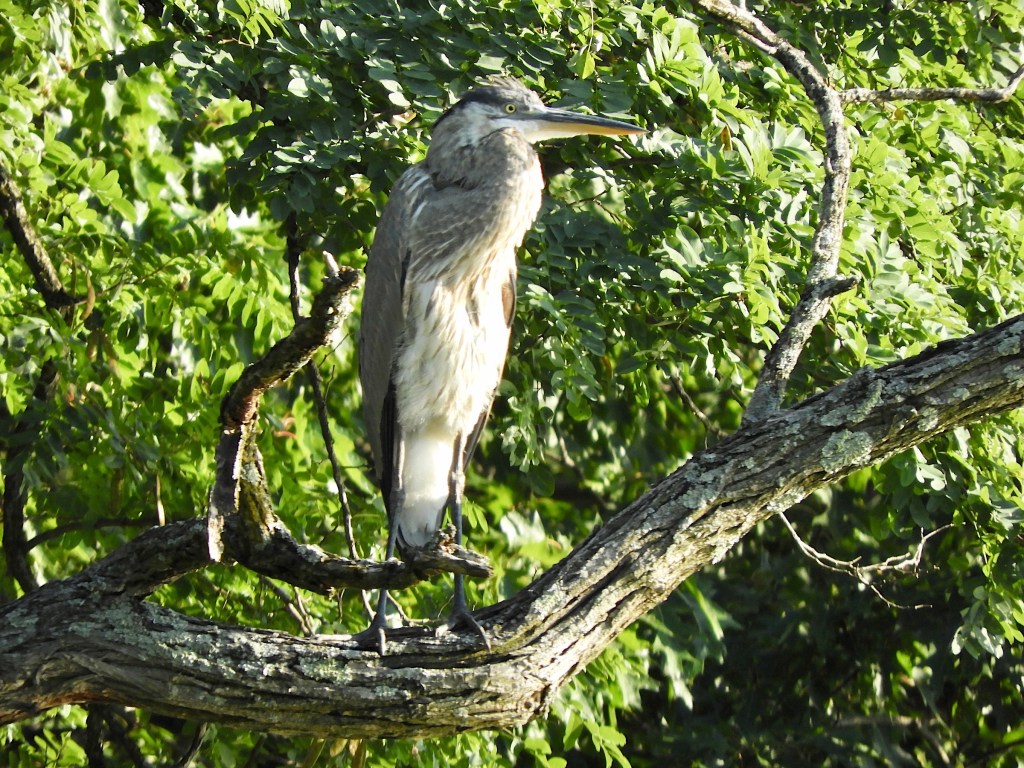
At high tide on the Salt Marsh, one Great Blue Heron tends to perch on a tree above the shoreline while a younger one explores the tunnel between the Salt Marsh and Muscota Marsh. The Great Egret often perches on another branch or on a railing on a dock. They are all waiting for the water levels to drop. Meanwhile, a few Herring Gulls and ducks float in the water, taking frequent flights to resettle in a new place.

At high tide, a Double-crested Cormorant dives and reemerges in the deeper Spuyten Duyvil Creek, sometimes with a fish. Black-crowned Night Herons, a migratory Snowy Egret, Herring Gulls, Ring-billed Gulls, and many ducks take part in their own rituals while waiting for the tide to go back out.
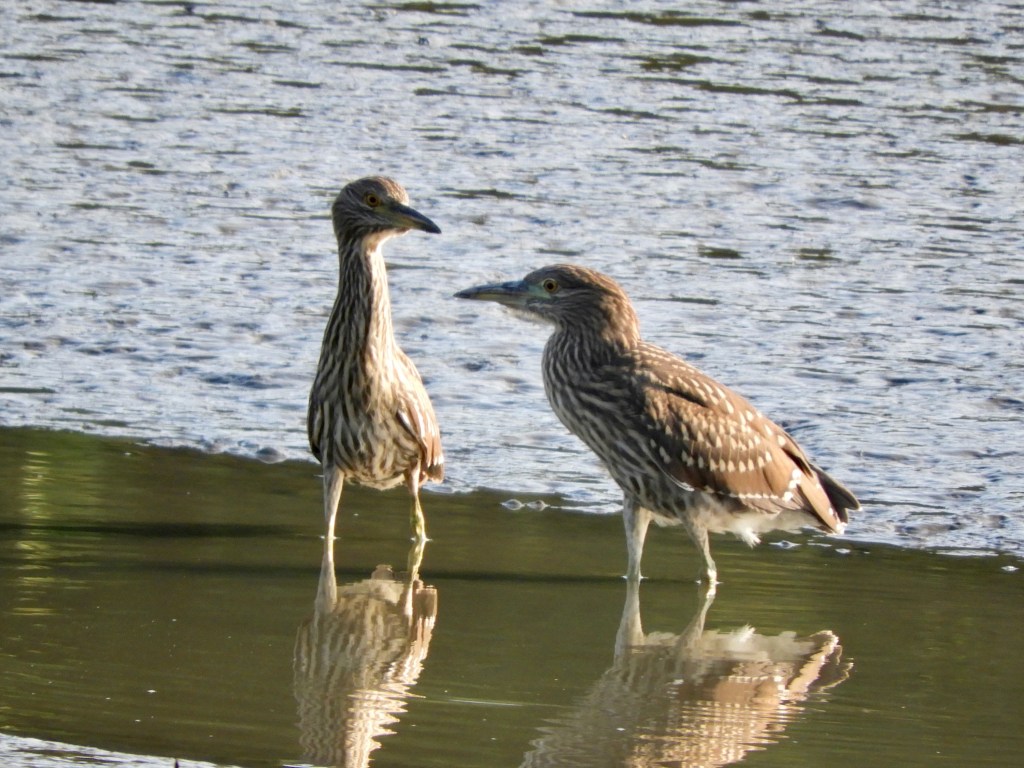
These days of late summer tend to be the busiest at the Salt Marsh in Inwood Hill Park. This summer seems particularly lively with juvenile marsh birds joining the park regulars. Recently, two juvenile Black-crowned Night Herons excitedly explored the marsh. For onlookers, watching the comings and goings at the marsh has been particularly enriching of late, especially during this current break from the heat and smoke that has stifled the summer air.

The egrets and herons are the most active during the hours on either side of low tide. As a tidal estuary, the high and low tides tends to come at intervals, usually around every six hours. The tides come and go at never precisely the same interval, so consulting the tidal charts of Spuyten Duyvil Creek helps with planning a visit to the Salt Marsh. For example, checking martineweather.net for Spuyten Duyvil Creek, low tide occurred today at 5:04 am and will come again at 5:18 pm. High tide arrived around 11:12 am and will come again at 11:29 pm. I arrived at the marsh around 6:15 am this morning and saw both the Great Egret and the Great Blue Heron in the water. If I were to go again today, I would return anywhere from 3 to 7:30 pm. Sunsets are lovely here, too.

At low tide, the Salt Marsh turns into muddy flats. When the smaller shorebirds arrive, typically in August, look for them near the shoreline at low tide. After the water rises and begins to fill the basin, and after the high tide falls, the big egrets and herons typically follow ribbons of water in order to fish or scavenge for remnants.

The Salt Marsh has been particularly entertaining of late for watching the various species interact or at least exist in harmony. On the kayak launch on the Peninsula, the Great Egret may perch and preen on one side of the dock while the Great Blue Heron does the same on the other side. On a recent day, the Great Egret joined a Black-crowned Night Heron on the launch railing. The visiting Snowy Egret has often wandered around underneath this same dock, seemingly hiding from the larger Great Egret.
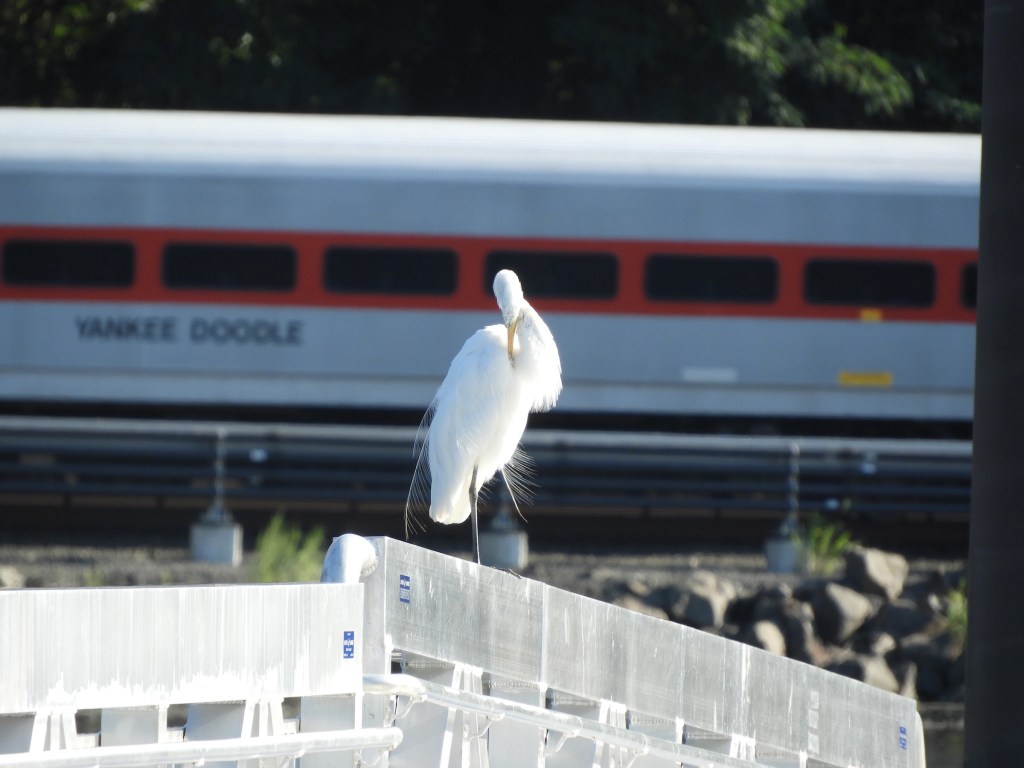
The regular background rumblings and whistles of the MTA Metro-North’s Hudson trains accentuate the rhythms of the tidal marsh. The Hudson line hugs the shoreline, traveling north to Poughkeepsie through the Hudson Highlands and south to Grand Central. The local train stops for passengers at Spuyten Duyvil and Marble Hill. Travelers on the Hudson line frequently choose a window seat, and for good reason.

Another good way to view the ebb and flow of Inwood’s Salt Marsh would be by boat. Still, the best way to view the egrets and herons would be to stand or sit still at the shoreline for a long time, or for as long as it takes to watch the waters ebb and flow.
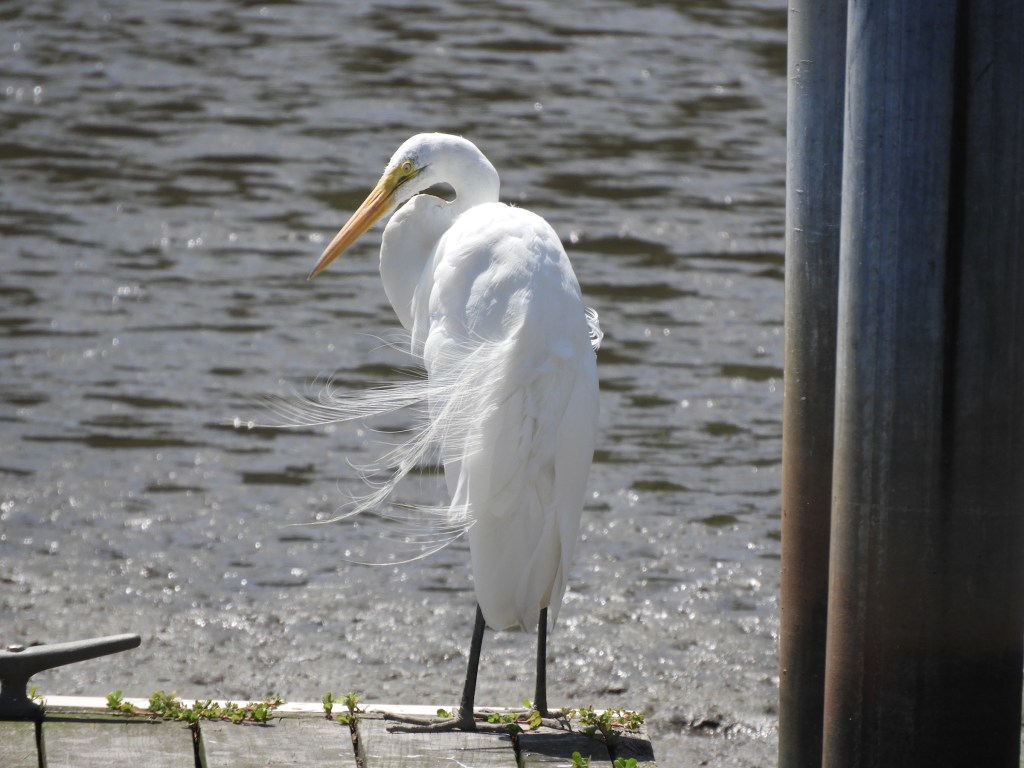
Cover image: The Great Egret. August 3, 2023. 6:52 am, a little less than two hours after low tide.

Note: Please see the Sightings pages for more daily pictures. Also, subscribers, please visit the website to see all the images that illustrate this post.
Recent Posts
- Northern Mockingbird – The Bossiest Singer in the Park
 Northern Mockingbirds are famous for their expressive and varied songs, often mimicking other birds. All this month, whenever I have had occasion to walk in Inwood Hill Park or Sherman Creek Park, I’ve come across a loud mockingbird singing its heart out.
 - An Early Spring Preview of the Birds of Inwood
 A burst of spring weather and unseasonably warm days brought a variety of birds to Inwood Hill Park in Northern Manhattan this week. The three days in early March— March 9 through March 11— felt like a gift, especially after a long winter of cold temperatures and abundant snow. Many New Yorkers talked about how… Read more: An Early Spring Preview of the Birds of Inwood
 - The Snowiest of Snows, and a Bald Eagle Appears
 On Monday, February 23, the snow fell across New York City in steady downfalls over many hours, embedded in a winter storm that arrived late afternoon on Sunday and continued well into the afternoon. By the end, Central Park experienced one of the largest snowstorms in the city’s history. * Up here in Northern Manhattan,… Read more: The Snowiest of Snows, and a Bald Eagle Appears
 - Blizzard Warning: A Great Blue Heron Hunkers Down, and Other Stories of the Birds of Inwood in a Cold and Snowy Month
 Northern Cardinals have resumed singing their song of spring this past week, so you would never know that NYC and parts of the Tri-State area are currently under a blizzard warning. As I write, the temperatures are mild, and the sky is blue. The blizzard warning is the first such weather alert issued for NYC… Read more: Blizzard Warning: A Great Blue Heron Hunkers Down, and Other Stories of the Birds of Inwood in a Cold and Snowy Month
 - A Red-shouldered Hawk for Valentine’s Day
 I fell in love this morning on my walk over to the Hudson River. I was walking very slowly on the sloped path leading up to the Henry Hudson Bridge. The path was a little icy, still covered with recent snow, and I was careful with every step. My intention was to see the Bald… Read more: A Red-shouldered Hawk for Valentine’s Day
 Birds of Inwood
Comments welcome!