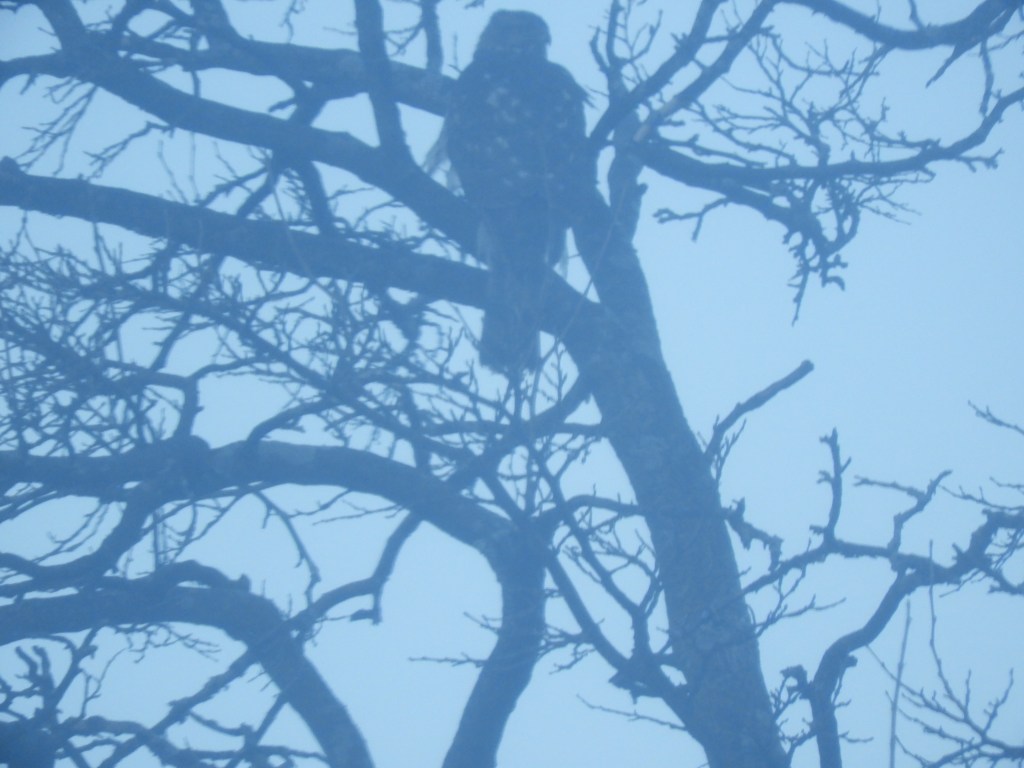
The dawn of the first day of January brought cold, piercing winds and a surprising early morning snow squall. It was the kind of day to stay indoors and drink tea. The first bird I saw that day was the Cooper’s Hawk of Cooper Street, a sighting from my kitchen window. The Cooper’s Hawk is built for the worst weather, and I was confident that its presence stood as a metaphor.
For much of the first week of the new year, it was cold outside. At a time when precipitous national events would call for a healthy walk in the woods, the weather conditions would not allow for much temporary escape. The Clove, a favored environment for birds, proved too treacherous to traverse. I was left inside and hooked on social media, bearing witness to a succession of mind-boggling events playing out on the world stage.
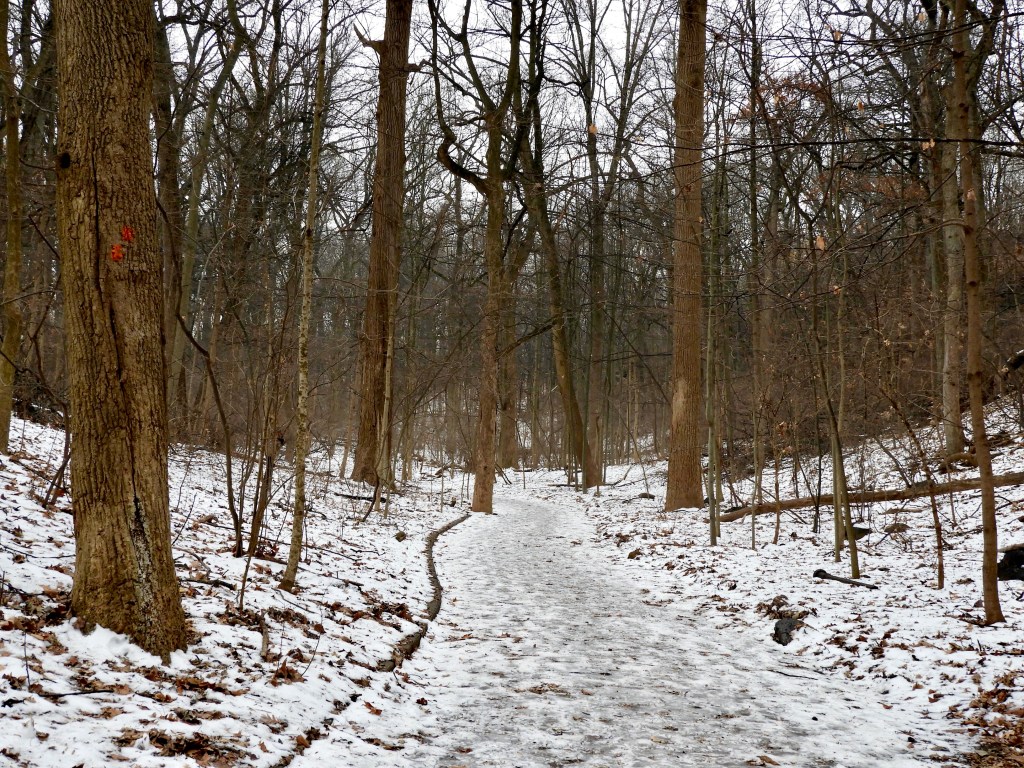
The weather started improving over the course of the week. When Tuesday morning arrived, the 6th of January, the wintery landscape of Inwood Hill Park began to thaw. With the ice underfoot turning to slush, I was able to proceed deeper into the woods and along the trail. On the morning of January 8, I successfully completed the graded walk up the Clove trail and could view the surrounding landscape as before and look for birds.
On the long morning walks these past few days, I have intentionally kept the phone in my backpack. The breaks from constant news trauma improve my well-being, I have found. While my conscience demands staying present and aware of what is surely a national crisis of the first order, I am subtly finding myself connecting to the slower and long processes of both nature and the tides of history.
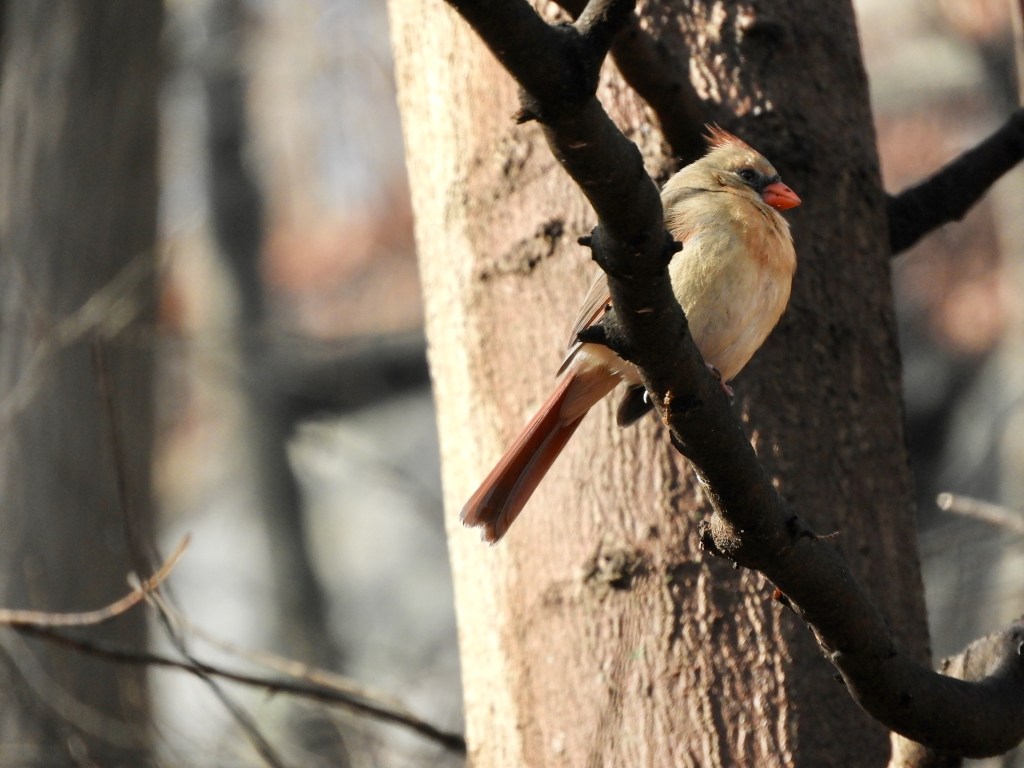
What do the birds know of what crises we face in our world? They may be intimately connected, above all, to forces affecting our environment. We know that songbirds are disappearing from the world, but we can try to mitigate the harmful manmade environmental policies that contribute to their demise.
Let us be mindful of the birds while the world is on fire. I believe we need to address the particular failings of our human society, to act boldly when necessary, and at the same time to protect the gifts of all creation. If anything should stir our courage, let it be the creatures who fly.

Most of the birds I saw this week were the winter regulars – Blue Jays, Northern Cardinals, Tufted Titmice, and the hard-working woodpeckers, among others. Watching them fly and forage in their colorful feathers raised my spirits. Studies have shown that watching birds in particular improves well-being, with effects that can last up to eight hours. Search online for “mental health benefits of birdwatching” and be amazed at this accessible solution for reducing stress.

Instead of being swept away by current events, I plan to slow down. During the dark hours, I’ll read a history book about the Roman Empire or the French Revolution. I am taking up embroidery. I have thoughts to visit the Hayden Planetarium again because I want to shift my perspective to something much larger than myself.
When the light comes in the morning and weather permitting, I will go find birds in the woods and at the marsh. I will embrace the possibilities of discovery in a slow, cold walk. May we all do the best that we can.
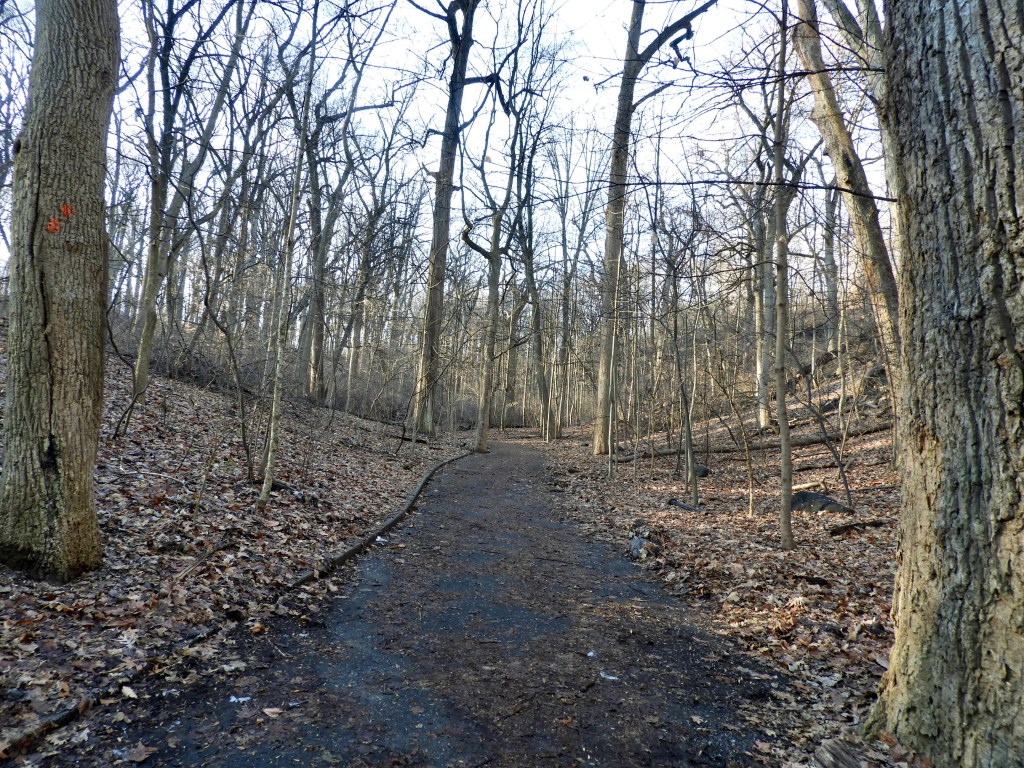
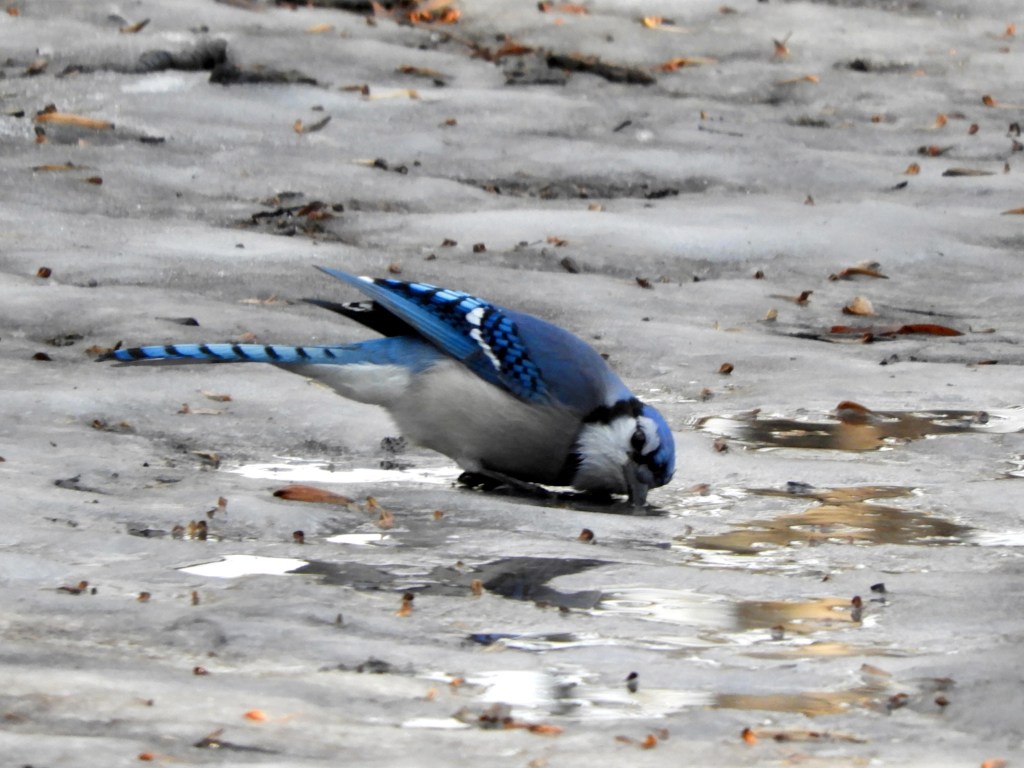
Cover: A Blue Jay drinks water on the thawing path in the Clove. Inwood Hill Park. January 7, 2026. 10:48 am.
January 2026 Sightings
Additional bird sightings for the month may be found here.
More posts
- Northern Mockingbird – The Bossiest Singer in the Park
- An Early Spring Preview of the Birds of Inwood
- The Snowiest of Snows, and a Bald Eagle Appears
- Blizzard Warning: A Great Blue Heron Hunkers Down, and Other Stories of the Birds of Inwood in a Cold and Snowy Month
- A Red-shouldered Hawk for Valentine’s Day


 Birds of Inwood
Comments welcome!