
An American Kestrel, the smallest falcon in North America, has been visiting the athletic fields adjacent to the Salt Marsh in Inwood Hill Park. I’ve seen it three times now – on September 10, a month later on October 12, and then on October 17.
The kestrel’s preferred perch, it seems, is one of the goal posts on the fields. On September 10, I had been searching the marsh grasses in the water looking for a warbler when one of the advanced birders casually pointed out the presence of an American Kestrel on the post.

It’s such a stunningly colorful falcon. With tones of gray and beige, black spots, and a big head with dark black streaks below its eyes, it reminds me of a harlequin or a bird from an illustrated medieval fairy tale. It has two round dark markings on the back of the head that can easily be confused for eyes.

It’s a killer of a bird. The previous time I remember seeing an American Kestrel was a few years ago in this exact same spot. I watched it swoop in and grab a bright songbird out of the sky. As I recall, the quick grab upset me, though I think the little bird got away.
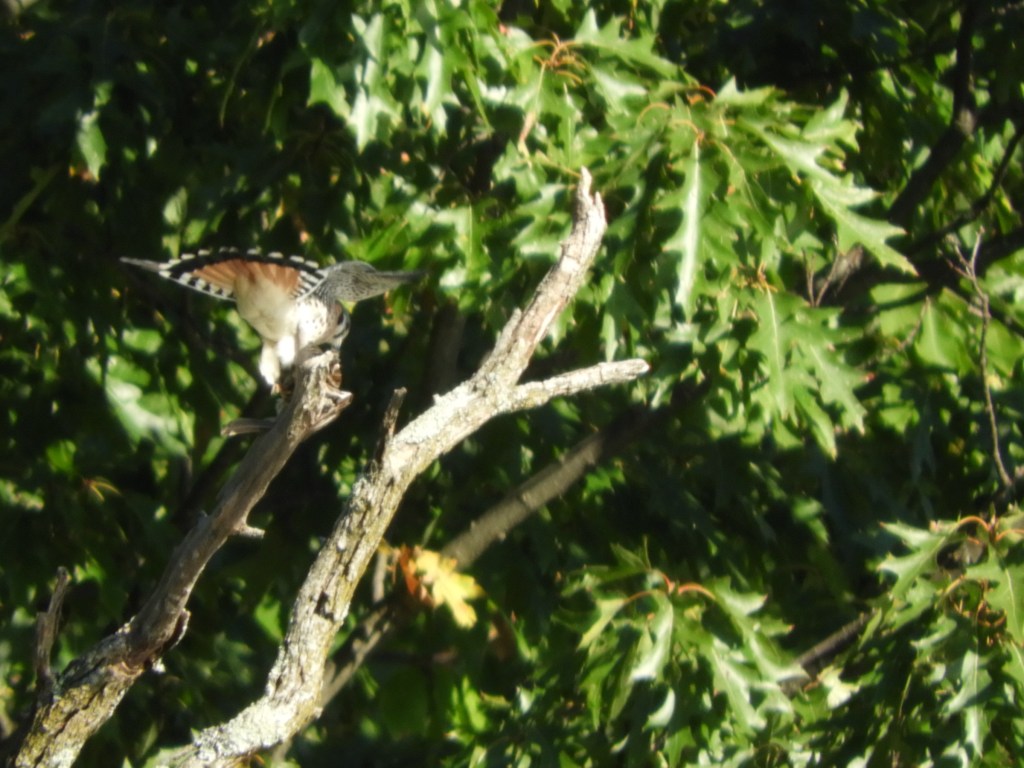
The second time this season that I observed the kestrel, a songbird was not so lucky. I watched the kestrel first perched on the goal post, then lost sight of it, and soon saw it again atop a tree branch with a struggling victim in its clutches.

On October 17, I found the kestrel high atop the Osprey tree. The regular birders in the park call it the “Osprey tree” because the old tall snag is the one favored by the Osprey for fishing in the waters below. It was a windy day. The kestrel was alone, with nothing yet in its clutches. Kestrels typically lean into the wind to begin their kiting maneuver. They can then hover over prey and catch victims out of thin air.

In making this small gouache study of the American Kestrel, I wanted to focus on its powerful eyes.
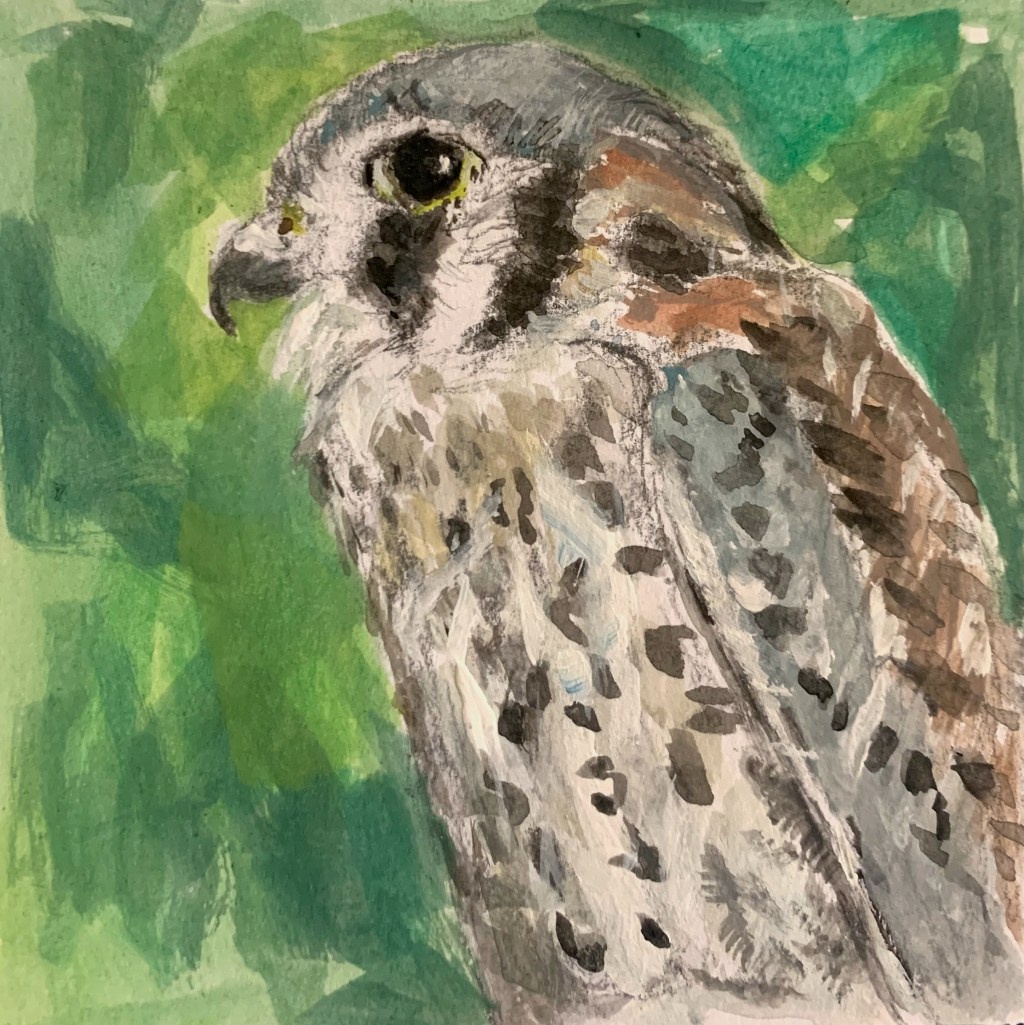
October 21, 2024.
Cover: American Kestrel. October 12, 2024. 9:13 a.m. Gaelic Fields near the Salt Marsh.
High Migration Days
The October 2024 Sightings page is beginning to overflow with birds in fall migration. Many may stay in Inwood for the season. Most welcome are the Black-capped Chickadees and Tufted Titmice that have been absent these recent winters.
Recent posts
- Northern Mockingbird – The Bossiest Singer in the Park
- An Early Spring Preview of the Birds of Inwood
- The Snowiest of Snows, and a Bald Eagle Appears
- Blizzard Warning: A Great Blue Heron Hunkers Down, and Other Stories of the Birds of Inwood in a Cold and Snowy Month
- A Red-shouldered Hawk for Valentine’s Day
 Birds of Inwood
Comments welcome!