The summer of 2024 has been hot in New York City, with successive heat waves and uncomfortable levels of humidity. Still, the early hours of the summer mornings have been mostly tolerable for rewarding outdoor excursions in Inwood Hill Park. Low tide at the Salt Marsh is the best time to watch herons fishing, but the opportunity for low tide viewing in the cool hours of the morning comes and goes.
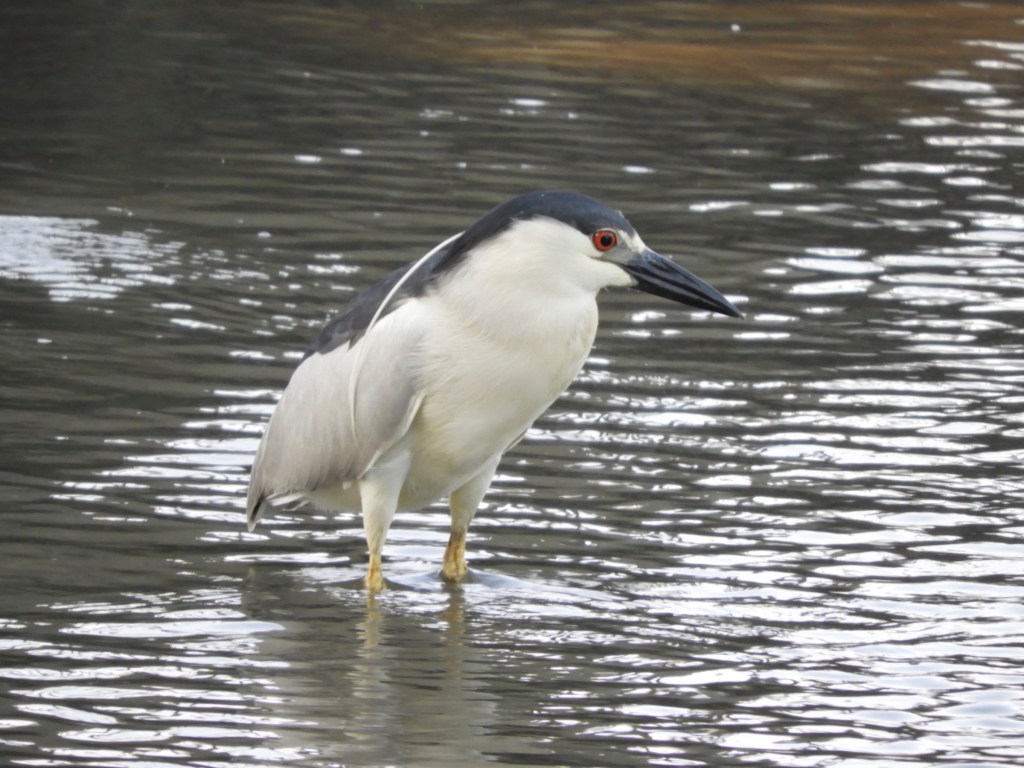
By late July, the tides bring in many fish for the herons to discover. The fish are often visible to human eyes, appearing to jump to the surface. Herons can easily follow the fish, and they are skillful in catching them. Of course, many fish get away.
The main players of this heron summer have included at least one or two Great Blue Herons, the main Great Egret, a Snowy Egret, and an adult Black-crowned Night Heron featured in many of the pictures here. In late July, a Least Bittern shyly joined the company. The bittern was a rescue, courtesy of the Wild Bird Fund, and released to the marsh.
While the birds of the forest go about raising their young and a pair of hawks zoom overhead, the herons take center stage in this hot heron summer. As members of the same family Ardeidae, the 72 species of herons share similar characteristics. With long necks and long legs, the various egrets, herons, and bitterns share a preference for coastal marsh areas. They are comfortable fishing together in proximity.
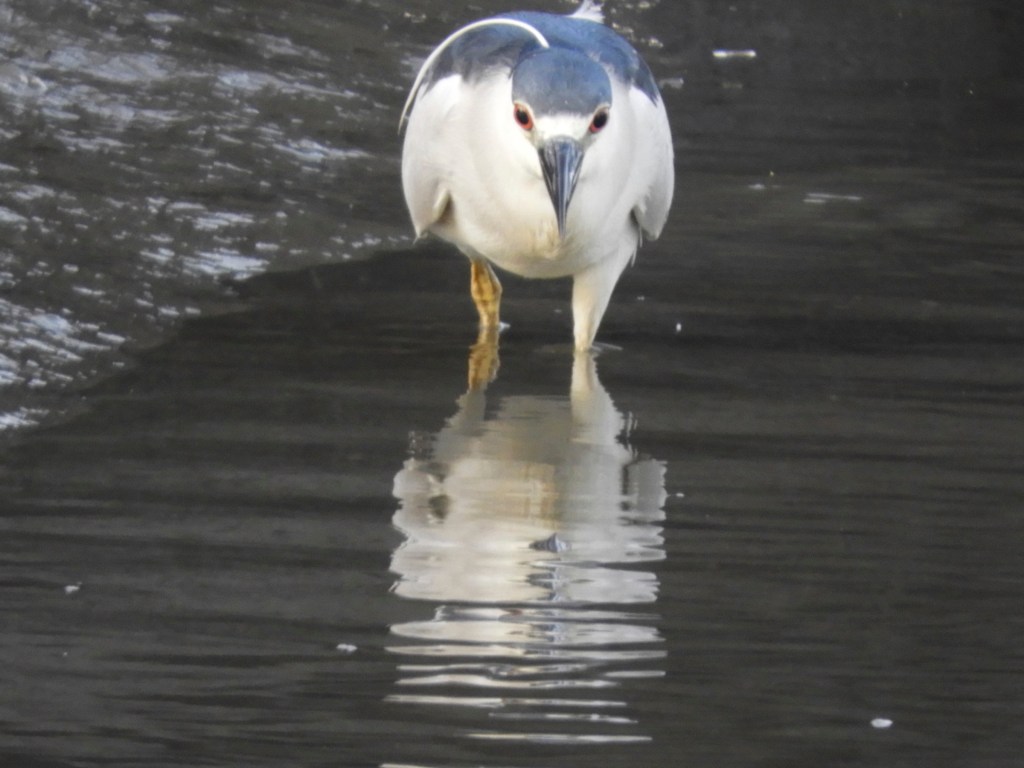
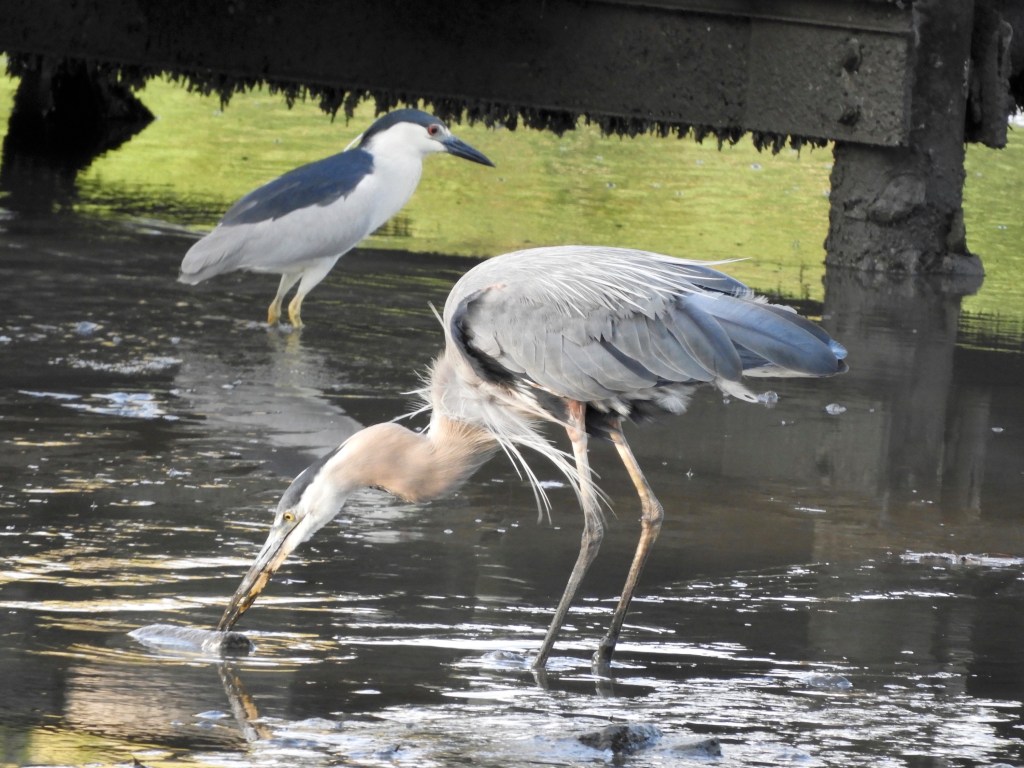
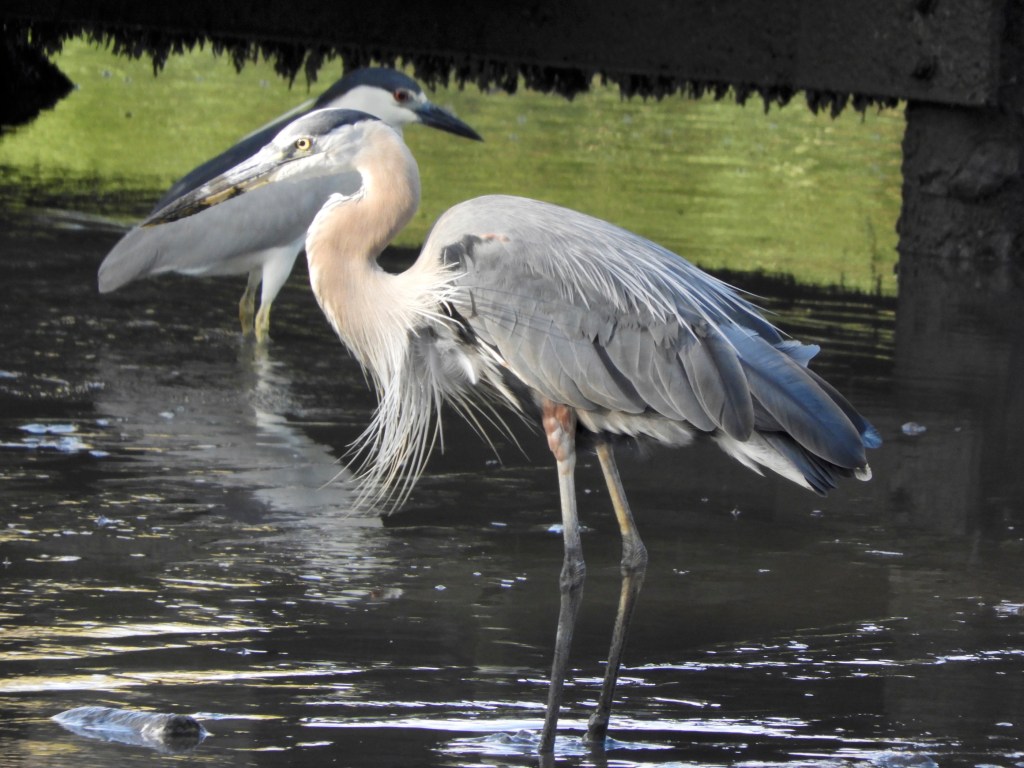
On the morning of July 26 at low tide, I observed a Black-crowned Night Heron and a Great Blue Heron watching and waiting for fish to roll in. They had assumed a strategic position underneath the kayak launch in the main marsh. The Black-crowned Night Heron closely watched the more active Great Blue Heron, as if to get lessons from a fishing master.

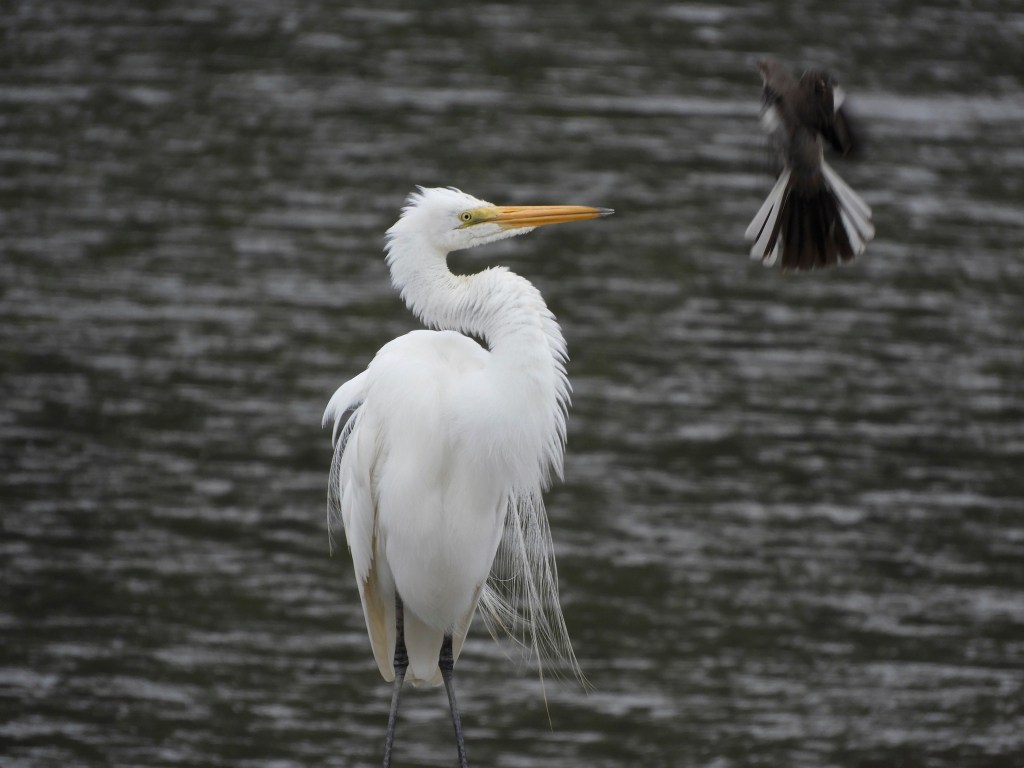
While the herons are waiting for the tides to ebb and flow, they spend their time in trees or on the high rocks of the marsh. The Great Egret often assumes a lofty position on top of one of the dock posts. One morning, a territorial Northern Mockingbird repeatedly hassled the egret, but it eventually flew away in defeat.
The herons often move between Muscota Marsh, situated next to Columbia University’s boathouse on the Harlem River, and the main Salt Marsh. Sometimes, the herons will perch in the trees surrounding Muscota Marsh. The small public park also affords a view of bird activity across the river. The Black-crowned Night Herons can be observed just below the railroad tracks in the shade of overhanding trees and bushes.

Wherever they are perched, the herons spend considerable time preening their feathers. They must keep them in good condition for waterproofing, adequate insulation, and flight.
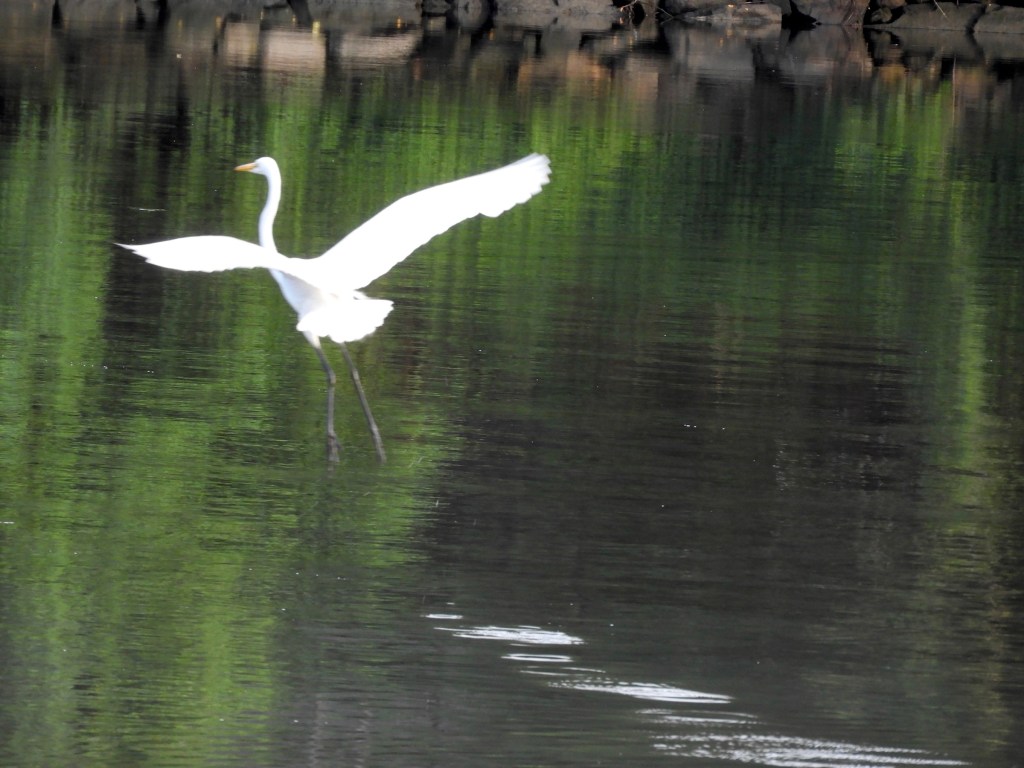
Find more images of herons fishing, preening, and perching on the Sightings pages for July 2024 and August 2024.
Cover: Black-crowned Night Heron and Great Blue Heron fishing at the kayak launch in the Salt Marsh. July 26, 2024. 7:21 am.
Latest posts
- Northern Mockingbird – The Bossiest Singer in the Park
- An Early Spring Preview of the Birds of Inwood
- The Snowiest of Snows, and a Bald Eagle Appears
- Blizzard Warning: A Great Blue Heron Hunkers Down, and Other Stories of the Birds of Inwood in a Cold and Snowy Month
- A Red-shouldered Hawk for Valentine’s Day
 Birds of Inwood
Comments welcome!