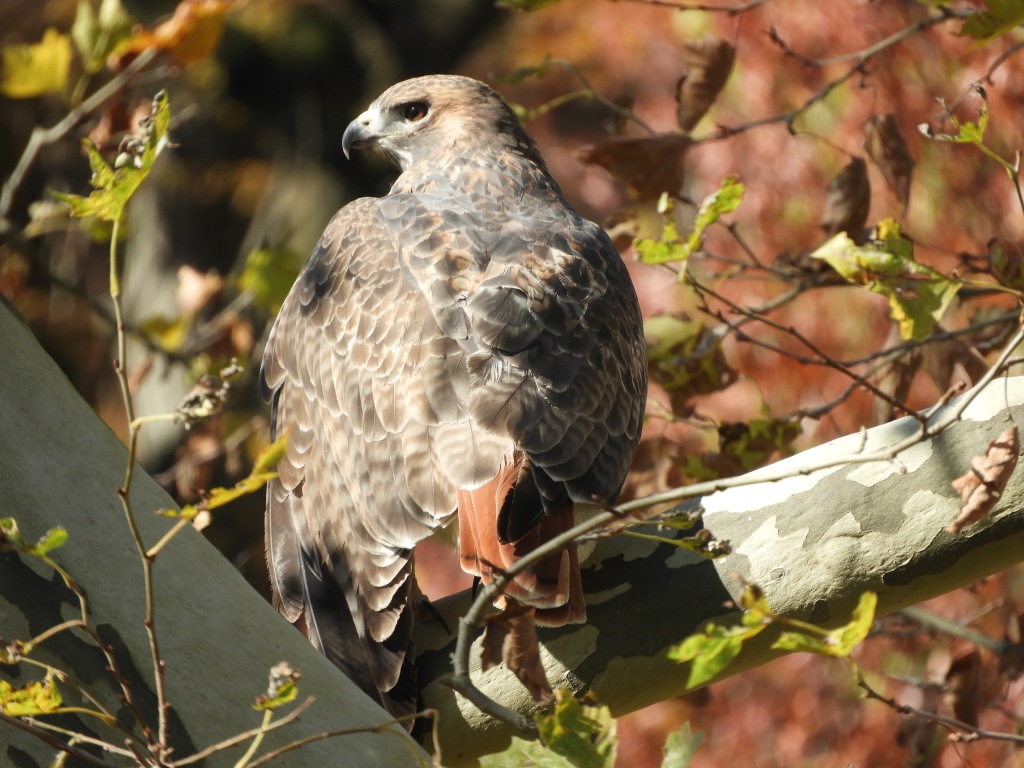
I took two brief walks in Inwood Hill Park this week, and both times I saw a Red-tailed Hawk. On the first walk on late Monday morning I observed a mature hawk, and the second time on the late afternoon of Wednesday, I saw a young hawk. They were both in the London planetrees on the south side of the Salt Marsh.
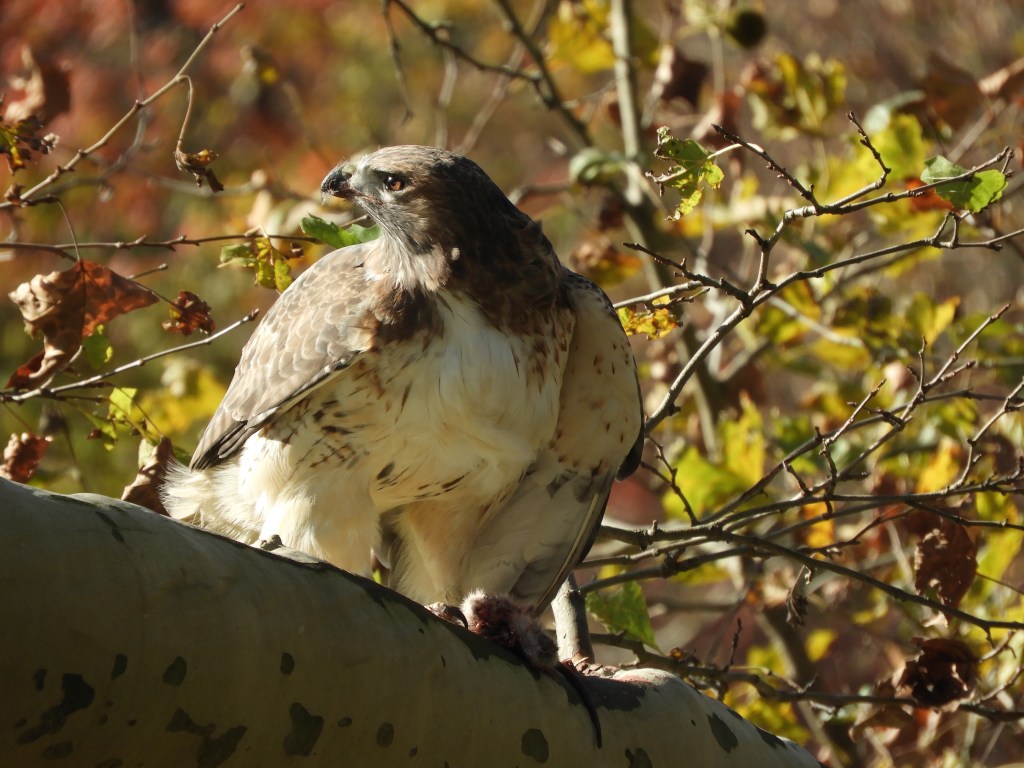
Adjacent to the Salt Marsh, Inwood Hill Park. 11:03 am.
On the first walk in the late morning of Monday, November 13, 2023, I came across the mature hawk perched on one of the trees and eating a rat. It seemed to relish its meal, pulling apart its prey and slurping it down. The hawk took frequent breaks to look around for any competitors. It didn’t seem to have any competition from other birds, and it ignored the human admirers on the trail just below.
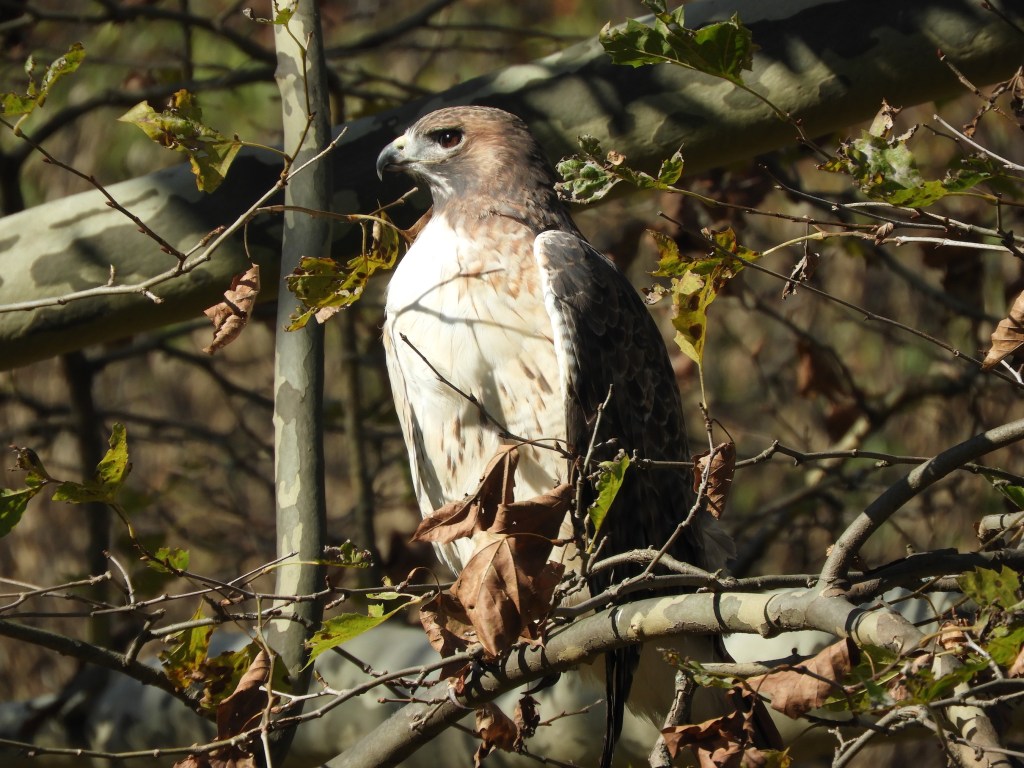
The London planetrees adjacent to the groomed salt marsh trail provide excellent viewing for all types of birds but especially for this Red-tailed Hawk in autumn. The dying leaves and mottled bark nicely complemented the colors and patterns of the hawk. The hawk could easily adjust its perches among the tree’s strong branches.
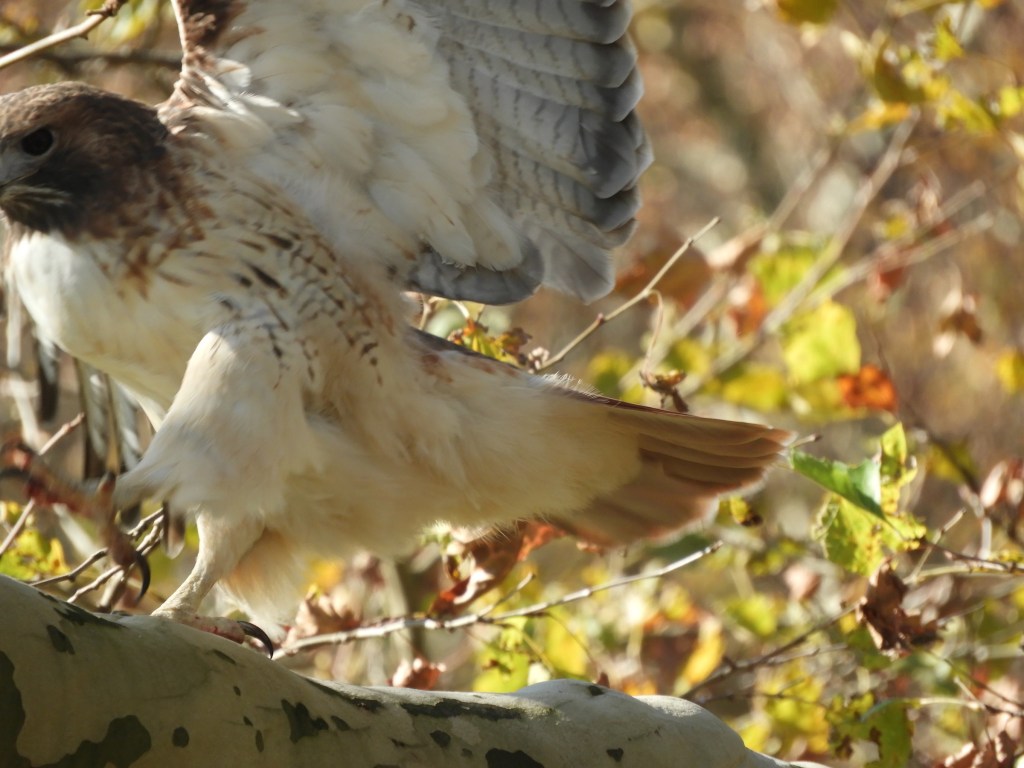
London planes, a hybrid between the sycamore and a non-native Asian plane, was said to be a favorite of NYC Parks commissioner Robert Moses. The leaf symbol of NYC Parks, adopted during the early years of the department, resembles the leaf of the London plane. Note: NYC Parks provides an online tree map for the city’s urban forest. Here’s a link to the online map (opens the map).
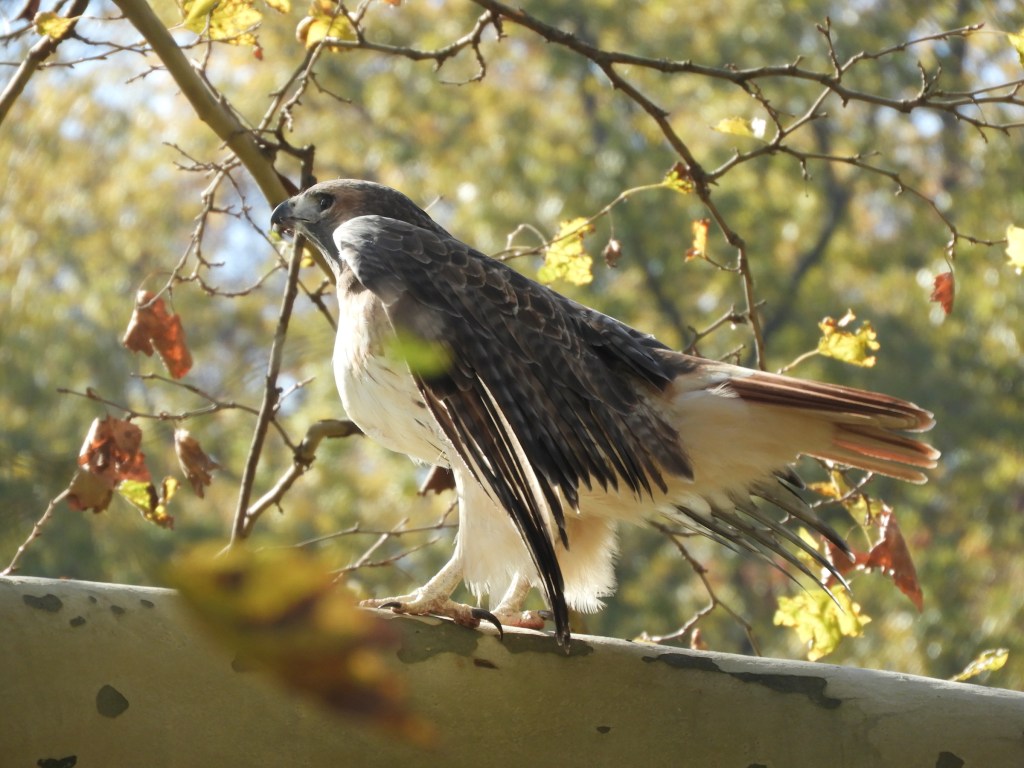
After the hawk dispensed with lunch, it moved around the tree and showed off its characteristic red tail. It took its time to fly away, finding another destination of interest in a loftier and wilder section of the park to the west.
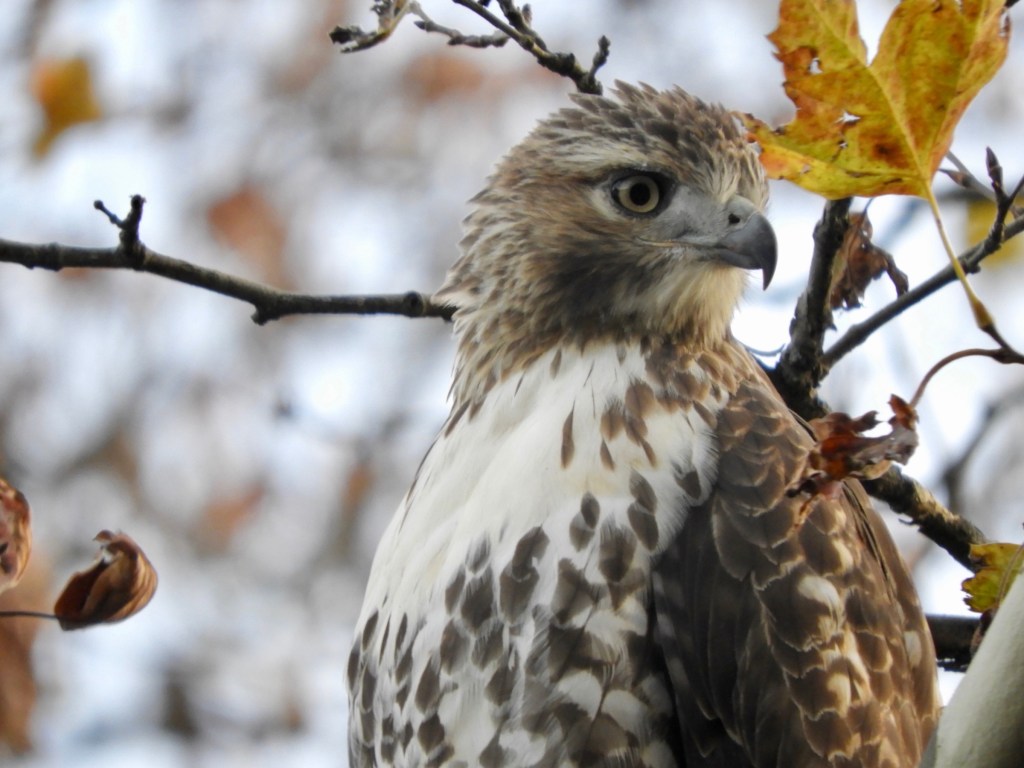
On Wednesday afternoon, I saw another Red-tailed Hawk sitting on one of the lower branches of the plane trees. It was clearly young, having that ruffled unfinished look to it, and its tail showed horizontal bandings and muted color. Its eyes were pale in contrast to the adult’s deeper amber.
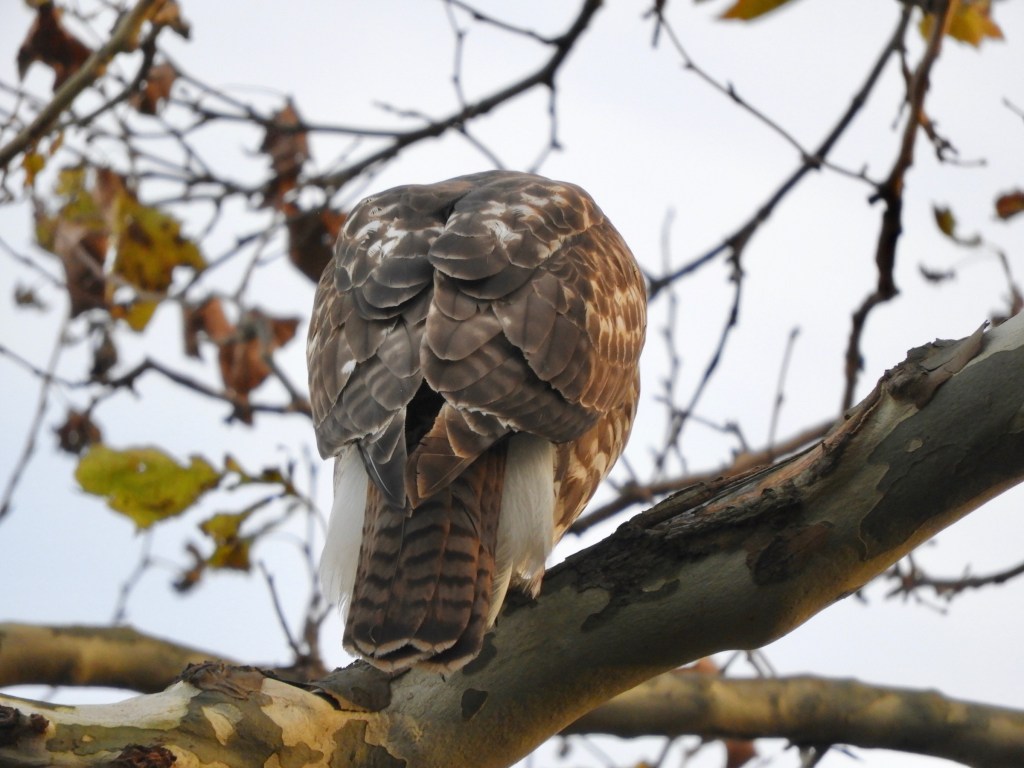
The young hawk also gave the appearance of just learning about its environment. It stared at me taking its picture. While observing it, a neighbor strolled by and commented that she had seen two hawks interacting a few days ago, and it may have been both these hawks.
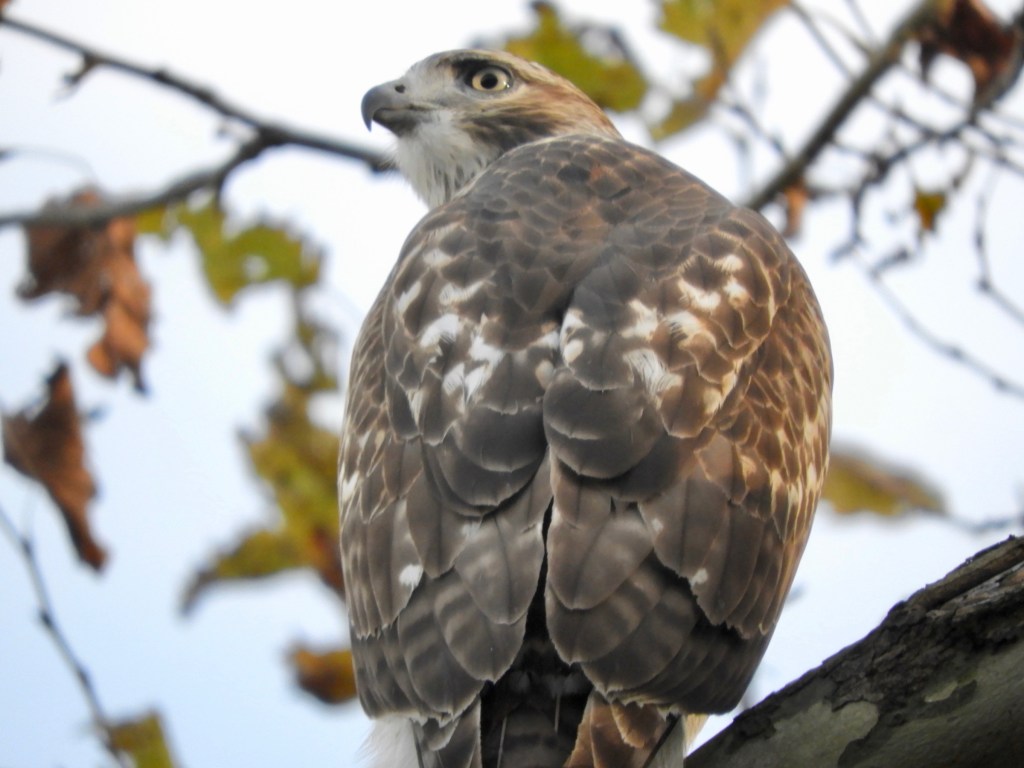
The hawk seemed especially interested in something on the water, and I saw that its focus was on a Great Blue Heron. (see Sightings page for November.) In addition, a Belted Kingfisher flew by and caught its interest briefly. When it moved to a branch directly over the marsh, a Northern Mockingbird tried an attack.

After these two hawk encounters, I don’t think I can infer that I’ll see a hawk now on every walk. Yet, the barer trees of late autumn should make it easier to see any hawks that care to stop by.
Recent posts
- Northern Mockingbird – The Bossiest Singer in the Park
- An Early Spring Preview of the Birds of Inwood
- The Snowiest of Snows, and a Bald Eagle Appears
- Blizzard Warning: A Great Blue Heron Hunkers Down, and Other Stories of the Birds of Inwood in a Cold and Snowy Month
- A Red-shouldered Hawk for Valentine’s Day
 Birds of Inwood
Comments welcome!