
On Friday morning, as I gazed up at the fall foliage at the top of Inwood Hill Park, I was drawn to explore the higher paths of the park. I was hoping, of course, to see birds, but as I set out on my walk, I didn’t see many. The sheer brilliance of the falling leaves provided inspiration enough.

I heard Blue Jays caw-caw-ing in the distance or fleetingly overhead. I followed the winding paths without any fixed idea of how to proceed. The paths in the park lead to impromptu choices. Go left, go right. Go up, go down.
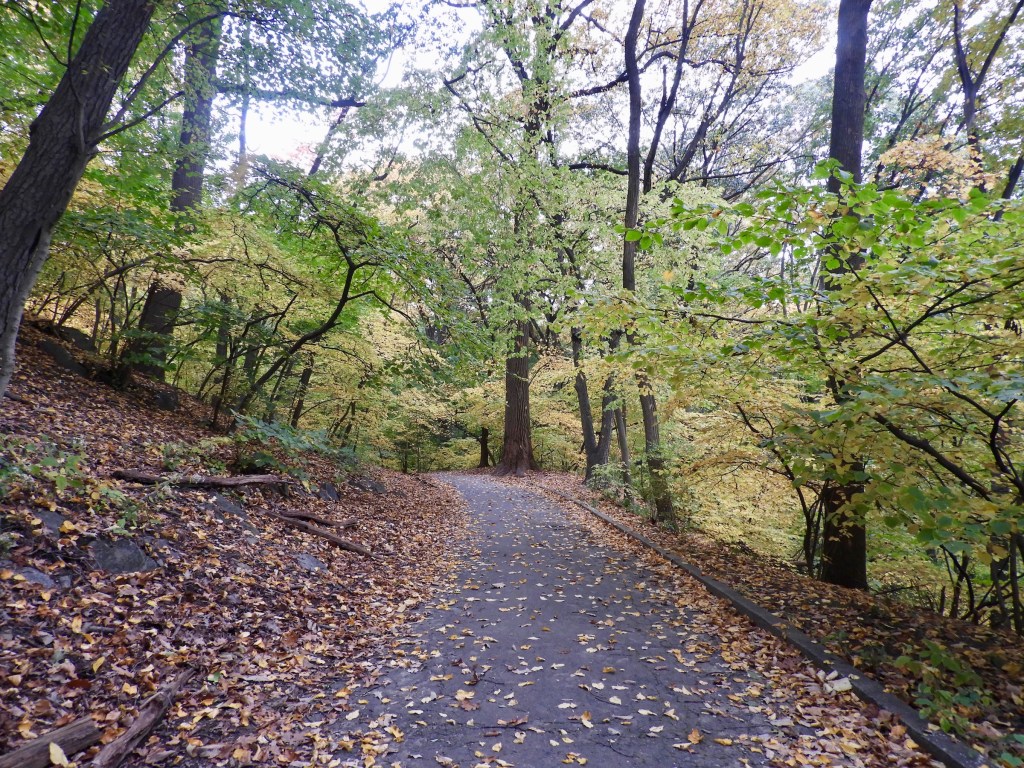
Many birds of the Salt Marsh have flown south for the season, so the forest once again takes center stage. Many of the fall migrants have also flown south, but the winter birds such as Dark-eyed Juncos, the White-breasted nuthatches, Black-eyed Chickadees, Brown Creepers, and Tufted Titmice will soon arrive from the north. A few have begun to settle in the park.

A walk in the autumn forest can serve as a reintroduction to the topography of the park. In contrast to the lush green foliage of summer when the forest floor and rocky features are obscured, the falling leaves of autumn gradually reveal more contour and details. Newly barren trees provide views of the forest floor as well as the formidable rock formations and hills that define the native Manhattan landscape. This island was once all like this.
The paths in Inwood Hill Park are both paved or unpaved. The paved paths follow the old settlements here, long gone but with traces still remaining.
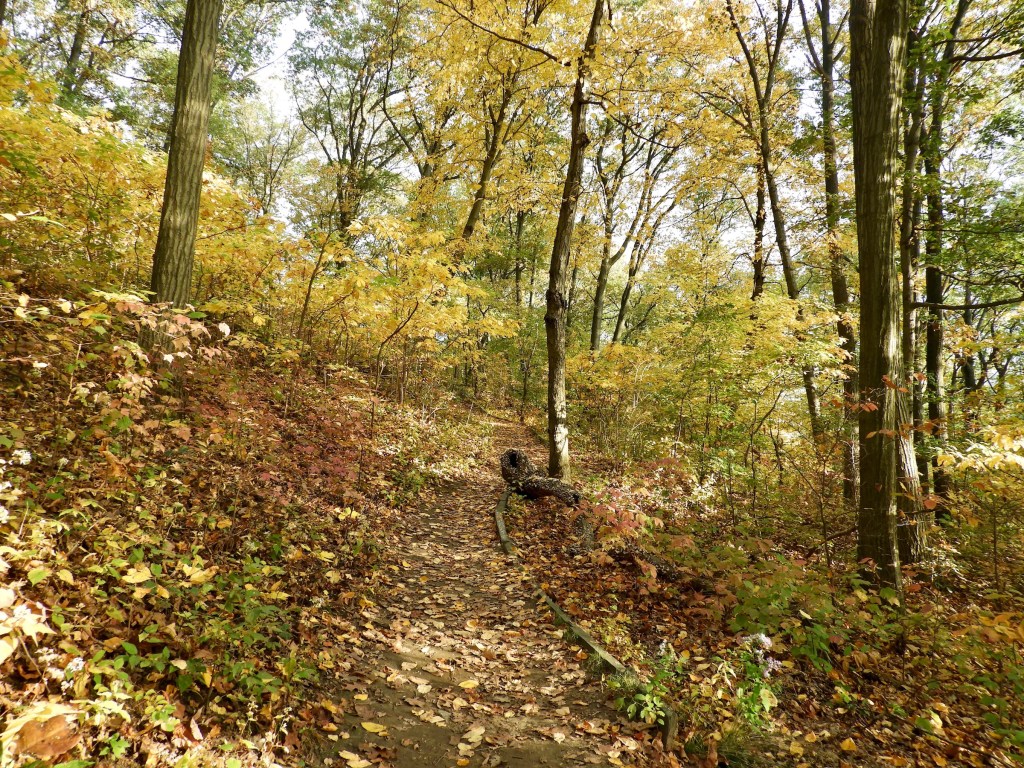
Inwood Hill Park is managed as an old-growth forest, meaning that when trees fall, they will be left in their natural setting. The Parks department will remove branches and limbs that pose impediments to the trails or look unsafe, but otherwise, the forest is left to its own processes of decay and regeneration.

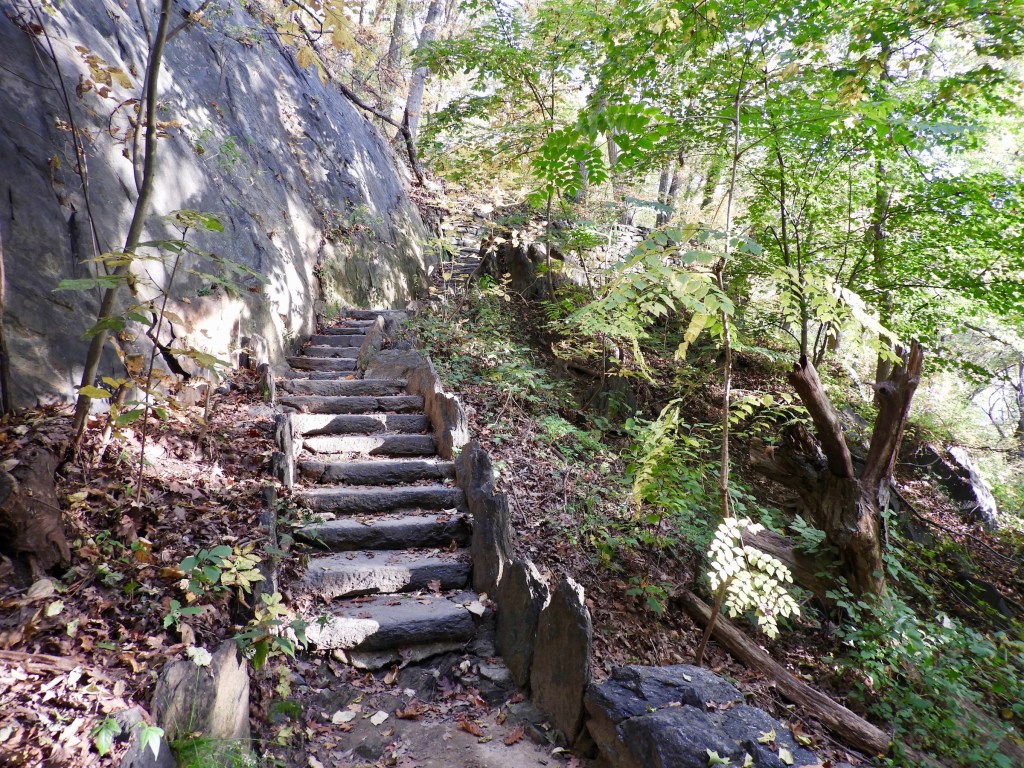
The unpaved paths tend to follow the paths that older humans have made. One picturesque unpaved path, and my personal favorite, is made of stepping stones (see the fourth image). It’s lined with overlooks and walls constructed by members of the Civilian Conservation Corps (CCC) in the 1930s. Near the top of the path, a few steps lead to the site of Fort Cockhill, a military installation built during the Revolutionary War.

The top of the park naturally remains a great place to look for birds, especially for warblers. On this walk, I did see a pair of Dark-eyed Juncos and a smattering of Blue Jays.

If few birds are present, then the surrounding scenery may be enough for some exhilarating exercise and inspiration. A walk to the top of the park (I made a Google map of the walk, if interested) can seem to push everyday city life to the far background.
Recent posts
- Northern Mockingbird – The Bossiest Singer in the Park
- An Early Spring Preview of the Birds of Inwood
- The Snowiest of Snows, and a Bald Eagle Appears
- Blizzard Warning: A Great Blue Heron Hunkers Down, and Other Stories of the Birds of Inwood in a Cold and Snowy Month
- A Red-shouldered Hawk for Valentine’s Day
 Birds of Inwood
Comments welcome!