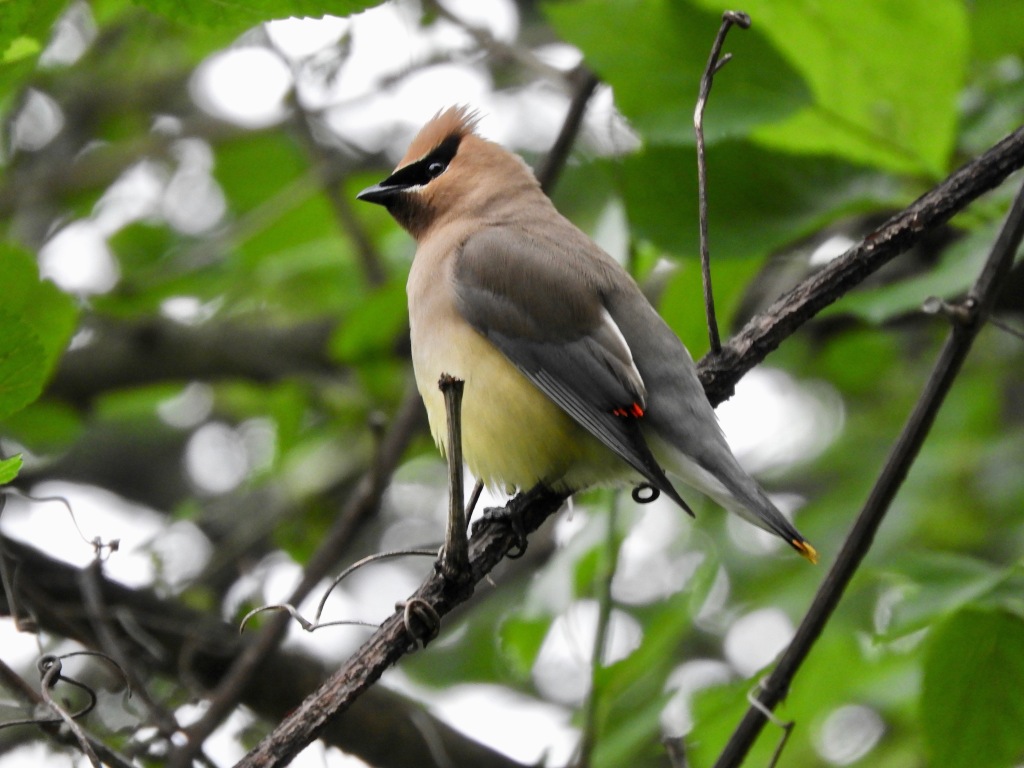
Cover image: Cedar Waxwing in a tree next to the Salt Marsh. Inwood Hill Park. June 3, 2023.
Whenever I encounter Cedar Waxwings, and they generally travel in groups, they seem to arrive from outer space. They are all beautiful and mysterious, thanks to those masks. Their arrival is unpredictable, appearing out of the blue, except for some expectations that many fly through New York in early June on their way to Canada. While I have come to learn on good authority that some have been seen recently settling down and raising a family nearby (in Fort Tryon Park, for example, just to the south of here) like regular earthlings, I still find them otherworldly.
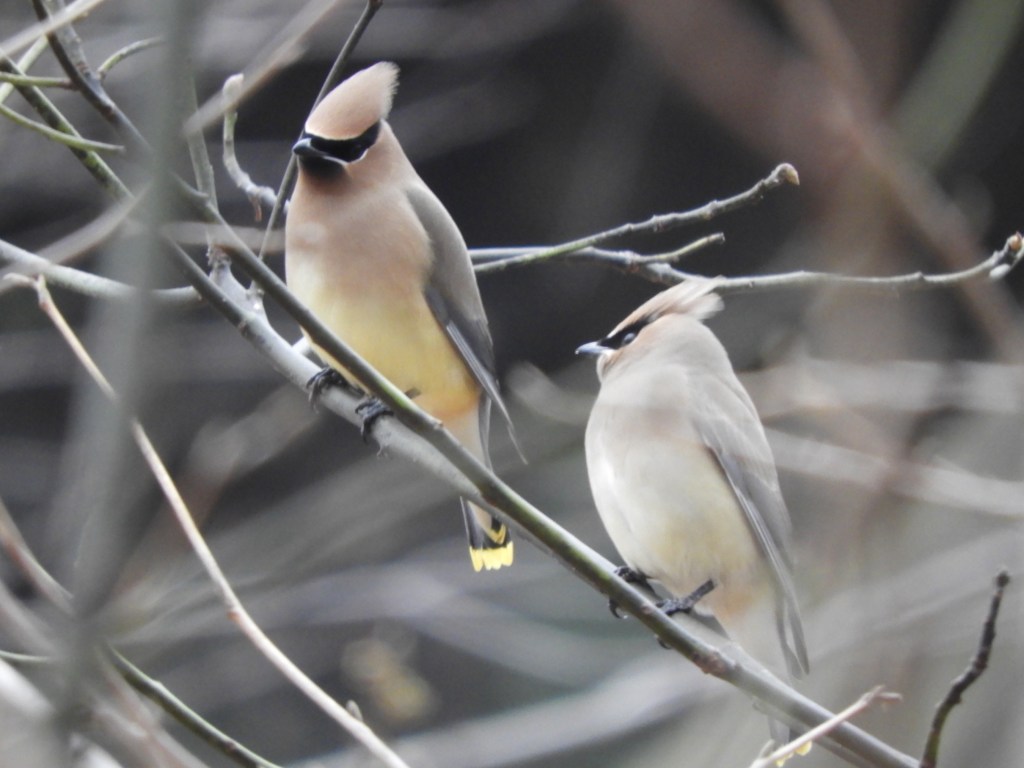
Yes, I know they are native to North America, enjoy fruit, and are named for the waxy secretions at the tips of the secondary feathers. So, yes, a part of me understands that they are somehow a real part of the bird world of this section of the planet. But they possess their own aura. Have you ever heard a flock of Cedar Waxwings arrive en masse to a mulberry tree? Imagine the sound of tuning the dial on an old radio to find a station and hearing only high-pitch static. (I played the sound for my resting cat just now, and he hastily made his way to the computer speaker.)

I remember the date and time I was totally captivated by Cedar Waxwings, although I had seen them before here and there. (Years ago while living in a southern state, I happened upon a large flock of intoxicated Cedar Waxwings and was shocked at the spectacle.) It was March 6, 2022 at around 7:22 a.m. I was walking on the trail that rounds the eastern hill of Inwood Hill Park, the path that leads to the left of the fork behind the dog run. Near the railed section that tends to flood after a rain, I heard their “frequency.” Looking up, I saw of couple of Cedar Waxwings on a branch overhead.

The rest of the flock soon arrived and swooped quickly over to the glacial rocks on the north side of the hill. They looked sensational in their pale pastels, staying in the spot for about ten minutes. The next day, I walked over to the same place, and they arrived at the same time. And then the next day, they were there again. I have pictures. By the fourth day, they were gone.

In early March of this year, I made it a point to look for the waxwings at that same place and time. I didn’t hear or see them that month, but it’s a lesson of bird watching that others could have seen them. Birding can often involve a fear of missing out, especially for favorite birds.
I know now, though, that they are unpredictable. Don’t set a fixed date with a Cedar Waxwing.
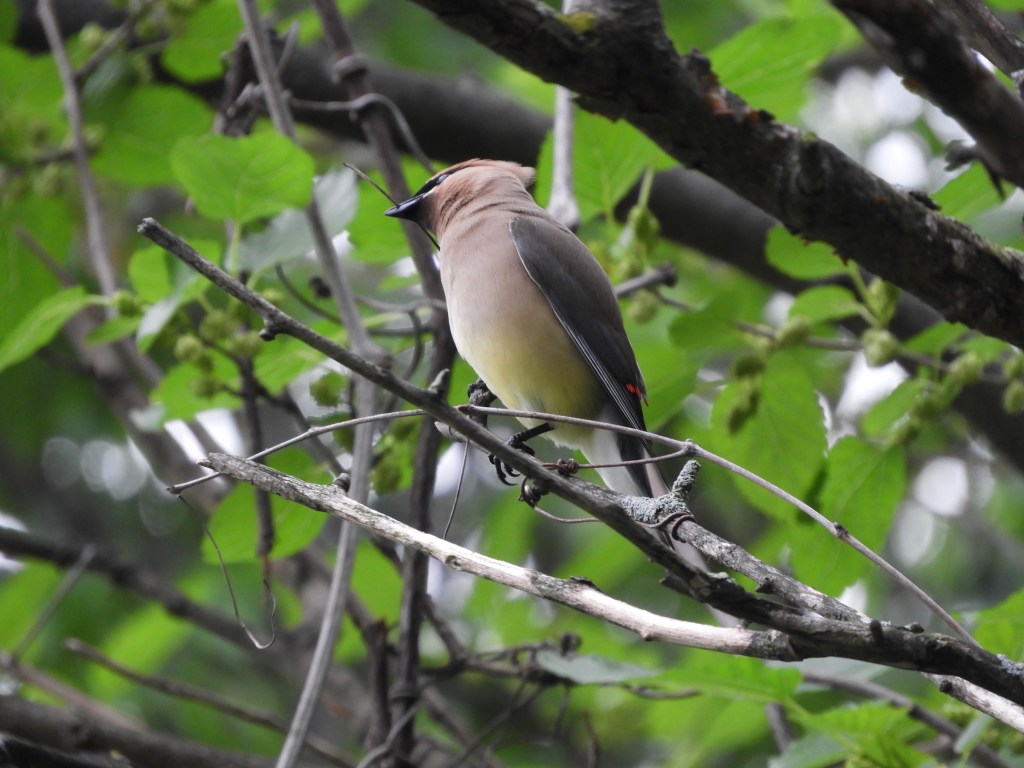
On June 3 of this year, while on my usual morning rounds, I came upon a flock of birds in a tree next to the Salt Marsh. I immediately knew they were Cedar Waxwings.

Studies of Cedar Waxwings show that they often vary their migration patterns. For this year, I have a question -If many flock to southern Canada for their breeding grounds, then what impact would the current wildfires there have on their migration? (The potential impacts of wildfires are the topic of several ongoing studies.) When they do begin their southern journey for winter, often around August, they may take months to get to their destination. Sometimes, they do not migrate at all. All I know is that I saw them in the spring of 2022 and early June of this year. I don’t know if they were coming or going or maybe just staying here. I felt lucky just to see them. I don’t know when I will see them again.

On this day, they had perched in a Japanese Pagoda tree right outside my apartment window in Inwood.
Recent posts
- Northern Mockingbird – The Bossiest Singer in the Park
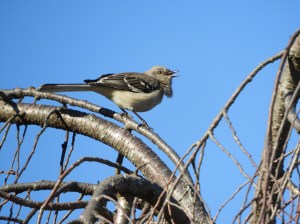 Northern Mockingbirds are famous for their expressive and varied songs, often mimicking other birds. All this month, whenever I have had occasion to walk in Inwood Hill Park or Sherman Creek Park, I’ve come across a loud mockingbird singing its heart out.
 - An Early Spring Preview of the Birds of Inwood
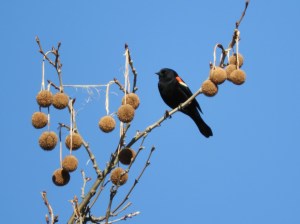 A burst of spring weather and unseasonably warm days brought a variety of birds to Inwood Hill Park in Northern Manhattan this week. The three days in early March— March 9 through March 11— felt like a gift, especially after a long winter of cold temperatures and abundant snow. Many New Yorkers talked about how… Read more: An Early Spring Preview of the Birds of Inwood
 - The Snowiest of Snows, and a Bald Eagle Appears
 On Monday, February 23, the snow fell across New York City in steady downfalls over many hours, embedded in a winter storm that arrived late afternoon on Sunday and continued well into the afternoon. By the end, Central Park experienced one of the largest snowstorms in the city’s history. * Up here in Northern Manhattan,… Read more: The Snowiest of Snows, and a Bald Eagle Appears
 - Blizzard Warning: A Great Blue Heron Hunkers Down, and Other Stories of the Birds of Inwood in a Cold and Snowy Month
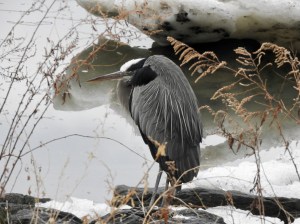 Northern Cardinals have resumed singing their song of spring this past week, so you would never know that NYC and parts of the Tri-State area are currently under a blizzard warning. As I write, the temperatures are mild, and the sky is blue. The blizzard warning is the first such weather alert issued for NYC… Read more: Blizzard Warning: A Great Blue Heron Hunkers Down, and Other Stories of the Birds of Inwood in a Cold and Snowy Month
 - A Red-shouldered Hawk for Valentine’s Day
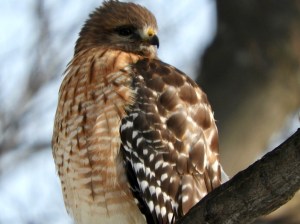 I fell in love this morning on my walk over to the Hudson River. I was walking very slowly on the sloped path leading up to the Henry Hudson Bridge. The path was a little icy, still covered with recent snow, and I was careful with every step. My intention was to see the Bald… Read more: A Red-shouldered Hawk for Valentine’s Day


 Birds of Inwood
Comments welcome!