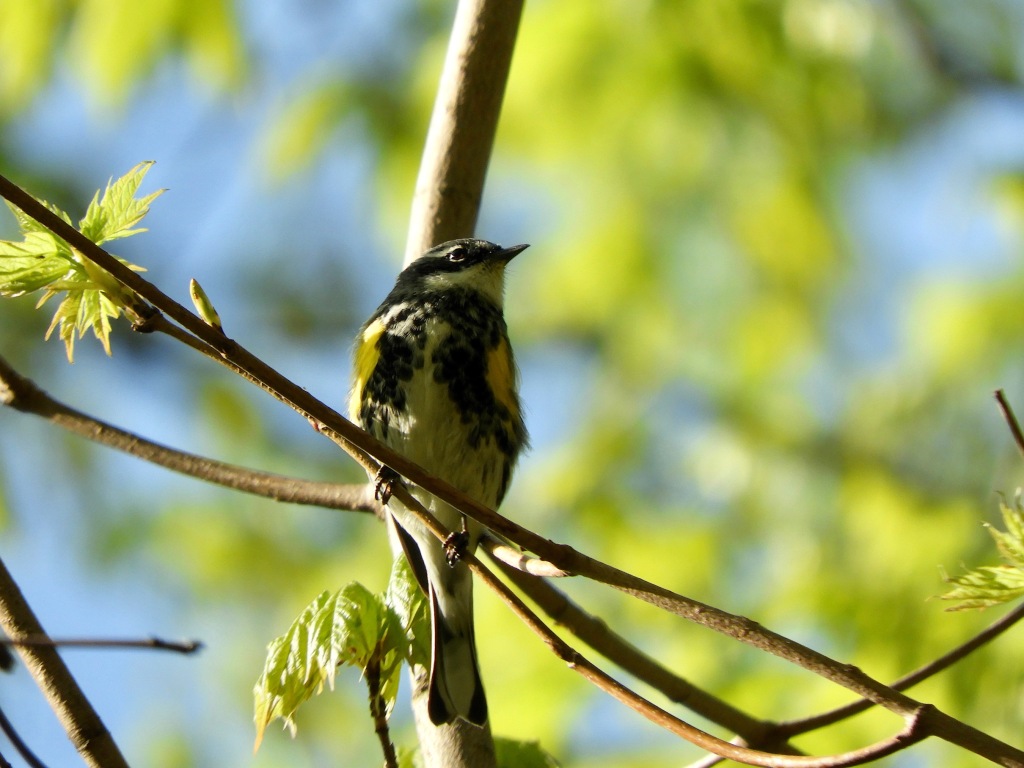
With their high tinny chirp, Yellow-rumped Warblers are often heard rather than seen. They are swift fliers, making them hard to discern in the top canopy of the old-growth forest. Walking through the forest, I can hear them over there, and then here, and up there, but I often have a hard time actually seeing one up close. It’s as if bands of Yellow-rumped Warblers are moving around the forest behind some science fiction cloaking device.

Capturing good pictures of warblers of all sorts can easily turn into frustration. They are often too high up in the tree, leading to the all-too-human phenomenon known as “warbler’s neck.” Once a warbler is in sight, they will cunningly move behind a tree branch. They do not owe birders anything.

In migration, Yellow-rumped Warblers will eat everything – insects, fruits of bayberry and wax myrtle trees, poison ivy, many types of seeds, and dogwoods. In this respect, they may literally be found everywhere in nature along their spring migration path.

As Inwood Hill Park is characterized by hilly terrain, venturing to a high elevation in the park provides the best vantage point to actually see warblers. Early this morning, I climbed up the set of stairs leading to the ridge trail high above the Clove, and I was able to observe these elusive migrants.
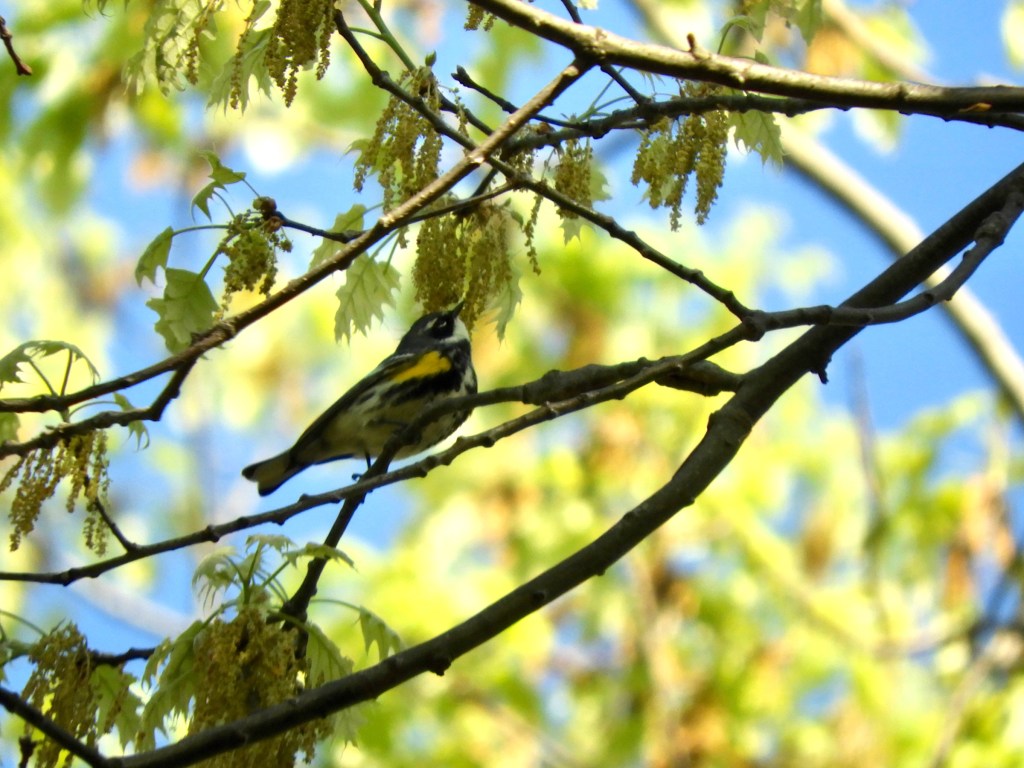
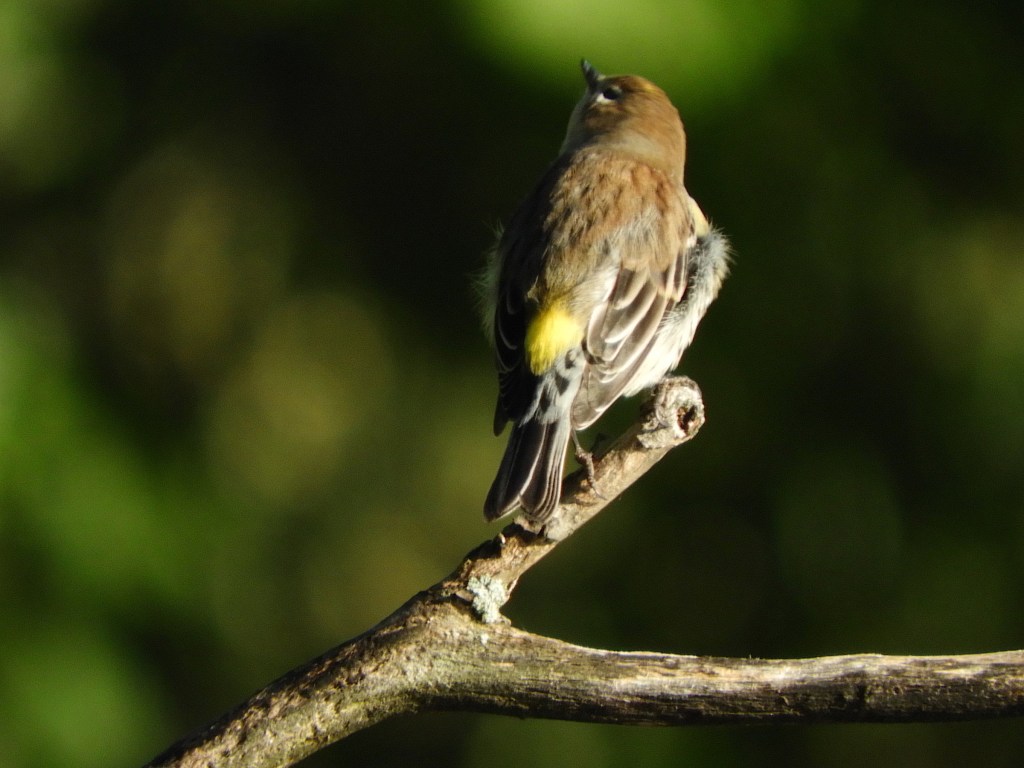
Once seen, Yellow-rumped Warblers are quite remarkable. Like similar species such as Magnolia, Yellow-throated, and Townsend’s, their plumage consists of blacks, whites, charcoals, and bright yellows. During fall migration, Yellow-rumped Warblers are brown in color (below). Their rumps are always yellow.
Recent posts
- Northern Mockingbird – The Bossiest Singer in the Park
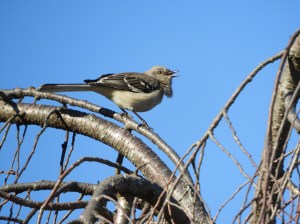 Northern Mockingbirds are famous for their expressive and varied songs, often mimicking other birds. All this month, whenever I have had occasion to walk in Inwood Hill Park or Sherman Creek Park, I’ve come across a loud mockingbird singing its heart out.
 - An Early Spring Preview of the Birds of Inwood
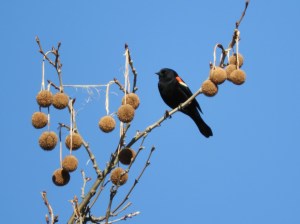 A burst of spring weather and unseasonably warm days brought a variety of birds to Inwood Hill Park in Northern Manhattan this week. The three days in early March— March 9 through March 11— felt like a gift, especially after a long winter of cold temperatures and abundant snow. Many New Yorkers talked about how… Read more: An Early Spring Preview of the Birds of Inwood
 - The Snowiest of Snows, and a Bald Eagle Appears
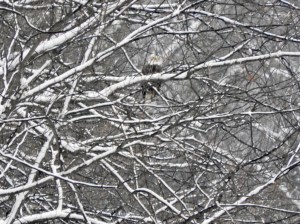 On Monday, February 23, the snow fell across New York City in steady downfalls over many hours, embedded in a winter storm that arrived late afternoon on Sunday and continued well into the afternoon. By the end, Central Park experienced one of the largest snowstorms in the city’s history. * Up here in Northern Manhattan,… Read more: The Snowiest of Snows, and a Bald Eagle Appears
 - Blizzard Warning: A Great Blue Heron Hunkers Down, and Other Stories of the Birds of Inwood in a Cold and Snowy Month
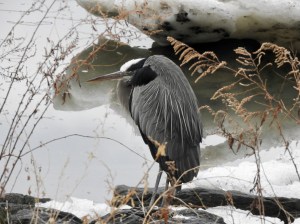 Northern Cardinals have resumed singing their song of spring this past week, so you would never know that NYC and parts of the Tri-State area are currently under a blizzard warning. As I write, the temperatures are mild, and the sky is blue. The blizzard warning is the first such weather alert issued for NYC… Read more: Blizzard Warning: A Great Blue Heron Hunkers Down, and Other Stories of the Birds of Inwood in a Cold and Snowy Month
 - A Red-shouldered Hawk for Valentine’s Day
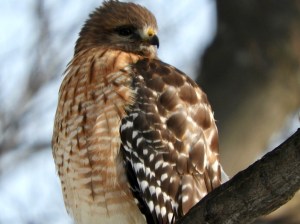 I fell in love this morning on my walk over to the Hudson River. I was walking very slowly on the sloped path leading up to the Henry Hudson Bridge. The path was a little icy, still covered with recent snow, and I was careful with every step. My intention was to see the Bald… Read more: A Red-shouldered Hawk for Valentine’s Day
 Birds of Inwood
Comments welcome!